Particle physics: Glashow
Scientific and technological importance of particle physics
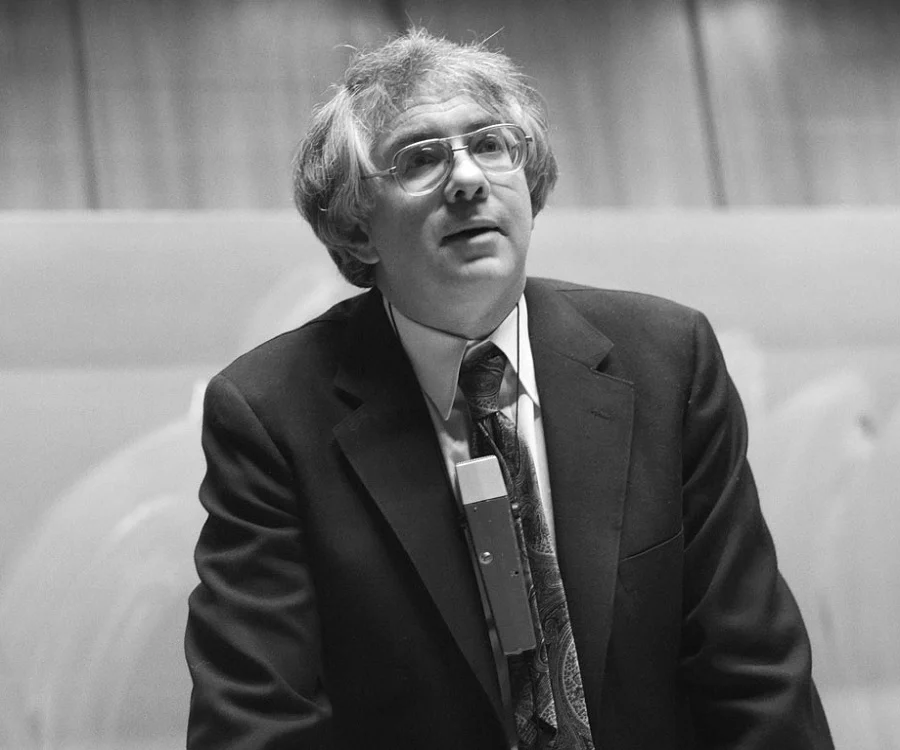
Sheldon Glashow
Boston University, (Nobel Laureate 1979) - Paris, Oct. 4, 2002 (translated into Italian by Prof. Guido Martinelli, Department of Physics University la Sapienza, Rome, notes are by the translator)
Many politicians, as well as representatives of industry and academia, are convinced that society should invest exclusively in research that is likely to generate direct and specific benefits in the form of wealth creation and quality-of-life improvements. In particular, they believe that research in High Energy Physics and of Astrophysics are unnecessary and wasteful luxuries, that these disciplines consume resources rather than promote economic growth and well-being for man. for example, let me quote a recent letter to the Economist: “Physicists working in fundamental research would feel harassed if they had to point to something useful that could be derived from their theoretical elaborations … Itʼs much more important to encourage our ‘best brains’ to solve real problems and leave theology to the professionals of the religion.” Instead, I believe that these people are completely wrong, and that the policy they advocate is very unwise and counterproductive.
If Faraday, Roentgen and Hertz had focused on the “real problems” of their day, we would never have developed electric motors, x-rays and radio.It is true that physicists working in fundamental research deal with “exotic” phenomena that are not in themselves themselves particularly useful.It is also true that this kind of research is expensive.Nevertheless, I argue that their work continues to have an enormous impact on our lives. In truth, the search for fundamental knowledge, driven by curiosity human, is just as important as finding solutions to specific practical problems.
Ten examples should be enough to prove this point.
Informatics: the World-Wide-Web was created by and for High Energy physicists at CERN. It led to the explosive development of Internet and its countless commercial applications. The 21st century will require an even greater capacity for sharing, distribute and process vast amounts of data. Again, the spearhead of the development of a Global Network is for largely made up of the High Energy Physics community. This system will connect hundreds of thousands of sites around the world, to provide ultra-powerful computing services to consumers distributed in all places.
The immediate thrust of the Global Grid is due to basic experiments in high-energy physics and astronomy. However, it is possible to foresee many important practical applications that will certainly follow: in other fields of physics, in biology (particularly in sharing data libraries in genomics and imaging in medicine, medical-imaging), in climatology, in earth and atmospheric sciences (especially to study global warming and ozone layers), as well as in engineering, agriculture, epidemiology and education.
Computers: As we all know, during the past decades computers have become essential to daily life in thousands of ways different.But the reason we have computers today, and not a century ago, is NOT that we discovered the need for the computers, but rather because of the fundamental physics discoveries that underlie modern electronics, the development of abstract mathematical logic, and the need for nuclear physicists in the 1930s to develop methods for counting particles. Even the founder of IBM could not have imagined the role that modern computers play today.
Cryptography: Very similar topics concern The Modern Cryptography that makes remote banking and financial transactions possible with the necessary security guarantees. For this topic we have a number of number theory scholars to thank.
GPS: Global Positioning Systems (GPS) that instantly indicate your location and altitude to an approximation of a few meters, and have generated multimillion-dollar industrial activity. These miraculous navigation systems depend on clocks atomic that were developed for the sole purpose of testing Einstein’s theory of general relativity.
[ I would like to point out that the above three examples are due to Sir Christopher Llewelyn Smith ]
Particle beam therapy: many of the so-called “elementary particles” , in the form of carefully directed and collimated beams, play an essential role in medicine. It all began-and continues to this day-with x-rays, and it was Madame Curie who first suggested that particle beams could also be useful in medicine. In the early 1950s, the Berkeley and Harvard cyclotrons, initially built for research in pure physics, began a second career as pioneers in the use of proton beams for the cancer therapy and thousands of patients were helped by these ancient accelerators. Today, dozens of facilities where dedicated medical accelerators operate are have been built around the world to deliver beams of protons, neutrons, and heavy ions. In addition, high-energy electron accelerators are used to treat some lesions resulting from AIDS, skin lymphoma and breast cancer.
Medical Imaging: The first medical image analyzers (scanners) were developed by High Energy physicists “in the scraps of time” , but not at their expense. Alan Cormack and Geoffrey Hounsfield shared a Nobel Prize for developing tomography computer-assisted.Medical practice has become dependent on CAT scanners, magnetic resonance imaging (MRI) and the post-tron emission tomography (PET).MRI uses nuclear magnetism, while PET uses a form of antimatter.Both these notions originated in an academic environment far removed from the “real world” problems to which they are addressed today.
Superconductivity: Superconductivity will be the basis for many new technologies of the 21st century. What was once an “exotic” phenomenon now has many potential applications: energy generation, storage and transportation, medicine and electronics. It has been said that “every program in superconductivity is due to the fact that at Fermilab (a laboratory dedicated to fundamental research in physics, which derives its name from our compatriot Enrico Fermi ed.) the Tevatron, a superconducting magnet accelerator, was built, and works !” .
Radioisotopes: short-lived radioactive isotopes are used for millions of patients each year (including yours truly!) for a wide range of medical purposes: to diagnose diseases, to treat various forms of cancer, to relieve pain, and to make analysis of blood, urine, or tissue samples for diagnostic or legal purposes. These isotopes are necessarily produced by particle accelerators located in hospitals, or (in some cases) at nuclear reactors located in research laboratories government.Long-lived radioactive isotopes have countless applications through the use of mass spectroscopy.For by means of this procedure, it is possible to measure concentrations of a radionuclide smaller than one atom in a billion billion (i.e., a percentage of 1/1000000000000000). This method is commonly used in archaeology, geology, planetology, and engineering (ad example in leak detection, or leakage). More recently, the technique called AMS is becoming an important means of medical research (to study the effect of drugs on human subjects, to track metabolic pathways, etc.). None of this would be could have happened without research on radioactive materials and the development of sophisticated accelerators and particle detectors elementary (which are being researched in High Energy Physics and Astrophysics n.d.t.).
Synchrotron Light Sources: synchrotrons were developed to explore the ultimate nature of matter, a topic that the author of the letter quoted above seems to regard as more theological in nature than useful. One of the difficulties in the build such machines is that accelerated electrons lose most of their energy in the form of “radiation of synchrotron” . However, this difficulty was transformed by heterogenesis into a billion-dollar business. It turns out, in fact, that the synchrotron radiation is extraordinarily useful in both pure science and technology of commercial interest: for the materials science, industrial testing, earth science, environmental science, living things science, and for diagnostics medical.About 80 synchrotron light sources, all of which are expensive and pose real technological challenges, have been developed in 23 different countries, the largest number of which were built in Japan (seventeen !), including the best and the brightest of them, called “of the third generation” .
Sources of Neutrons: first discovered seventy years ago, it was immediately understood that neutrons are the key to understanding the nuclear structure.But who could have imagined how important these tiny unstable particles would become ? The discoverer of the atomic nucleus emphasized that “Anyone who believes that the atom is a source of energy is making a blunder.” l. But the neutrons have much more to offer than nuclear energy.The scattering and diffraction of neutrons obtained using intense sources have myriad applications in the basic and applied sciences, and in engineering. This is a further fallout of the fundamental science that has led to decisive advances that benefit everyone. Note that many of the developments commercially relevant that I have discussed make use of particle accelerators: instruments that were invented and developed for the sole purpose of the pure research (which some people think is without utility). However, there are now about 10000 accelerators around the world, of which no more than 100 are used for research in nuclear and particle physics (while all others are used for industrial purposes, commercial or therapeutic, ed.).
I have described how fundamental and seemingly useless scientific disciplines have contributed greatly to the growth economic and human welfare.
Long ago we were warned that the pressure for immediate results would destroy pure research unless we pursue conscious policies to prevent this from happening. This warning is even more pertinent nowadays. However, the pursuit of particle physics and astrophysics is not motivated by their potential economic importance, no matter how great this may be. We study these disciplines because we believe it is our duty to understand how best to possible the world in which we were born.Science provides the possibility to rationally understand our role in the Universe and can replace the superstitions that produced so much destruction in the past.
In conclusion, we should note that the great success of the initiative spirit of scientists around the world should serve as a model for broader international collaboration. We hope that science and scientists will lead us toward a century more just and less violent than its predecessor.
Further Considerations of Prof. Sheldon Glashow on Fundamental Research
(At the end of the paper forwarded to me by Prof. S. Glashow, there are some additional considerations, some of which I think it is important to report. ed.)
We have mentioned just ten of the new “spin-off technologies” that were initiated by-or evolved from-research by those who have devoted their lives to contemplating the universe. But there are many other reasons why governments should continue to fund seemingly useless research that is not directed toward practical purposes:
The business of business is a business_: Here I adapt a remark by Sir Chris Llewellyn-Smith, former director of CERN: “If research driven by scientific curiosity is economically important, why should it be publicly funded rather than privately funded? The reason is that there are sciences that bring general benefits, rather than benefits specific to individual products. any economic return from this research cannot be ascribed to a single company or entrepreneur. This is the reason why pure research is funded by governments without regard to the immediate commercial interest of the results. Government funding of basic research, not directed to immediate purposes, must continue if further progress is to be made.”
Inspiration for Youth: We have become a technological society in which citizens are required to have special skills science, mathematics, and engineering, or at least some degree of scientific literacy. Many of the wondrous concepts of particle physics and cosmology - such as quarks and quasars or black holes and the Big Bang - fascinate young people and can steer them toward technical careers.
The best and the brightest: Particle physicists and those involved in cosmology spend many years developing technical skills or problem-solving methods that can (and often are) redirected to more practical purposes. Many of the industries in Silicon Valley and the Boston area were created by physicists, computer scientists, and engineers at the accelerators of particles that owe their capabilities to experience gained in high-energy physics laboratories.
To give a new example (Prof. Glashow gives three, but I think just one, in addition to those already mentioned, is sufficient, editor’s note) Walter Gilbert, who worked in theoretical physics, became a famous molecular biologist. He shared a Nobel Prize in Chemistry for making DNA mapping possible, and was the founder of Biogen Inc, and is the leader of the Gilbert Laboratory at Harvard University
- Sheldon Glashow - https://en.wikipedia.org/wiki/Sheldon_Glashow
- Sheldon Glashow - Nobel Facts https://www.nobelprize.org/prizes/physics/1979/glashow/facts/
- Sheldon Glashow - Nobel Lecture https://www.nobelprize.org/prizes/physics/1979/glashow/lecture/
- Christopher Llewllyn-Smith - https://en.wikipedia.org/wiki/Christopher_Llewellyn_Smith
- Guido Martinelli - https://www.lincei.it/it/content/martinelli-guido
- Francesco Sylos Labini - Preface to Milena Cuccurullo’s essay “Le ali spezzate della ricerca. L’Italia e il Mezzogiorno nell’Europa della conoscenza” - https://francescosyloslabini.info/2012/06/26/le-ali-spezzate-della-ricerca/