Science and Philosophy: Weinberg
Steven Weinberg
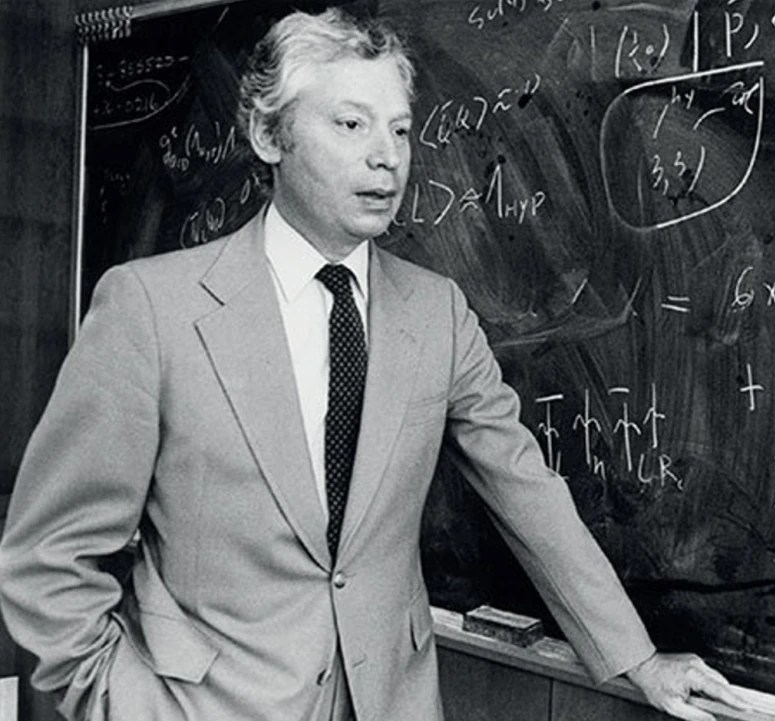
" In our hunt for the final theory, physicists are more like bloodhounds than hawks; we have become good at sniffing on the ground the traces of beauty we expect in the laws of nature, but we do not seem to be able to see the path to truth from the heights of philosophy."
_" Physicists naturally carry with them a practical philosophy in their work. For most of us, it is a rudimentary realism, a belief in the objective reality of the ingredients of our scientific theories. But this has been learned through the experience of scientific research and rarely from the teachings of philosophers.
This is not to deny all value to philosophy, much of which has nothing to do with science. Nor do I mean to deny all value to the philosophy of science, which at best strikes me as a pleasant gloss on the history and discoveries of science. But we should not expect it to provide today’s scientists with useful guidance on how to do their work or what they are likely to find. .. From time to time, I have tried to read current works on the philosophy of science. Some of them I found written in such impenetrable jargon that I can only think they aimed to impress those who confuse obscurity with profundity. Some of these were good and even witty reads, such as the writings of Wittgenstein and Paul Feyerabend. But only rarely did they seem to me to have anything to do with the work of science as I knew it. … I know of no one who has been actively involved in the progress of Physics in the postwar period whose research has been significantly aided by the work of philosophers."_
Steven Weinberg, “Against Philosophy “, ch. 7 of “The Dream of the Unity of the Universe “ (1982)
A phrase sometimes unfairly attributed to Feynman was actually quoted by Weinberg: “My talk this afternoon will be about the philosophy of science rather than about science itself. This is, in some ways, unusual for me and, I suppose, is generally unusual for a scientist in the midst of his activities. I have read the observation (though I have forgotten the source) that the philosophy of science is as useful to scientists as ornithology is to birds. “ Steven Weinberg, “Newtonianism, reductionism and the art of congressional testimony “,Nature vol. 330, pg. 433-437,(1987) https://www.nature.com/articles/330433a0
Today we continue to search for the order of nature, but we do not think of it as an order based on human values… My view is that this ardent aspiration for a holistic view of nature is precisely what scientists have had to dispose of. We simply do not find anything in the laws of nature that corresponds in any way to the ideas of virtue, justice, love or contention, and we cannot rely on philosophy as a reliable guide to scientific explanation.
Steven Weinberg, Explaining the World, V - Ancient Science and Religion, (2015)
Most scientists share Weinberg’s views on the end of philosophy.
For theoretical astrophysicist Stephen Hawking, in his essay with Leonard Mlodinow “The grand design: What do we know about the universe today” (2010), “Philosophy is dead,” ousted of its traditional questions around origin of the world, where we come from and why we are here, has made scientists “the only holders of the flashlight of discovery in our quest for knowledge.” theoretical physicist and cosmologist Lawrence Krauss, in “The Universe from Nothing " (2012), argues that physics would make philosophy and religion obsolete and that relevant branches of the philosophy (such as logic or ethics) would nowadays be engulfed by other disciplines. Evolutionary biologist and popularizer Richard Dawkins, in “Selfish Gene” (1976) wonders why philosophy and so-called “humanities” subjects were still being taught almost as if Darwin had never existed.
In Italy, geneticist Edoardo Boncinelli (as well as physicist, epistemologist and Greek scholar, discoverer of homeotic genes, former student of Giuliano Toraldo di Francia), in the essay “The Butterfly and the Chrysalis. The Birth of Experimental Science” (2018) traces a provocative counterhistory of the origin and evolution of philosophy-from Greek antiquity, to Western thought in the Christian era, up to the modern age and to the birth of experimental science, a moment when an unbridgeable gulf would open wide between scientific and philosophical approaches, elaborating the metaphor of the butterfly and the chrysalis. The chrysalis of Western philosophy guarded its interest in the natural world until four centuries ago, when the advent of the experimental method marked the irreversible revolution that would release the butterfly of science from its historic incubator, making it fully autonomous. The butterfly, no longer burdened with unnecessary ballast, can now soar into the skies of rationality, pursuing scientific and technological progress.