Theoretical Physics - Landau
L.Landau, E.Lifsic - Course in Theoretical Physics - Vol. 1-10
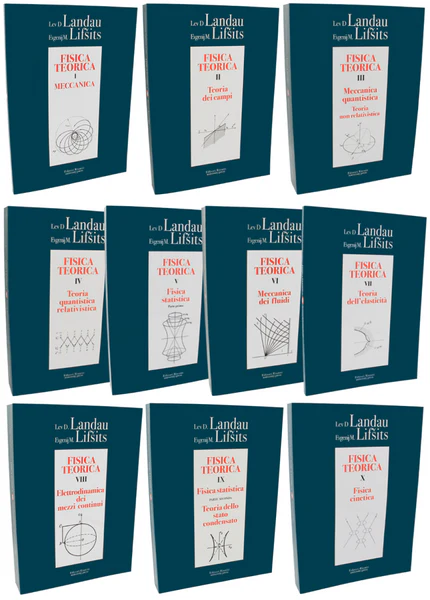
A legend, a unique example of an advanced work for specialists sold over a million copies worldwide, and reprinted continuously for over 60 years.
The Course in Theoretical Physics is a monumental ten-volume book series, the purpose of which is to cover all of theoretical physics, that was started by Lev Landau and written in collaboration with his student Evgenij Lifšic beginning in the late 1930s. After Landau’s death, Lifšic continued the project, in collaboration with Lev Pitaevskii and Vladimir Berestetskii, writing the remaining volumes. Landau is said to have composed much of the series in his head while he was in an NKVD prison between 1938 and 1939. However, almost all the actual writing of the first volumes was done by Lifšic, giving rise to the motto, “not a word from Landau and not a thought from Lifšic,” although Lifšic’s role was later reevaluated. This series is usually referred to as “Landau and Lifšic.” For a long time, the introduction found in the first volume of the course (Mechanics) was the only available source on Landau’s life. In Italian, the course translation was published by Editori Riuniti, which subsequently reprinted it in the 21st century. The presentation of the material is advanced in level and generally considered suitable for specialized undergraduate courses. Despite this fairly niche nature, an estimated one million volumes of the Course have been sold as of 2005. The series has been called “renowned” by Science and “celebrated” by American Scientist. A note in Mathematical Reviews states, “The usefulness and success of this course has been demonstrated by the large number of subsequent editions in Russian, English, French, German and other languages.” In a centennial celebration of Landau’s career, it was noted how the Course showed “unprecedented longevity.” In 1962, Landau and Lifšic received the Lenin Prize for their work on the Course. This was the first time the Lenin Prize was awarded for teaching physics. In Italy, the series was particularly popular with physics students (especially in the 1970s and 1980s) partly because of its low cost and easy availability, since it was distributed even in nonspecialized bookstores.
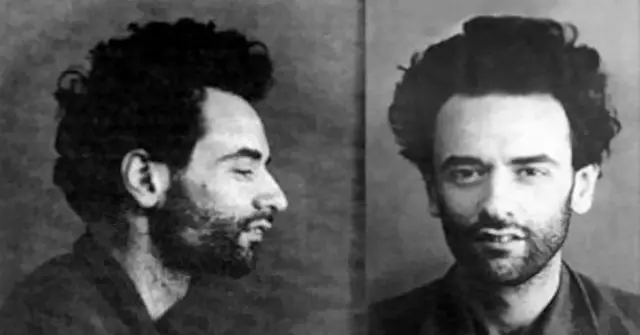
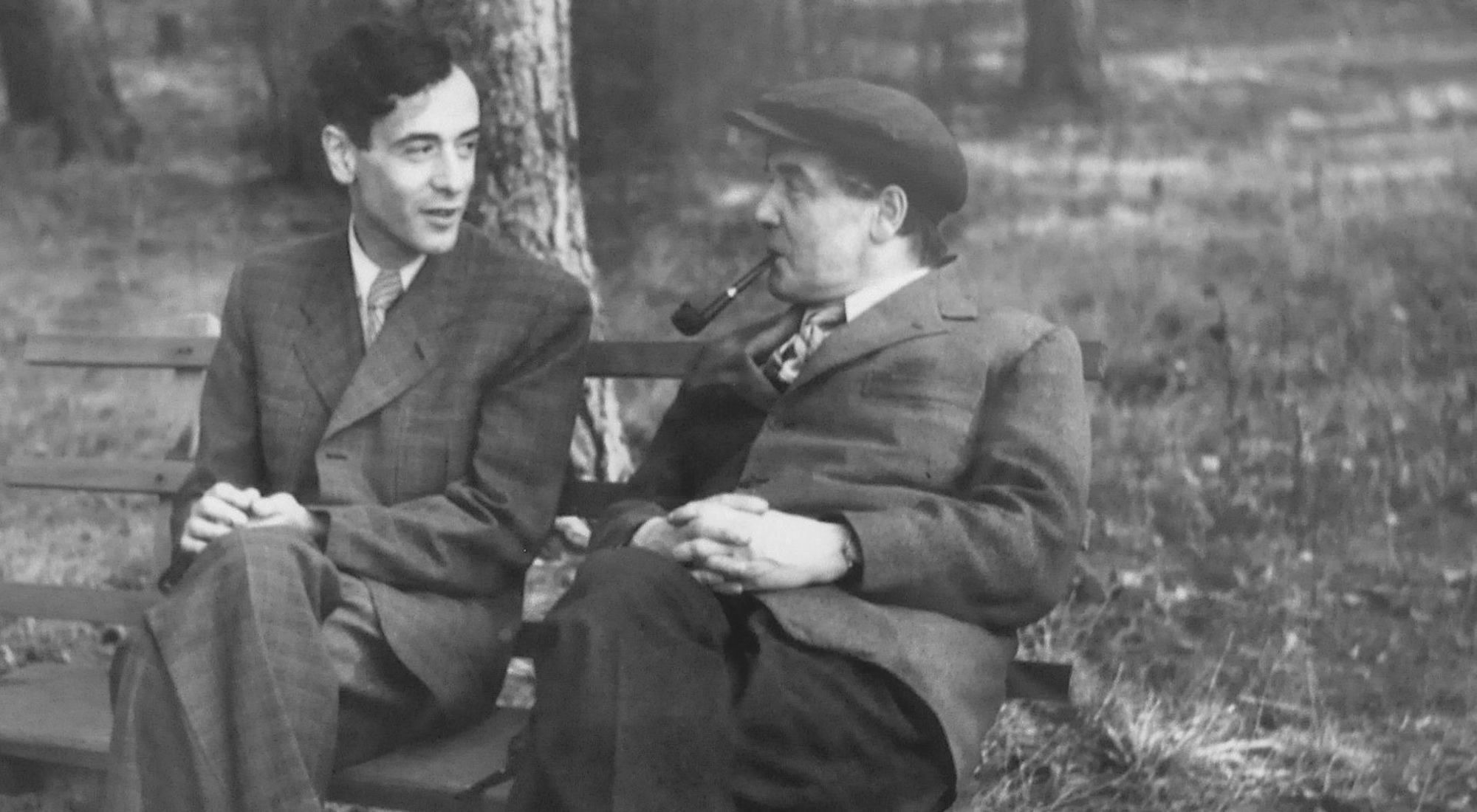
Pictures above are mugshots of Landau in prison as a Stalin opponent. His life was saved by Pjotr Kapitsa, who used all his influence and fame as a great scientist with Molotov, Berja and Stalin to convince them that he was indispensable to the USSR and science, and thus get him freed. Landau and Kapitsa are in conversation a few years later in a park
List of volumes
Volume 1: Mechanics Volume 1 describes classical mechanics without special or general relativity, using Lagrangian and Hamiltonian formalisms.
Volume 2: Field Theory Volume 2 covers relativistic particle mechanics and classical field theory, particularly special relativity for electromagnetism, and general relativity for gravitation.
Volume 3: Quantum mechanics: non-relativistic theory Volume 3 covers the basics of quantum mechanics, without the use of special relativity.
Volume 4: Relativistic quantum theory The original edition comprised two books, labeled as Part 1 and Part 2. The first covered general aspects of relativistic quantum mechanics and quantum field theory, leading to quantum electrodynamics. The second continued with quantum electrodynamics and what was then known about strong and weak interactions. These volumes were published in the early 1970s, at a time when strong and weak interactions were not yet well understood. In the second edition, the corresponding sections were discarded and replaced by in-depth discussions of quantum electrodynamics (which was well established, however), and the two parts were unified into one, thus providing the exposition of relativistic quantum field theory for electromagnetic interaction as the prototype of a quantum field theory.
Volume 5: Statistical Physics - Part One Volume 5 covers the basics of statistical mechanics and thermodynamics, with some applications to chemical reactions, phase transitions and condensed matter physics.
Volume 6: Fluid Mechanics Volume 6 covers all general aspects of fluid mechanics, from ideal to viscous fluids. It also includes a short chapter on relativistic fluid mechanics and another on superfluid mechanics.
Volume 7: Theory of elasticity Volume 7 covers the theory of elasticity of solids, including viscous solids, vibrations and waves in crystals with dislocations, and a chapter on the mechanics of liquid crystals.
Volume 8: Electrodynamics of continuous media Volume 8 deals with electromagnetism in materials and includes a number of topics in condensed matter physics (such as ferromagnetism or superconductivity), a chapter on magnetohydrodynamics and another on nonlinear optics.
Volume 9: Statistical Physics 2. Condensed state theory Volume 9 is a continuation of Volume 5, with more applications to condensed matter theory (such as superconductivity and superfluidity).
Volume 10: Kinetic Physics Volume 10 presents various applications of kinetic theory to condensed matter physics and to metals, insulators and phase transitions.
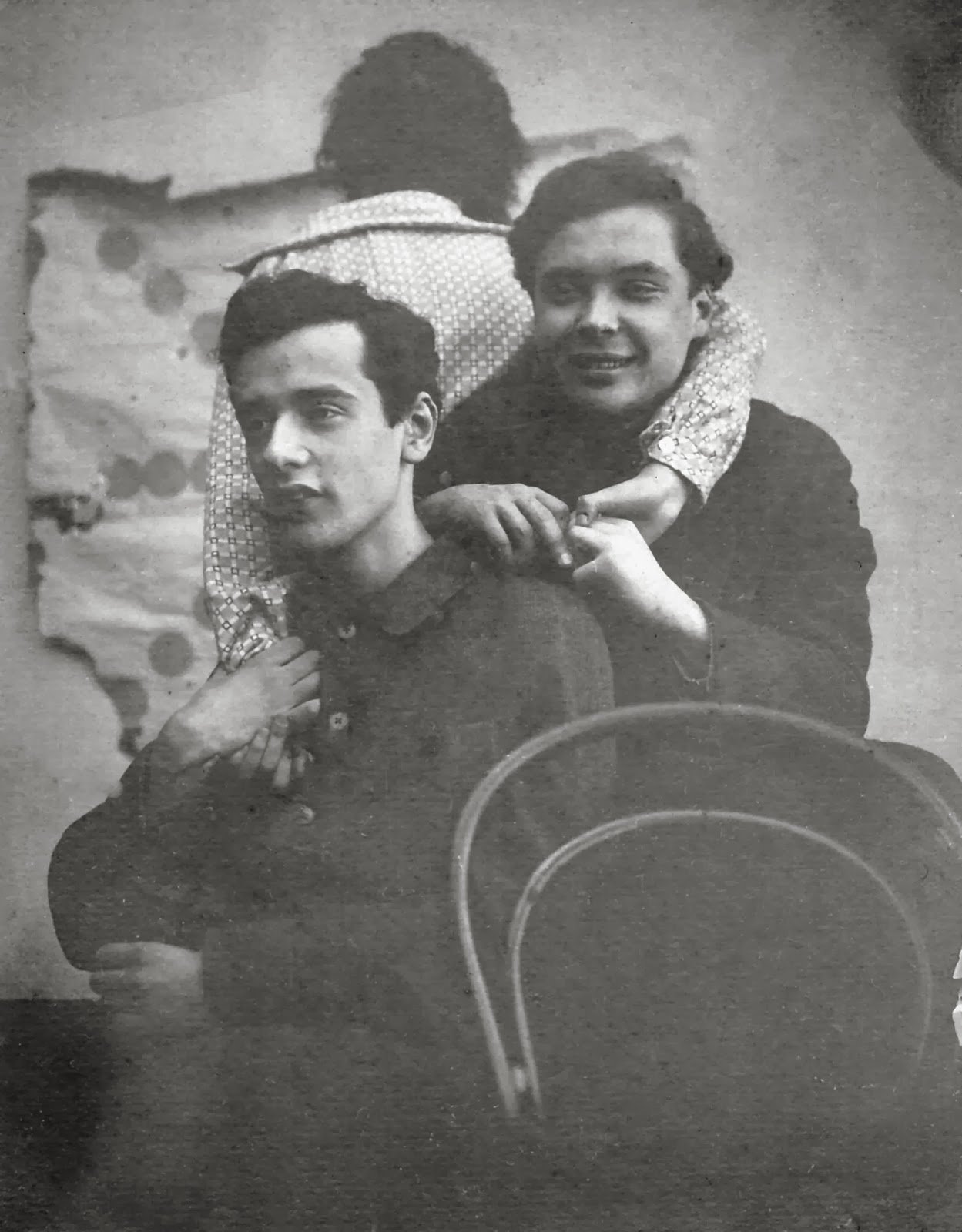
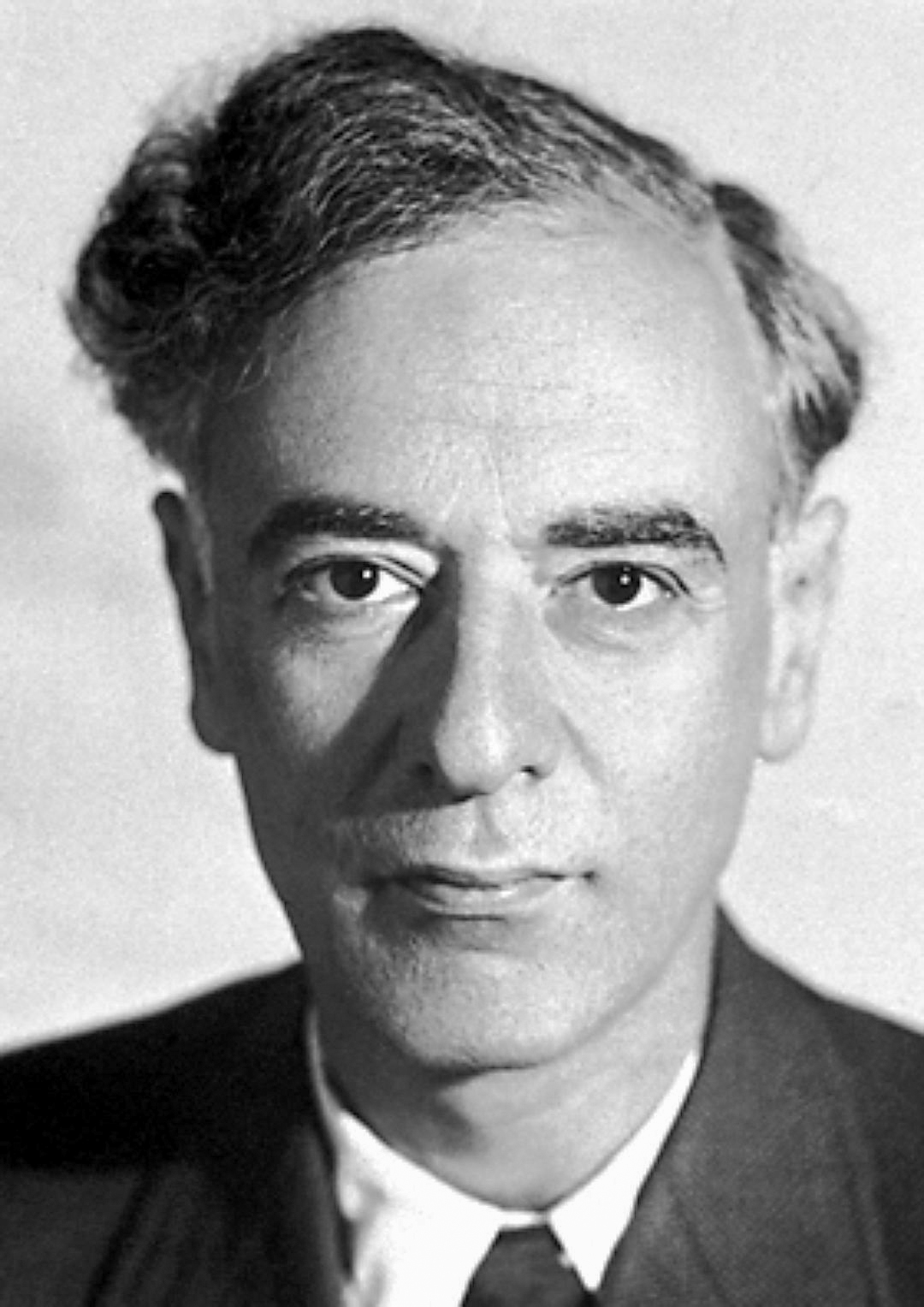
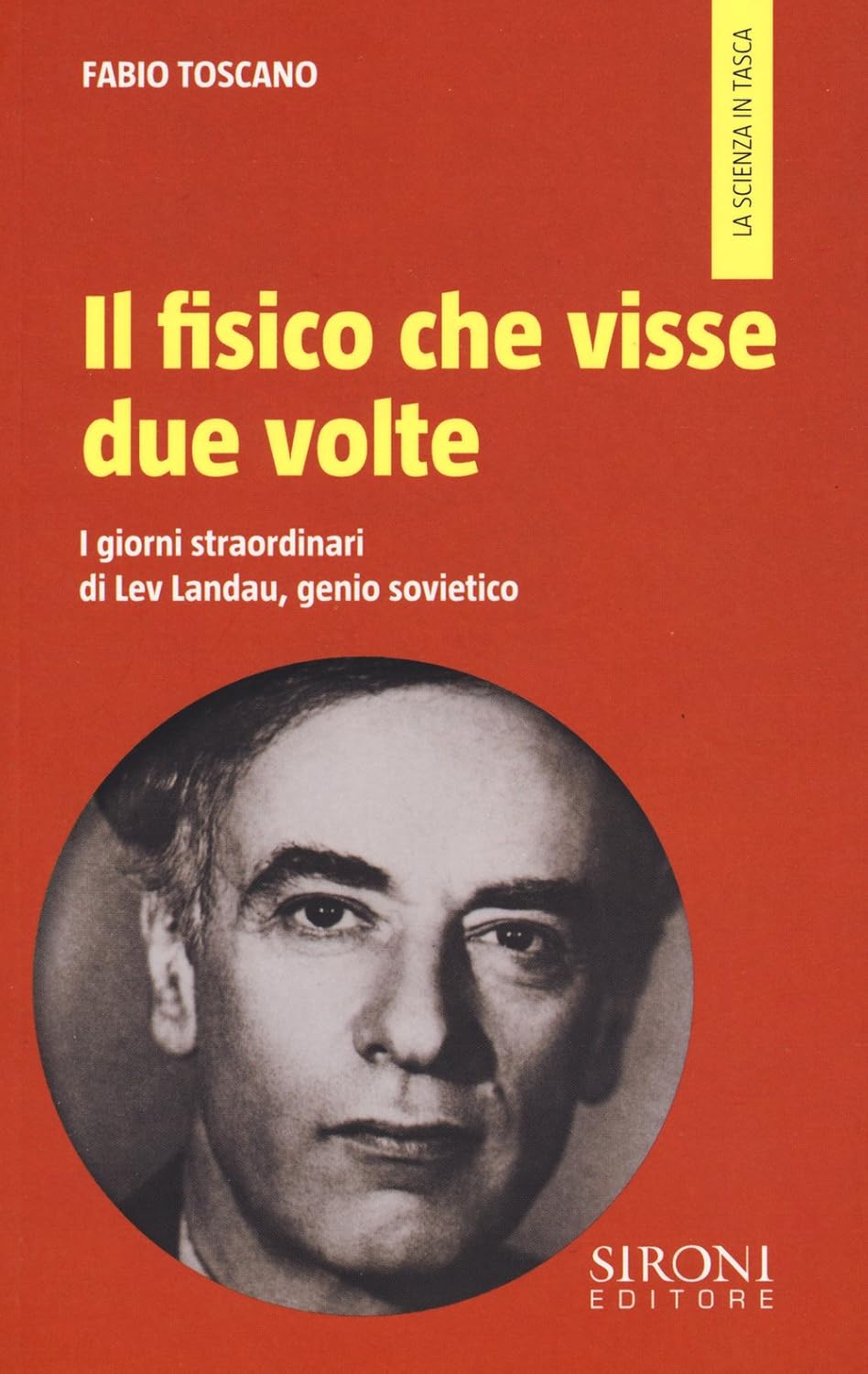
Landau young man with his friend Ivanenko, and a girl from behind. In the other photo just before the tragic accident that ended his scientific career, and inspired the title of a gripping biography
Lev Landau (1908-68) was the leading exponent of theoretical physics in the Soviet Union, and certainly one of the greatest scientists of the 20th century, and of all times.There would be much to say about the personality of such a genius. His brilliant studies on superfluidity earned him the Nobel Prize in 1962, but that is not the only reason why physicists of all ages and countries still revere him today: indeed, he is credited with the most famous and systematic treatise on theoretical physics ever published, on which generations of students have been trained. Brilliant, quirky and controversial, Landau had grown up in Bohr’s court, on par with Heisenberg, Pauli and Dirac; in his homeland, however, he was looked upon with suspicion by the regime and was even imprisoned. Although he would later receive honors and recognition, he would never again be allowed to leave the country’s borders. For the well-rounded figure of an outstanding scientist and man, see the biography:
- Fabio Toscano - The Physicist Who Lived Twice. The Extraordinary Days of Lev Landau, Soviet Genius