Quantum Mechanics II: To Deepen Matter
E - Are there any “serious” quantum mechanics textbooks accessible to those who did not study physics and mathematics in college?
- E1) R.P. Feynman, R. Leighton, M. Sands - “Feynman’s Lectures on Physics,” Vol. III, “Quantum Mechanics” (1st ed. 1966, new millennium ed. 2006) transl.it “Feynman’s Physics,” Vol. III “Quantum Mechanics.”
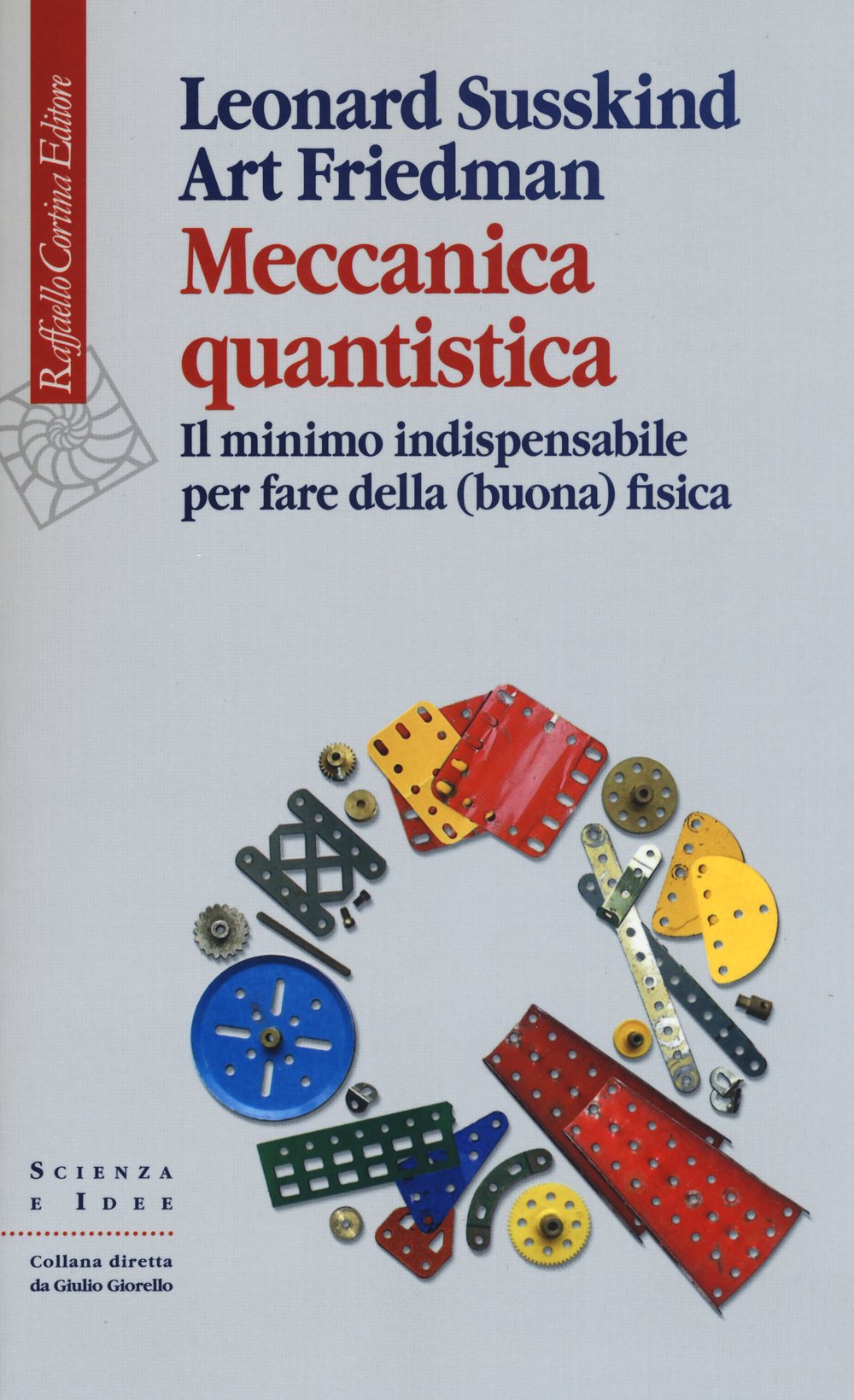
- E2) Leonard Susskind, Art Friedman - “Quantum Mechanics” (The Theoretical Minimum Vol. II) - (2015)
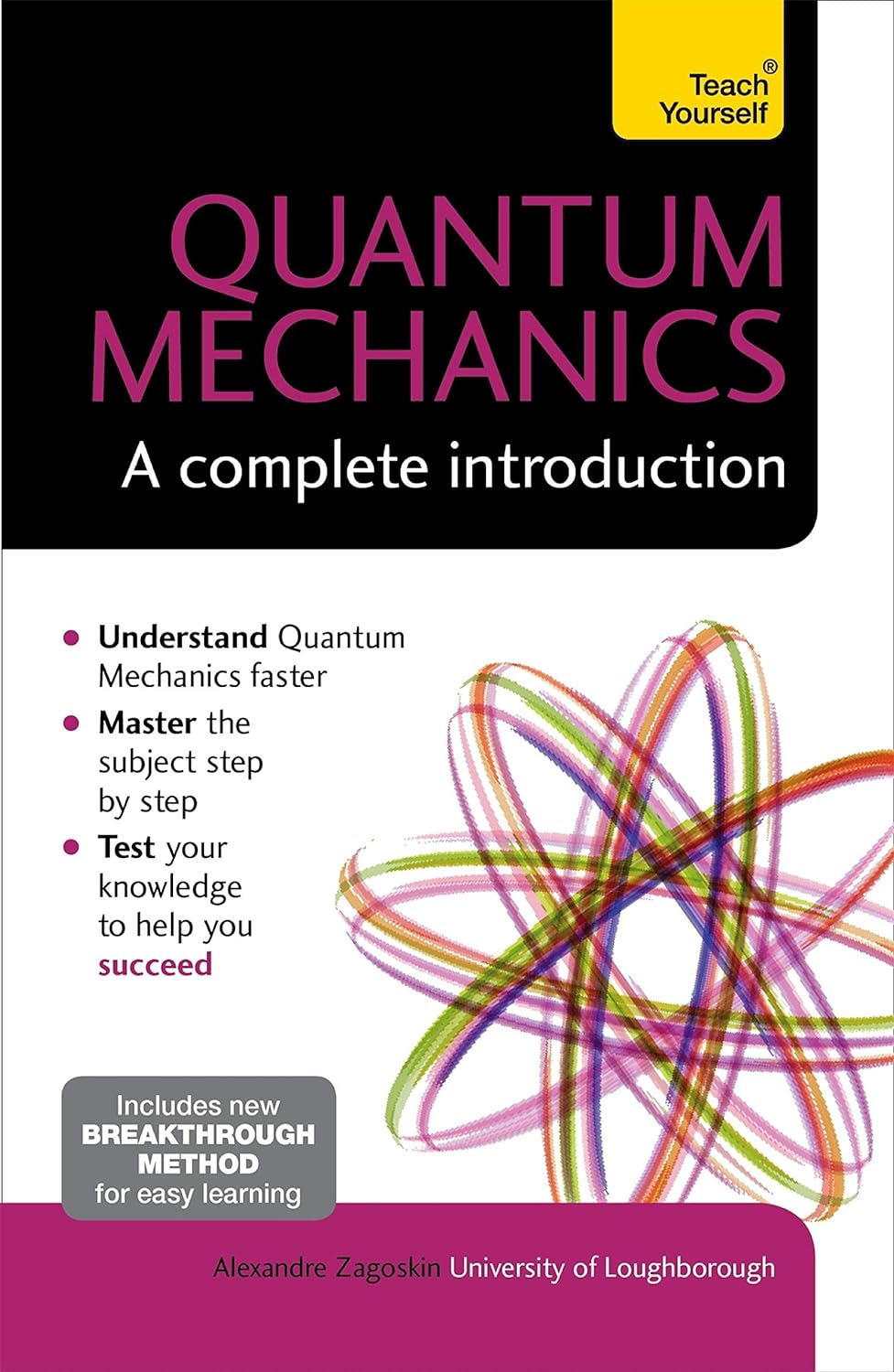
- E3) Alexandre Zagoskin - “Quantum Mechanics: A complete introduction” (2015)
Alternatively:
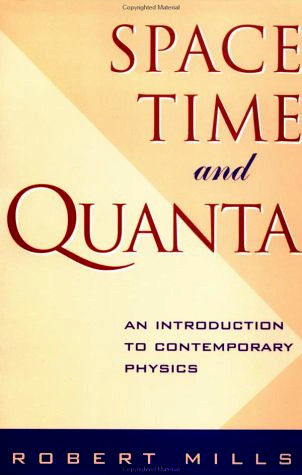
- E4) Robert Mills - “Space Time and Quanta” - Part II Quantum Physics - (1994)
- E5) Eyvind Wichmann - “Berkeley Physics,” Vol. IV, “Quantum Physics.”
Leonard Susskind, Art Friedman - “Quantum Mechanics” (The Theoretical Minimum Vol. II) - (2015)
From the preface: " This is the definitive introduction to quantum mechanics. World-renowned physicist Leonard Susskind and data scientist Art Friedman give you the basic skills you need to tackle this notoriously difficult subject on your own. They provide clear and lively explanations of basic concepts, introduce the key fields of quantum mechanics, and include step-by-step exercises. To make a complex topic “as simple as possible, but no simpler,” this is a handy toolbox for amateur scientists that you won’t find anywhere else."
The original course is available online:
- Susskind’s Quantum Mechanics https://theoreticalminimum.com/courses/quantum-mechanics/2012/winter
Susskind’s other published volumes include:
- Theoretical Minimum: Classical Mechanics
- Theoretical Minimum: Special Relativity and Classical Field Theory
- Theoretical Minimum: General Relativity
- An Introduction to Black Holes, Information and the String Theory Revolution: The Holographic Universe
- The Black Hole War: My Battle with Stephen Hawking to Make the World Safe for Quantum Mechanics
Alexandre Zagoskin - “Teach Yourself Quantum Mechanics: A Complete Introduction” (2015)
A. Zagoskin ( https://www.lboro.ac.uk/departments/physics/staff/alexandre-zagoskin/). is an experienced Russian-born, naturalized English researcher, working on quantum engineering and superconducting devices, with more than 120 articles published in refereed journals. He directed the development of the first commercial quantum computer at D-Wave System Inc. Lecturer in Kharkov, Gothenburg, Vancouver, RIKEN, Un. Notre Dame, Loughborough, published two other textbooks, “Quantum Engineering: Theory and Design of Quantum Coherent Structures.” “Quantum Theory of Many-Body Systems.
R.P. Feynman, R. Leighton. M.Sands - Feynman’s Lectures on Physics III, Quantum Mechanics (Caltech)
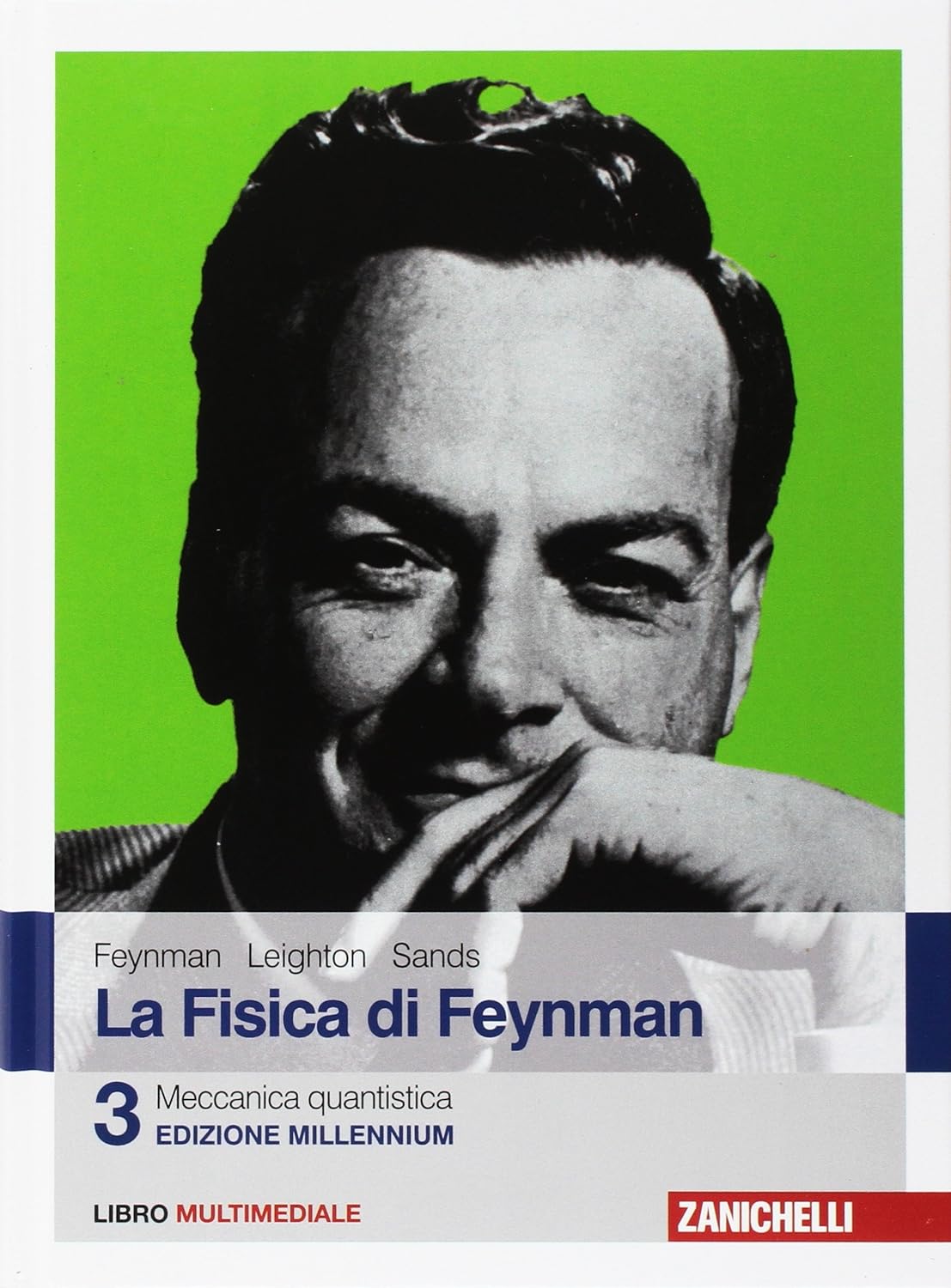
E3) Third volume of Nobel laureate Richard P. Feynman’s Introduction to Physics series. Also available in Italian (Zanichelli), the first edition (the one I own) is bilingual, with the Italian translation alongside the original text. Accessible to non-physicists, much more so than most other quantum physics books, because it does not require knowledge of advanced mathematics. In particular, it is not necessary to know partial differential equations, and what is needed is introduced time after time. The book begins with the wave-particle duality, and immediately shows that classical physics is not sufficient to describe electrons and photons. He continues with mental experiments around the double-slit experiment, the uncertainty principle, the relationship between the wave and particle point of view, quantization of energy, spin, the Stern-Gerlach experiment.
Robert Mills - Space Time and Quanta - Part II Quantum Physics - (1994)
E2) In the late 1980s, Prof. Mills, emeritus of theoretical physics at The Ohio State University, and author with Chen Ning Yang of a seminal paper on symmetries in the physics of fundamental forces, accepted a challenge, an educational experiment. To explain modern physics to people who had never before taken a real physics course: college freshmen, recent high school graduates. The basic idea was that young people who were motivated and fascinated by seeing the most advanced discoveries in the most rapidly advancing fields would enroll in science faculties en masse, and become more enthusiastically engaged in the traditional courses of the early years (general physics, mechanics, thermodynamics, electromagnetism, waves,…) after seeing where they could go to the frontiers of research. Mills divided the first semester course into three mini-courses:
- I. Relativity (special and general, with a sprinkling of classical and statistical physics)
- II. Quantum Mechanics
- III. Particles and Force Fields
The scientist prepared the material assuming that the students knew high school math (algebra, analytic geometry, trigonometry,..) well enough, a little derivatives and integrals, but nothing more. In fact, he included a quick review of all the necessary prerequisites.
What we are interested in here is the second part: iI QUANTUM PHYSICS
- the strange behavior of waves and particles 10
- waves
- the atom with only one electron (hydrogen)
- historical principles (correspondence, uncertainty, complementarity, overlap) 13
- schrodinger’s wave equation 14
- the role of the observer 15
- photons
It is a somewhat complementary exposition to that of Susskind and Feynman, mills’ is more traditional and centered on the wave function, and useful if you want to continue for example on Griffiths.
The fortunate turning point in Robert Lawrence Mills’ life came in 1954 at age 27, when he was finishing his PhD in theoretical physics at Columbia University in New York. Having obtained a small place to finish his thesis at Brookhaven National Lab, Long Island, they put him in a small room with two desks along with a young 32-year-old Chinese man, a former student and favorite assistant of Enrico Fermi in Chicago, Chen-Ning Yang. Immediately the two plunged into working together on the possibility of extending to interactions between elementary particles a property of Maxwell’s equations, and of QED, known as local “gauge” invariance, first proposed 40 years earlier by the brilliant German mathematical physicist Hermann Weyl (see, e.g., “Space Time Matter”). A few months later (October) the article by Yang and Mills came out in Physical Review in which they proposed quantum field theories with noncommutative gauge invariance (in which the outcome depends on the order of the symmetry transformations), one of the main building blocks of the standard model of elementary particles, fundamental interactions, and modern high-energy physics. Three years later Yang flew to Stockholm to receive the Nobel Prize in Physics for the discovery of non-conservation of parity in weak interactions (more or less in simple words, “the microscopic world is different when reflected through a mirror”), proposed in collaboration with compatriot Tsung Dao Lee, and immediately verified in the spectacular experiment of Chien-shiung Wu (“Madame Wu”), also from China. Many years later, in the late 1980s, Prof. Mills, emeritus of theoretical physics at The Ohio State University, accepted another challenge, an educational experiment. Explaining modern physics to people who had never before taken a real physics course: college freshmen, recent high school graduates.
A few excluded
Clearly such a list could be endless, or nearly so. Among the works narrowly excluded were some general physics texts dealing with modern physics:
E5) Ramamurti Shankar " Fundamentals of Physics II: Electromagnetism, Waves and Quantum Mechanics.” is a general physics course for the two-year undergraduate science program, completely free online in the Open Yale Courses initiative. The third and final part of the second year is a very clear and concise introduction to quantum mechanics, an alternative to Robert Mills’ volume. Shankar’s course materials are available online.
- https://oyc.yale.edu/physics/phys-201 Lectures 19-25 https://oyc.yale.edu/physics/phys-201/lecture-19
E6) A.C. Phillips - “Qauntum Mechanics.” Further alternative, at about the same level as Shankar, in the “Manchester Physics Series”
WHERE TO CONTINUE
After studying either the Susskind or Mills, or Zagoskin (or Shankar, or Penrose and Feynman) the layman will be able to delve deeper into the subject in more advanced texts, even at the graduate level.
Free online courses
Susskind’s Quantum Mechanics Part of a course in theoretical physics for the layman by Leonard Susskind, Stanford University https://theoreticalminimum.com/courses/quantum-mechanics/2012/winter
Feynman’s Lectures on Physics III, Quantum Mechanics Feynman’s general physics course at CalTech https://www.feynmanlectures.caltech.edu/III_toc.html
Barak Shoshani, Thinking Quantum . Lectures on Quantum Theory(for very advanced high school students) Notes from a summer school at Perimeter Institute for genius students who arrived from high schools. https://arxiv.org/abs/1803.07098v3
David Tong’s Lectures on Quantum Mechanics (DAMTP Cambridge) Courses by Prof. David Tong of the DAMTP (Department of Applied Mathematics and Theoretical Physics) at the University of Cambridge have covered every aspect of theoretical physics, from classical mechanics to string theory. This is the course devoted to quantum mechanics. http://www.damtp.cam.ac.uk/user/tong/quantum.html
Allan Adams, Quantum Physics, MIT Open CourseWare https://ocw.mit.edu/courses/8-04-quantum-physics-i-spring-2013/video_galleries/lecture-videos/ and the lectures, with slightly different approaches, by Barton Zwiebach https://ocw.mit.edu/courses/8-04-quantum-physics-i-spring-2016/pages/video-lectures/part-1 MIT (Massascheutes Institute of Technology) provides a lot of educational materials, videos and course transcripts, as part of the Open CourseWare program.
University-level texts
Harry Paul - “Introduction to Quantum Theory” (2008)
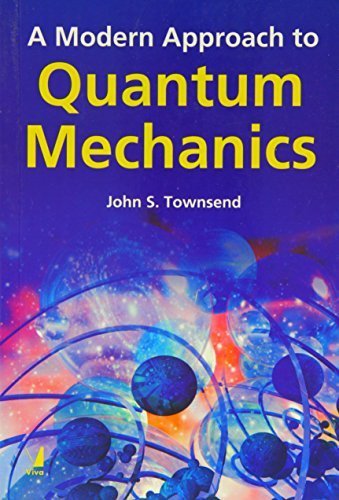
John Townsend - “A modern approach to Quantum Mechanics” (2013)
Jochen Rau - “Quantum Theory: An Information Processing Approach” (2021).
David J. Griffiths, Darrel F. Schroeter - “An introduction to Quantum Mechanics,” 3rd ed. (2018)
It focuses on Schrodinger’s equation and wave mechanics rather than on vector and Hilbert spaces. But in general for a college text I prefer the setting of Townsend, Paul and Rau’s texts.
Changes and additions to the new edition of this classic textbook include a new chapter on symmetries, new problems and examples, improved explanations, more numerical problems to work on a computer, new applications to solid-state physics, and a consolidated treatment of time-dependent problems.
More insights into the history and philosophy of quantum mechanics
- F1) Abraham Pais - Inward Bound: Of forces and matter in physical world. (1988)
- F2) Stephen G. Brush - Statistical Physics and the Atomic Theory of Matter: From Boyle and Newton to Landau and Onsager. (1983)
- F3) Max Jammer - The Conceptual Development of Quantum Mechanics.(1966)
- F4) Adam Becker - What Is Real?: The Unfinished Quest for the Meaning of Quantum Physics (2019)
Abraham Pais - Inward Bound: Of forces and matter in physical world (1988)
From the back cover: " The history of physics since the discovery of X-rays would be an overly simplistic description of this book. It certainly covers the historical period from the late 19th century to the present day, but the book attempts to tell not only what has happened in the last hundred years or so, but why it happened that way, as it did for those scientists involved and as those who, at the time, seemed like a series of bizarre or unrelated events, now, in hindsight, they present a logical narrative. the author, himself a notable physicist and author of the successful Subtle is the Lord (Clarendon Press 1982), was personally involved in many of the developments described in the book. As was the case with his previous book, we get unique insights into the world of large and small physics from this important work."
Stephen G. Brush - Statistical Physics and the Atomic Theory of Matter From Boyle and Newton to Landau and Onsager (1983)
- I. EARLY DEVELOPMENT OF THE KINETIC THEORY OF GASES
- II. IRREVERSIBILITY AND INDETERMINISM
- III. THE QUANTUM THEORY
- IV. QUANTUM MECHANICAL PROPERTIES OF MATTER
- V. INTERATOMIC FORCES AND THE CHEMICAL BOND
- VI. PHASE TRANSITIONS AND THE CRITICAL POINT
- VII. STATISTICAL MECHANICS AND THE PHILOSOPHY OF SCIENCE
- VIII. OUTSTANDING PROBLEMS IN STATISTICAL PHYSICS
Of the history of quantum theories are covered among others: Max Planck on indeterminism, The new century: Brownian motion, Einstein’s theories and randomness, the interior of the atom, The Heisenberg uncertainty principle, Planck and Einstein’s hypotheses, linear spectra, Bohr’s model of the atom, wave mechanics, the philosophy of quantum mechanics, specific heats of solids and gases, absolute entropy and chemical reactions: ionization and stellar atmospheres, zero-point energy, Bose-Einstein statistics, Fermi-Dirac statistics, quantum degeneracy in stars, magnetic properties of electron gas, superconductivity, superfluidity of liquid helium, the quantum theory of scattering forces, The true law of interatomic force?, The exclusion principle and the electronic structure of atoms
Max Jammer - The Conceptual Development of Quantum Mechanics (1966)
From the presentation:
« lo scopo di questo studio è di tracciare lo sviluppo concettuale della meccanica quantistica dal suo inizio alla sua formulazione come teoria completa della fisica atomica, dal suo status di ipotesi ad hoc piuttosto dubbia a quello di imponente struttura intellettuale di grande bellezza. Tutte le grandi teorie nella storia della fisica, dalla meccanica aristotelica e le sue elaborazioni medievali, attraverso la dinamica newtoniana con le sue modifiche lagrangiane o hamiltoniane, all’elettrodinamica maxwelliana e alla relatività einsteiniana, sono state ripetutamente sottoposte a indagini storico-critiche e le loro fondamenta concettuali sono state analizzate a fondo. Ma finora non è apparso alcuno studio accademico completo sullo sviluppo concettuale della meccanica quantistica. Le pubblicazioni popolari o semiscientifiche disponibili sfiorano appena la superficie dell’argomento. E le poche, sebbene importanti. I saggi sull’argomento scritti dagli stessi ideatori della teoria sono per lo più limitati a
The great classics ( advanced level) on Quantum Mechanics
Lev Landau, Eugenj Lifsits - Theoretical Physics vol. 3 - “Quantum Mechanics.”
Paul A.M. Dirac - “Principles of Quantum Mechanics.”
Jun John Sakurai, Jim Napolitano - “Modern Quantum Mechanics.”
John Von Neumann - “Mathematical Foundations of Quantum Mechanics.”
Richard Feynman, Albert Hibbs, Daniel Styer (ed.) - “Quantum Mechanics and Path Integrals” - new ed. (2010)
David Bohm - “Quantum Theory” - new ed. (1989)
Claude Cohen-Tannoudji, Bernard Diu, Franck Laloe, Susan Reid Hemley - “Quantum Mechanics” Vol. I-III
Steven Weinberg - “Lectures on Quantum Mechanics” (2015)
Gennaro Auletta, Mauro Fortunato, Giorgio Parisi - Quantum Mechanics - (2009)
John S. Bell - “Sayable and Unspeakable in Quantum Mechanics.”
Jagdish Mehra, Helmut Rechenberg - The Historical Development of Quantum Theory - Vol. 1-6 ( 1982-2001)
Alternative readings
Frederick A. Kaempffer - Concepts in Quantum Mechanics - (1965)
Jim Baggott - The Quantum Cookbook.Mathematical Recipes for the Foundations of Quantum Mechanics (2020)
Leslie E. Ballantine - Quantum Mechanics: A Modern Development - 2nd ed. (2014)
Jochen Pade - Quantum Mechanics for Pedestrians - 2e, (2018)
- Vol.1 (Fundamentals)
- Vol.2 (Applications & Extensions)
ONLINE ARTICLES
Wikipedia of course contains many articles on QM https://it.wikipedia.org/wiki/Portale:Quantistica
Interesting articles are published as entries in the online Treccani Encyclopedia.
- (Alain Aspect, Steve Grangier “Experimental Verifications of Quantum Mechanics” in Encyclopedia of the Twentieth Century Treccani https://www.treccani.it/enciclopedia/meccanica-quantistica-verifiche-sperimentali_%28Enciclopedia-del-Novecento%29/
- Sergio Caprara, Fabio Sciarrino “Quantum Mechanics” in Encyclopedia Italiana - IX Appendix (2015). https://www.treccani.it/enciclopedia/meccanica-quantistica_res-12dcca9b-dd84-11e6-add6-00271042e8d9_%28Enciclopedia-Italiana%29/
Very comprehensive is the treatment of the fundamentals of quantum mechanics in the Stanford Encyclopedia of Philosophy (SEP) with dozens of dedicated articles: https://plato.stanford.edu/entries/qm/
- Ismael, Jenann, “Quantum Mechanics.”
- Faye, Jan, “Copenhagen Interpretation of Quantum Mechanics.”
- Ghirardi, Giancarlo and Angelo Bassi, “Collapse Theories.”
- Goldstein, Sheldon, “Bohmian Mechanics.”
- Vaidman, Lev, “Many-Worlds Interpretation of Quantum Mechanics.”
- Lombardi, Olimpia and Dennis Dieks, “Modal Interpretations of Quantum Mechanics.”
- Bacciagaluppi, Guido, “The Role of Decoherence in Quantum Mechanics.”
- Laudisa, Federico and Carlo Rovelli, “Relational Quantum Mechanics.”
- Bub, Jeffrey, “Quantum Entanglement and Information.”
- Wilce, Alexander, “Quantum Logic and Probability Theory,
- Myrvold, Wayne, “Philosophical Issues in Quantum Theory.”
- Myrvold, Wayne, Marco Genovese, and Abner Shimony, “Bell’s Theorem,
On ArXiv there are many interesting papers e.g.:
- Maximilian Schlosshauer - Decoherence, the measurement problem, and interpretations of quantum mechanics (2005) https://arxiv.org/abs/quant-ph/0312059
- Klaus Hornberger - Introduction to decoherence theory (2008) https://arxiv.org/abs/quant-ph/0612118
- Pablo Echenique-Robba - Shut up and let me think. Or why you should work on the foundations of quantum mechanics as much as you please (2013) https://arxiv.org/abs/1308.5619
- H.D.Zeh - The Wave Function: It or Bit? https://arxiv.org/abs/quant-ph/0204088v2
- H.D.Zeh - What is achieved by decoherence? https://arxiv.org/abs/quant-ph/9610014v1