Quantum mechanics for all: a first look

This is a page of suggestions for a scientific culture for all, and we humbly want to contribute our own selection of readings. A very partial list, influenced by personal taste, of popular books we know, with preference for those also translated into Italian, which we have already reviewed or will review in detail in the future. It might be useful to someone since so much hogwash is also being published on this topic, both in bookstores and on the web and social media. In fact, today it is fashionable to slip in the word “quantum” or “quantum” to support the worst of the “new age” philosophy rubbish, the pseudosciences passed off as medicine and psychology, all kinds of fluff.
A - What is quantum physics and what is it for?
What impact does it have in science, technology and everyday life?
- A1) Jim Al-Khalili - The Physics of the Perplexed: The Incredible World of Quantum - (2014)
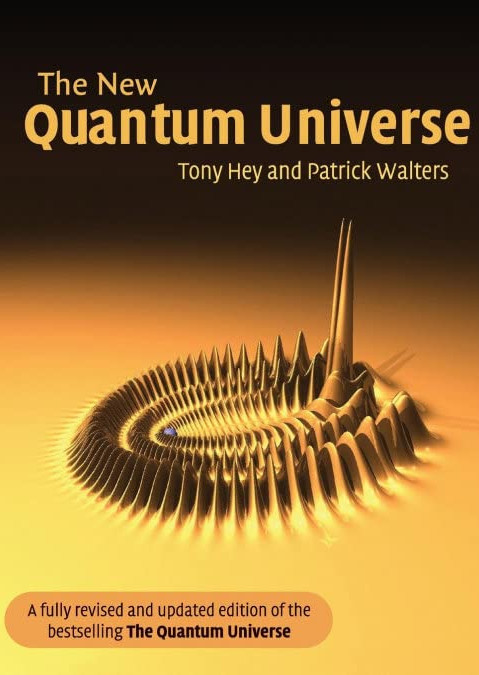
- A2) Tony Hey, Patrick Walters - The New Quantum Universe - 2nd ed. (2003)
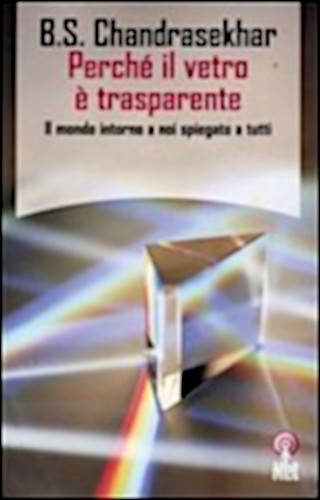
- A3) Bellur S. Chandrasekhar - Why is glass transparent? - (2000)
- A4) Lars Jaeger - The Second Quantum Revolution: From Entanglement to Quantum Computing and Other Super-Technologies (2019)
For a concise answer, see also the dedicated chapters in the general introductions to physics for all:
- Jim Al-Khalili - The World According to Physics - (2020), ch. 5 “The Quantum World” and ch. 9 “Useful Physics”
- Sean Carroll - The Biggest Ideas in the Universe - Collection 2 Books Set (I - Space, Time and Motion & II - Quanta and Fields) vol. II, ch. 1-3: “Wave Functions,” “Measurement,” “Entanglement” (not yet translated)
- Richard P. Feynman, Six Easy Pieces , ch. 6 “Quantum Behavior.”
- Richard P. Feynman, The Physical Law , ch. 6 “Probability and indeterminacy: nature from the perspective of quantum mechanics.”
B - Can essential concepts be explained without knowing more advanced mathematics?
- B1) Daniel F. Styer - The Strange World of Quantum Mechanics - (2005)
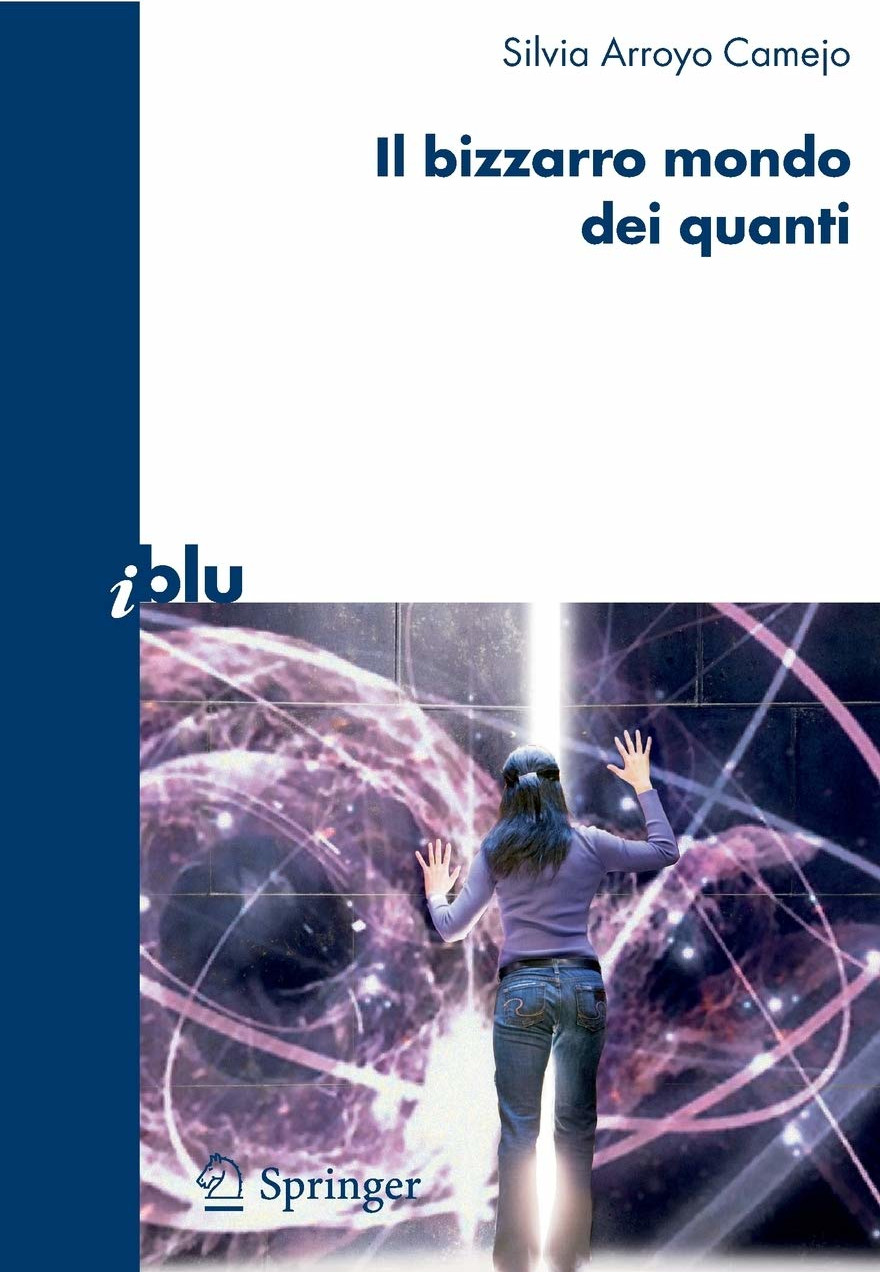
- B2) Silvia Arroyo Camejo - The Bizarre Quantum World - (2008)
As supplementary readings, for a broader perspective, the popular essays by two very great scientists, Nobel Laureates 1965 (Feynman) and 2020 (Penrose):
- B3) Richard Feynman - QED. The strange theory of light and matter - (2010)
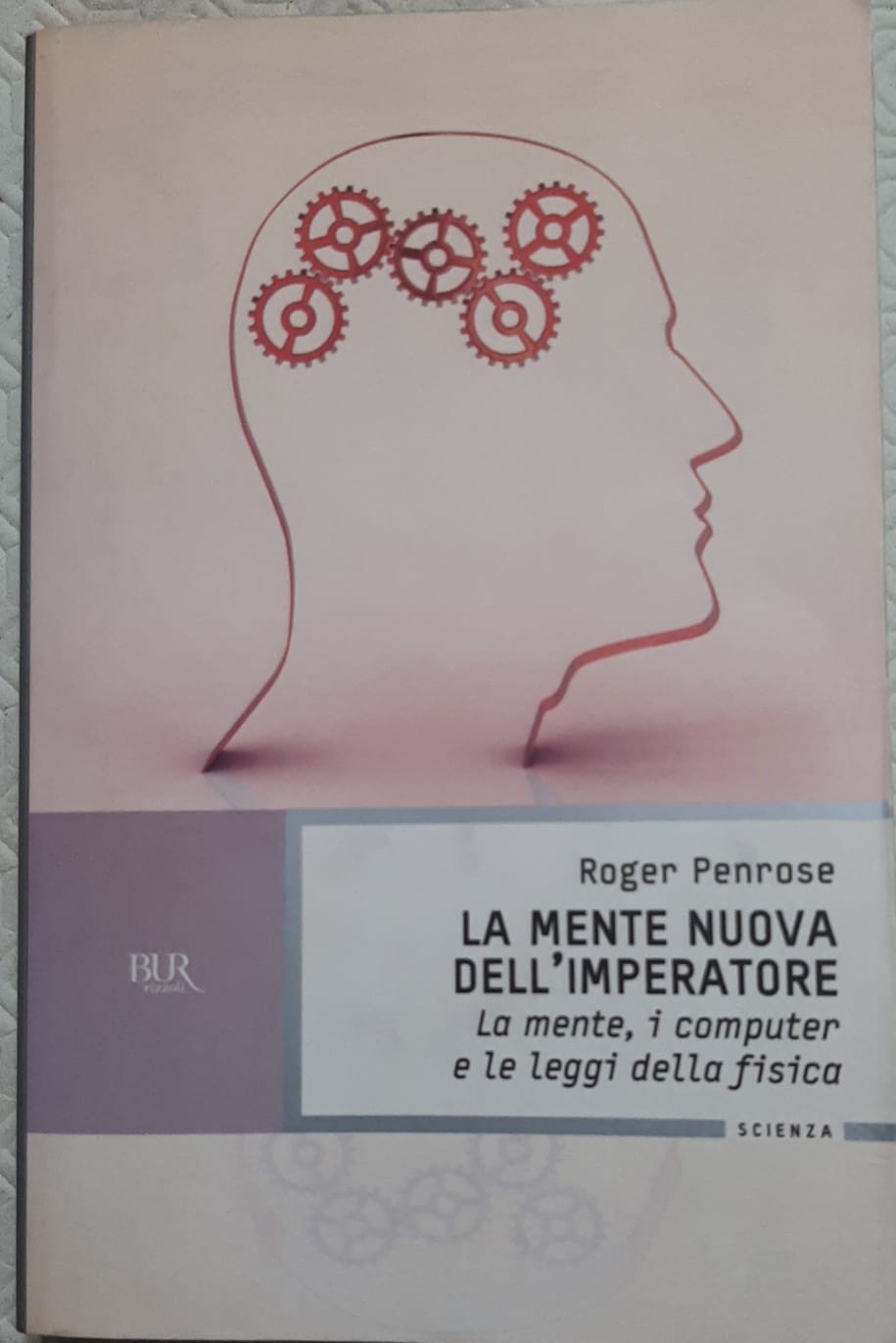
- B4) Roger Penrose - The Emperor’s New Mind. The human mind, computers and the laws of physics . (2000)
But by Feynman one should read a little bit of everything, especially the appropriate chapters of
- Richard P. Feynman - “Physical Law,” ch. 6 " Probability and indeterminacy: nature from the perspective of quantum mechanics"
- Richard P. Feynman - “Six Easy Pieces,” ch. 6 “Quantum Behavior.” One might also try reading Roger Penrose’s voluminous “Road to Reality.” b5) Roger Penrose - “The Road to Reality. The Fundamental Laws of the Universe” (2018) the relationship between the very high quality of the work and the low price of the paperback edition is unrivaled
C - Why doesn’t anyone understand quantum physics?
- C1) John S. Bell - Speakable and Unspeakable in Quantum Mechanics. Collected Papers on Quantum Philosophy - 2nd ed. (2004) transl.it. “Sayable and Unspeakable in Quantum Mechanics” - (2010)
- C2) Giancarlo Ghirardi - A look at God’s cards. The questions that modern science poses to man. - (2015)
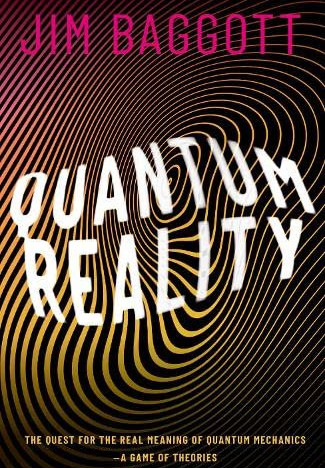
- C3) Jim Baggott - Quantum Reality: The Quest for the Real Meaning of Quantum Mechanics - a Game of Theories- (2020)
Other readings on interpretations of quantum mechanics and its philosophical implications:
- C4) David Z. Albert - Quantum Mechanics and Common Sense - (2000)
- C5) David Deutsch - The Plot of Reality - (1997)
- C6) N. David Mermin - Boojums All the Way through. Communicating Science in a Prosaic Age - (1990)
D - The history of quantum theory
for a quick first introduction to the history of quantum theory there are:
- a dozen pages of Daniel Styer’s “The Strange World of Quantum Mechanics” as an appendix
- two dozen pages by Alain Aspect, “From Einstein, Bohr, Schrödinger to Bohr and Feynman. A New Quantum Revolution.” transl. it. “Einstein and the Quantum Revolutions” (ignoble price for a few pages)
For a more complete account, but still accessible to laymen:
- D1) George Gamow - Thirty Years That Shook Physics - (1996)
- Q2) Manjit Kumar - Quantum. from Einstein to Bohr, quantum theory, a new idea of reality. (2019)
- D3) Jim Baggott - The Quantum Story - A history in 40 moments (2016)
What quantum theory studies and what it is for
Tony Hey, Patrick Walters - The New Quantum Universe - 2nd ed. (2003)
A1) Hey and Walters’ volume (first edition 1987 but completely rewritten in the second edition of 2003) is a simple and accessible introduction to quantum physics, without any mathematical formula, but complete, concise and authoritative. in about 300 pages, with lots of illustrations, there are all the essential ideas, historical development, paradoxes such as EPR and Schrodinger’s cat, applications in solid physics (semiconductors …), condensed matter physics (superconductors, superfluids, …), astrophysics, nuclear physics, particle physics, electronics, nanotechnology, quantum computers, and even a chapter on impact in popular culture and science fiction. Richard Feynman wrote the preface and commented on the text by his former collaborator Tony Hey as follows, " Quantum Universe has a quote from me in every chapter, but nevertheless it is a damn fine book."
Bellur Chandrasekhar - Because glass is transparent - 2000
Jim Al-Khalili - The physics of the perplexed. The incredible world of the quanta - (2020)
A3) After more than a century, physics has now become accustomed to coming to terms with the implications of quantum mechanics, because this counterintuitive theory has proven to be so solid and perfectly adequate to describe the phenomena of matter. But those who have not been fortunate enough to study physics are rather puzzled, and they are right to be. In what sense can a particle go through two parts at the same time? What exactly does it mean that a body behaves simultaneously as a wave of the sea and as a speck of matter? But really, is the cat in the box at the same time alive-and-dead until we look at it? It looks like Star Trek and instead it is the real world, although there is teleportation as well. this is the ideal subject matter for a popularizer extraordinaire like Al-Khalili, who is perfectly at ease with the implied irony of the material he recounts. The great British physicist once again grapples with the paradoxes of physics, being accompanied with short, enlightening essays by such exceptional guests as Anton Zeilinger, Frank Close and Paul Davies.
Alternatives in Italian for all readers
Alternative readings for all in our language are for example:
- George Gamow, Russell Stannard - The New World of Mr.Tompkins. Adventures of a Curious Man in the World of Physics
- Leon Lederman, Christoper Hill - Quantum physics for poets
- Anton Zeilinger - The veil of Einstein. the new world of quantum physics (2022)
- Anton Zeilinger - The dance of photons. from Einstein to quantum teleportation (2019)
- David Deutsch - The Plot of Reality (1997)
- Joanne Baker - 50 big ideas in quantum physics
- New Scientist - The quantum world. The bizarre theory behind reality.
- Giorgio Chinnici - Democritus’ Dream: The atom from antiquity to quantum mechanics.
- Giorgio Chinnici - Look at chance. the secret mechanisms of the quantum world
- Enrico Gazzola - The quantum world. Misinterpretations, improbable theories and quantum hoaxes.
- Catalina Oana Curceanu - From Black Holes to Hadrontherapy: A Journey in Modern Physics (2013)
B - The small volumes by Feynman, Styer and Arroyo Camejo are three gems of popular science, all three of which should be read before any more “serious” introduction to quantum theory.
Daniel F. Styer - The strange world of quantum mechanics - (2005)
B1) The most complex and difficult concepts of quantum mechanics are expounded in a very clear, rigorous and accurate manner, without abstruse formalisms and no physics or mathematics prerequisites. Physicist Dan Styer, a professor at Oberlin College, explains the difference between classical and quantum behavior with the discovery of the electron spin, the Stern Gerlach experiment, the concept of probability, the paradox of state projections, the Einstein-Podolski-Rosen paradox, wave interference in optics and amplitudes in quantum mechanics, the meaning of the wave function,quantum cryptography.Also not to be missed is the brief history of quantum mechanics in the appendix. This and the sister book on special relativity (Really Understanding Relativity) are two examples of very high disclosure, accessible to everyone who knows at least compulsory school mathematics, but also useful to undergraduate students of the subject who wonder what the heck they are calculating. A read that requires commitment because of the depth of the concepts, even in the absence of formulas. Daniel Styer also edited the new edition of Feynman & Hibbs’ classic textbook, “Quantum Mechanics and Path Integrals,” on the qM formulation with integrals on Feynman paths.
Dan Styer The Strange World of Quantum Mechanics https://www.oberlin.edu/physics/dstyer/StrangeQM/
Dan Styer home at Oberlin https://www.oberlin.edu/physics/dstyer/
Silvia Arroyo Camejo - The Bizarre Quantum World - (2008)
B2) This is an incredible book because it was written by a teenager who was still in high school, but as accurate and authoritative as if it had been written by an expert professor of quantum mechanics. Indeed, such a complex subject is treated with great clarity, without simplifications and errors, which perhaps haunt the popular works of famous scientists and academics. a comprehensive exposition of the fundamentals of the subject, without sacrificing formulas and data when they are indispensable, which fills the gap between the popular literature, which normally avoids any mathematical formula, and the specialized literature, well-stuffed, on the other hand, with very advanced mathematics. Obviously, no mathematics is used here other than that familiar to a 17-year-old secondary school student (algebra, analytic geometry, trigonometric functions, hints on derivatives and integrals), and in any case, calculus is not essential to follow the exposition. The subject is treated in its historical development, without neglecting Bell’s inequality, research on the foundations for which the 2022 Nobel Prize was awarded, and hints at future developments both theoretical (quantum gravity) and applied (quantum computing). “A book I wish I had when I was 17,” writes in the afterword the author, who has since grown up, obtained a PhD in theoretical physics and works as a researcher for Siemens.
Richard Feynman - QED. The strange theory of light and matter - (2010)
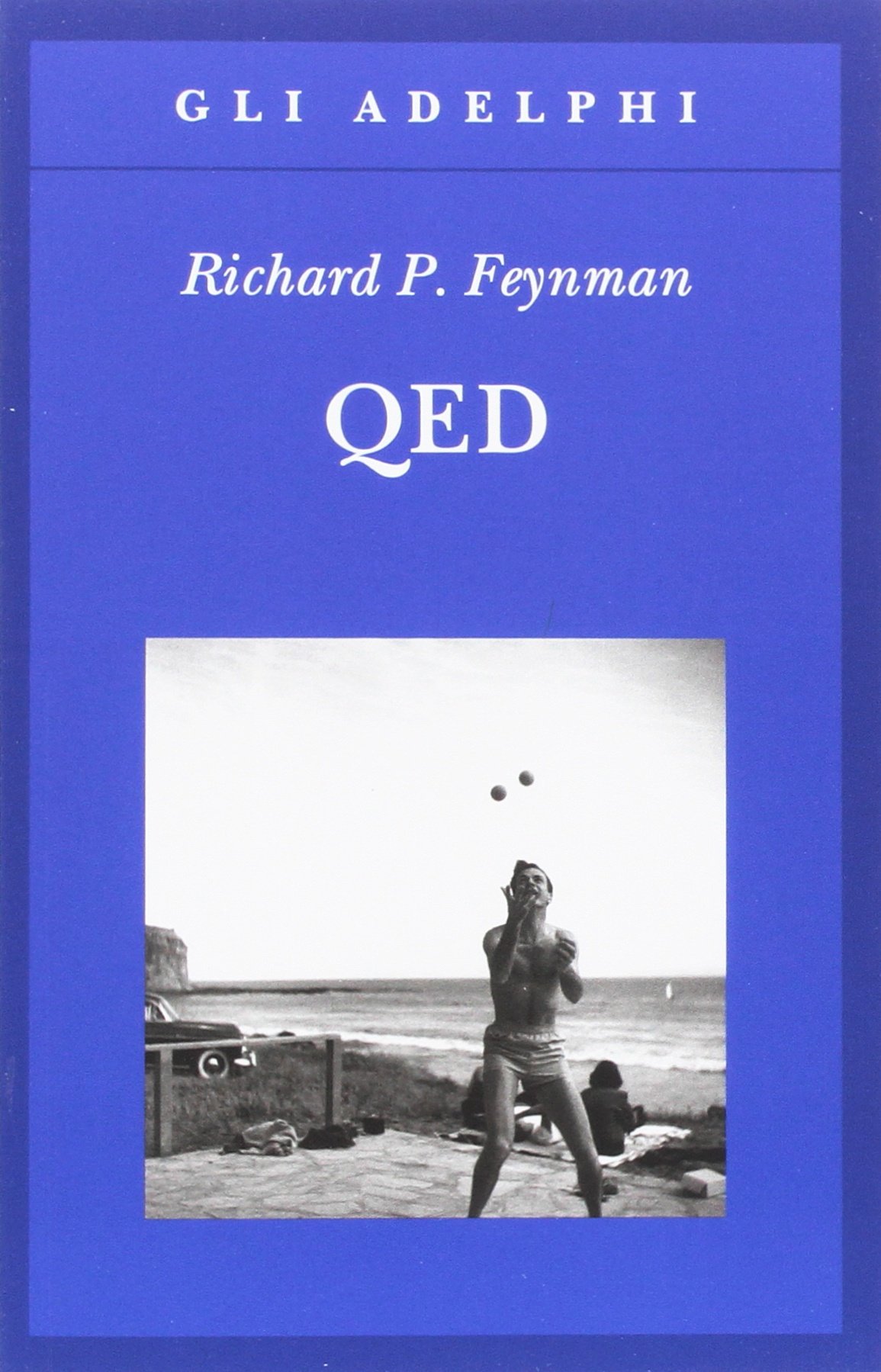
B3) There is little to say about one of the greatest geniuses of the 20th century; his extraordinary ability to explain the most complex things is well known even outside the circle of insiders. “QED: The Strange Theory of Light and Matter” is a small masterpiece in which Feynman expounds to students and the man in the street on the research that won him the Nobel Prize, and on quantum field theory in general. It is based on a series of lectures and lectures given around 1980 at UCLA in Los Angeles. it is divided into four parts:
- Introduction
- Photons: particles of light
- Electrons and their interactions
- Undefined conclusions From the preface: “Many scientific “vulgarizations” achieve an apparent simplicity only at the cost of describing something other than what they claim to describe, and indeed significantly distorted. Respect for the subject matter did not allow us to do the same. Through many hours of discussion we strove to achieve maximum simplicity and transparency, while renouncing any compromise that would lead to a distortion of the truth.”
In addition to these three:
Roger Penrose - “The Emperor’s New Mind: The Mind, Computers and the Laws of Physics.”
John S. Bell - Sayable and Unspeakable in Quantum Mechanics
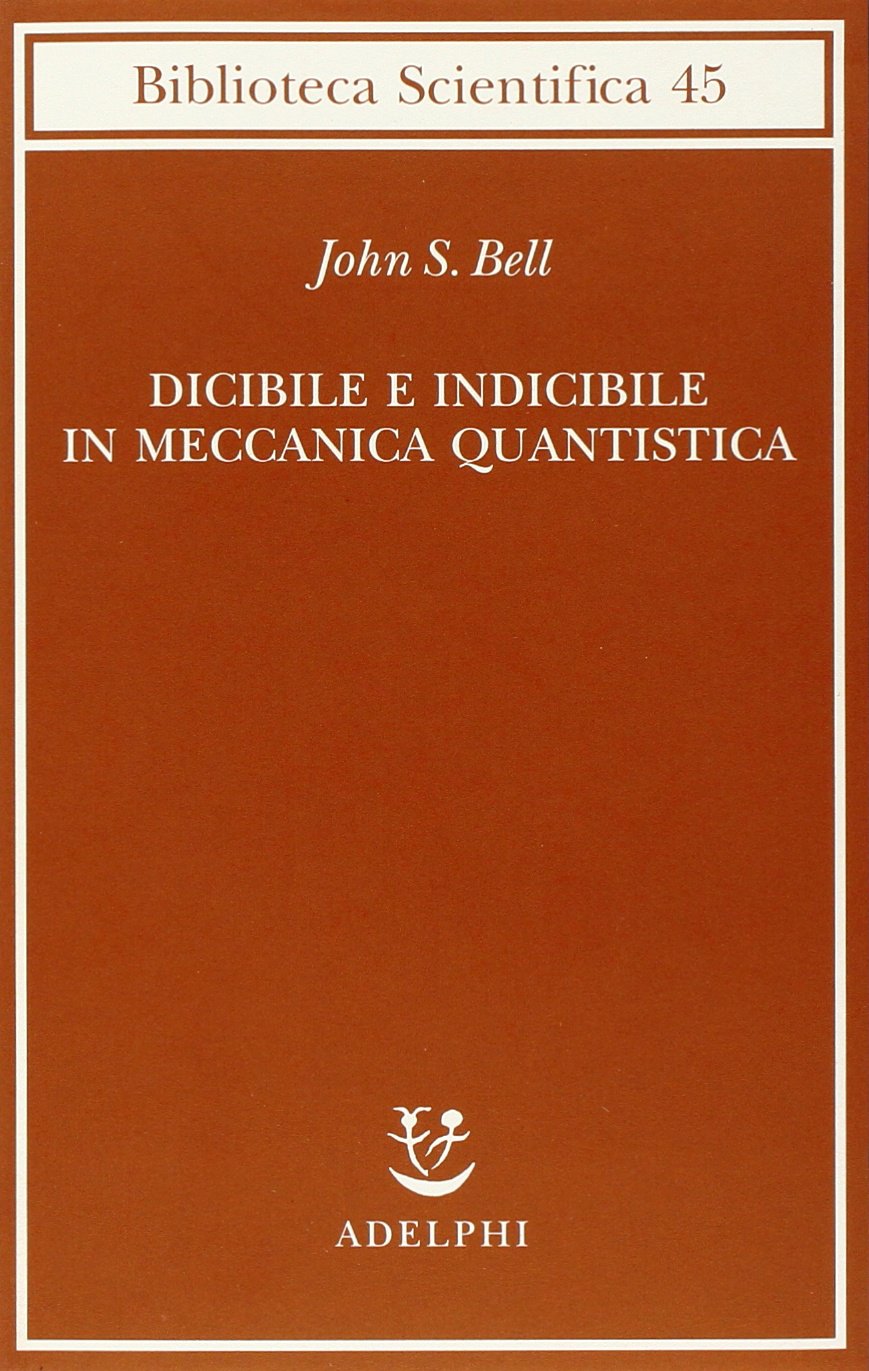
The collection of John Stewart Bell’s seminal contributions on quantum physics and philosophy from 1960 to about 1990, when the brilliant Northern Irish theoretical physicist passed away prematurely, just days before the announcement of the Nobel Prize to which he was a candidate. Not all the essays contained are intended for specialists. The common reader can read the introductory essay by Nobel laureate Aspect:
- Alain Aspect -John Bell and the second quantum revolution
and Bell’s essays, in different order from the chronological order of the book:
- Six possible worlds of quantum mechanics
- sayable and unspeakable in quantum mechanics
- bertlmann’s socks and the nature of reality 16
- the Einstein-Podolski-Rosen Experiments 10
Dall’inizio degli anni Cinquanta fino alla morte, avvenuta nel 1990, Bell ha dedicato gran parte dei suoi studi - oggi considerati fra i più decisivi del secolo scorso - ai fondamenti della meccanica quantistica. Nel 1987 la quasi totalità dei suoi lavori di contenuto fondazionale è stata raccolta in questo libro, divenuto ormai una pietra miliare nel campo. Bell ha infatti riaperto il problema che soggiace a tutti gli altri: quale realtà possiamo attribuire ai mattoni microscopici che costituiscono la materia? Un problema che si pose per la prima volta con urgenza nei primi due decenni del Novecento, allorché i fisici furono costretti dai fatti sperimentali a constatare che alla materia microscopica non si poteva attribuire uno specifico “dove” e che la logica a essa applicabile cozzava violentemente con il senso comune. A questo stato di cose reagì Einstein, che insieme a Podolsky e Rosen tradusse lo strano comportamento previsto per le particelle microscopiche in un apparente paradosso insito nella t
Giancarlo Ghirardi - A look at God’s cards. The questions modern science poses to man. - (2015)
Jim Baggott - Quantum Reality: The Quest for the Real Meaning of Quantum Mechanics - a Game of Theories- (2020)
N. David Mermin - Boojums All the Way through. Communicating Science in a Prosaic Age - (1990)
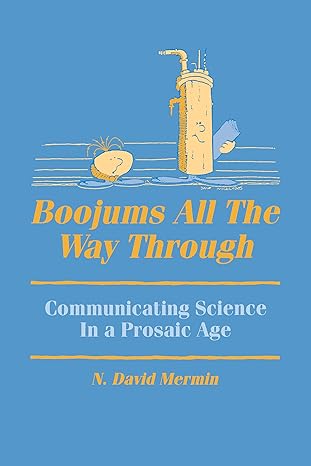
A collection of popular articles by David Mermin, some of which also appeared in Physics Today. The second part, “Quantum Theory,” contains the original of “Shut up and compute!!!” phrase falsely attributed to Feynman who never said it:
- Quantum mysteries for anyone
- Can you help your team tonight by watching on TV? .
- Spooky actions at a distance: mysteries of the quantum theory
- A bolt from the blue: the Einstein-Podolsky-Rosen paradox
- The philosophical writings of Niels Bohr
- The great quantum muddle
- What’s wrong with this pillow? https://pubs.aip.org/physicstoday/article/42/4/9/405689/What-s-Wrong-with-this-Pillow (“Shut up and compute!”) See also by David Mermin:
- Is the moon there when nobody looks? Reality and quantum theory - Physics Today 38, 4, 38 (1985) https://pubs.aip.org/physicstoday/article/38/4/38/434993/Is-the-Moon-There-When-Nobody-Looks-Reality-and https://doi.org/10.1063/1.880968
- Could Feynman Have Said This? - Physics Today 57, 5, 10 (2004) https://doi.org/10.1063/1.1768652
David Deutsch - The Plot of Reality - (1997)
Modern physics’ search for the “theory of everything,” as seen through the critical eye of a leading researcher. In this essay of his, which appears in Italian translation at the same time as the English edition, Deutsch launches into a fascinating excursus on the ideas of reality and physical law as conceived by contemporary science.
La scienza moderna potrà mai giungere a una teoria unitaria che spieghi ogni aspetto della realtà? Sí, arguisce Deutsch, ma si tratterà di una teoria ben diversa da quella che gli scienziati attualmente immaginano: dobbiamo abbandonare l’idea della «teoria del tutto» – l’unificazione vagheggiata dalla fisica – e in generale ogni ipotesi riduzionistica o meccanicistica. Esistono già quattro teorie fondamentali che possono costituire i quattro «fili» della trama della realtà: la meccanica quantistica, la teoria dell’evoluzione, la teoria dell’universalità della computazione e l’epistemologia popperiana. Si tratta, a questo punto, di considerarle tutte insieme come vere spiegazioni e non come semplici strumenti di lavoro. Accettandone anche le affermazioni piú controintuitive – come il fatto che esistono infiniti universi paralleli, che nulla vieta i viaggi nel tempo, o che la realtà a cui abbiamo accesso è, tecnicamente, solo «virtuale» – possiamo giungere a una concezione unitaria fonda
David Z. Albert - Quantum Mechanics and Common Sense - (1992)
From the introduction: “What I am about to tell is a puzzling story. It is perhaps the most puzzling story that has ever emerged in the physical sciences since the 17th century. And it is also a true story.” so Albert begins this exciting investigation of his. In fact, as the basis of an everyday technology that includes the laser and the transistor, the “quantum of energy” is familiar even to the layman. However, quantum mechanics remains, in its conceptual foundations, an unsettling enigma. Viewed closely, the simplest quantum phenomena pose continuous challenges to logic and common sense, and whether Einstein’s discovery that space and time are in fact a deformable continuum took the world by surprise, the new mechanics, revealing an element of uncertainty and unpredictability at the bottom of things, was a real trauma, from which physics has never fully recovered: in the atomic microcosm, although Einstein disapproves, “God plays dice.”
And the way to the case is dangerously open. Such a twisting of the categories of the mind usually requires, to succeed acceptable, years of initiation. In an effort to minimize this internship, Albert literally makes us touch with his inimitable style, the paradoxical results into which the fundamental experiences of quantum mechanics result and the failure of any attempt to reconcile experimental observations with common sense. After an initial chapter devoted to the reader’s bewilderment, he wins the gamble of making accessible to the layman the fragment of mathematics necessary for the exposition of physical facts such as superposition, the measurement problem, the Einstein-Podolsky-Rosen paradox, the non-locality. And it offers a concrete tool for participating in one of the most fascinating adventures in science.
George Gamow - Thirty Years that Shook Physics. The History of Quantum Theory - (1996, 1st ed. 1966)
Manjit Kumar - Quantum: From Einstein to Bohr, quantum theory, a new idea of reality (2019)
Q3) From the back cover:
" With critical acumen and argumentative poignancy, Manjit Kumar places the discovery of quantum mechanics in the context of the great upheavals of the modern era and clearly and rigorously illustrates the evolutionary process of the new discipline, helping to understand the essential role played by thinkers and scientists sometimes overlooked. If “quantum theory” conjures up in most people’s minds the image of a mysterious, impenetrable science reserved for a few initiates, “Quantum” debunks this cliché, outlining in a compelling and thoroughly accessible manner the story of the fundamental scientific revolution that ushered in the golden age of physics and triggered the greatest and most fruitful intellectual debate of the 20th century. "
Jim Baggott - The Quantum Story - (2016)
F3) Let us mention another book by British quantum chemist Jim Baggott, author of numerous popular works, which we have also discussed in other posts (Origins, Mass, Farewell to Reality,…). Baggott chooses to tell the story of quantum theory by focusing on 40 key episodes, the subject of the volume’s 40 chapters. From Planck’s paper on blackbody radiation to the epilogue with the discovery of the Higgs boson.
from a review: " Almost everything we think we know about the nature of our world comes from a theory of physics. This theory was discovered and perfected in the first three decades of the twentieth century and became simply the most successful physical theory ever conceived. Its concepts underlie much of the twenty-first-century technology we have come to take for granted. But its success has come at a price, for at the same time it has completely undermined our ability to make sense of the world at the level of its most fundamental constituents.
Rejecting the fundamental elements of uncertainty and chance implicit in quantum theory, Albert Einstein once famously declared that “God does not play dice.” Niels Bohr claimed that anyone who is not shocked by the theory does not understand it. The charismatic American physicist Richard Feynman went further: he claimed that no one understands it.
This is quantum theory, and this book tells the story of it.
Jim Baggott presents a celebration of this marvelous but utterly bewildering theory, with a story told in forty episodes: significant moments of truth or turning points in the theory’s development. From its birth in the porcelain kilns used to study blackbody radiation in 1900, to the promise of stimulating new quantum phenomena that would be revealed by CERN’s Large Hadron Collider more than a hundred years later, this is the extraordinary story of the quantum world. "
A few popular online articles
S.Marcellini - “The quantum that makes physicists cry” https://smarcell1961.blogspot.com/2019/11/il-quantistico-che-fa-piangere-i-fisici.html
Marco Capogni - “The Discontinuity of Nature.” https://scienzapertutti.infn.it/percorsi-divulgativi-list/835-la-discontinuita-della-natura
Davide Meloni - “Quantum Mechanics.” https://scienzapertutti.infn.it/percorsi-divulgativi-list/835-la-discontinuita-della-natur
Peter Greco - “The interpretation of quantum mechanics.” https://ilbolive.unipd.it/it/news/linterpretazione-meccanica-quantistica
Riccardo Giustozzi - “The long road to the Nobel Prize: from the debate between Bohr and Einstein to the EPR paradox” https://scienzaelode.unicam.it/la-lunga-strada-verso-il-nobel-dal-dibattito-tra-bohr-ed-einstein-al-paradosso-epr
Riccardo Giustozzi - “The long road to the Nobel: from hidden variables to the Prize” https://scienzaelode.unicam.it/la-lunga-strada-verso-il-nobel-dalle-variabili-nascoste-al-premio
Asymmetries INFN magazine No. 33 “How Many: - Paola Verrucchi - “A Century of Wonder From the First to the Second Quantum Revolution” https://asimmetrie.it/un-secolo-di-meraviglia - Marco Genovese - “Entanglement At the Center of the Quantum World” https://asimmetrie.it/entanglement - Lorenzo Maccone - “A story of friendship? The measurement problem in quantum mechanics.” https://asimmetrie.it/una-storia-di-amicizia - Catalina Curceanu - “On the Plush Trails of Schrödinger’s Cat In Search of Possible Limits of Quantum Theory” https://asimmetrie.it/sulle-tracce-felpate-del-gatto-di-schroedinger - Federico Laudisa Radici, Contraria sunt complementa https://asimmetrie.it/as-radici-contraria-sunt-complementa
Asimmettrie magazine INFN #12 : gian Carlo Ghirardi - “Light: waves or particles? The photon, the emergence of a concept.” https://www.asimmetrie.it/index.php/component/content/article/163-luce-onde-o-particelle
M.Parriciatu - “Demystifying the Heisenberg Principle.” https://cinturadiorione.com/2022/04/14/demistificando-il-principio-di-heisenberg/
M.Parriciatu - “Yes but, in the end, what are ’these quantum numbers?” https://cinturadiorione.com/2022/10/16/si-ma-alla-fine-cosa-sono-sti-numeri-quantici/
M.Parriciatu - “Measurement in quantum mechanics.” https://cinturadiorione.com/2019/12/28/la-misurazione-in-meccanica-quantistica/
Nobel Prize - The quantised world https://web.archive.org/web/20171013040636/https://www.nobelprize.org/educational/physics/quantised_world/
A few online disclosure videos
Secrets of Quantum Physics (2017) Jim Al-Khalili professor of theoretical physics, traces the history of the most important, accurate and yet perplexing scientific theory ever: quantum physics. https://www.raiplay.it/programmi/isegretidellafisicaquantistica
Gianni Battimelli - Quantum Mechanics https://youtu.be/ky-55xzuTeQ
Vincenzo Barone - Quantum Mechanics https://youtu.be/CFrCcUn6OOo
Vittorio Lubiscz - Introduction to Quantum Mechanics https://www.youtube.com/playlist?list=PLCQ44gAvV-zv717KFgLVzo7sZh1DqohrP
Quantum Girl (Virginia Benzi) - The Copenhagen Interpretation https://youtu.be/5HlnPPQ_M8Q
Enrico Gazzola - “The Quantum World” https://youtu.be/GQmEHS9oFVw?si=eoOxkhfRaYgxUdRy
Children’s video by Dr.Quantum: