Mathematics and its history - Stillwell
JOHN STILLWELL - MATHEMATICS AND ITS HISTORY - 3rd ed. 2010
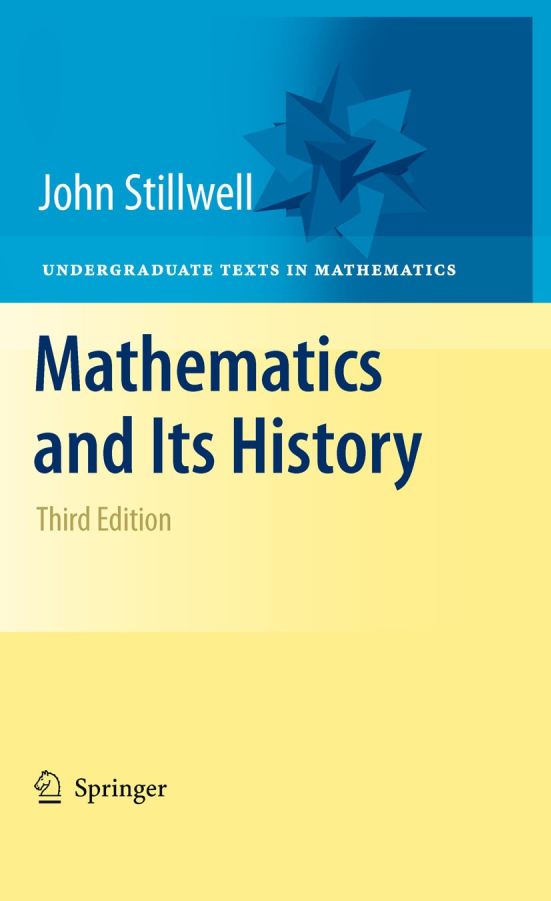
Of the prolific Australian mathematician I have already reviewed two volumes:
- “Elements of Mathematics: From Euclid to Gödel,” 2016
- “From Pythagoras to Turing. elements of philosophy in mathematics,” 2018 both review concepts in mathematics that one already encounters in high school, with a different point of view, and the second, in Italian, focuses on the most important ideas for the history of philosophy.
This is a much more ponderous and comprehensive volume of more than 650 pages, with a concise and unified exposition of mathematics, including early undergraduate mathematics, organized according to the historical development of the subject. The edition to consult is the fully revised third edition of 2010, avoid the earlier ones and the “concise” edition of 2020.
If only three references were to be given to answer the question “What is mathematics?” this would undoubtedly be one of the chosen works, along with “Mathematics Form and Function” (1989), by Saunders Mc Lane, and the monumental encyclopedic work “The Princeton Companion to Mathematics” (2008), edited by Timothy Gowers with contributions from more than two hundred leading contemporary mathematicians.
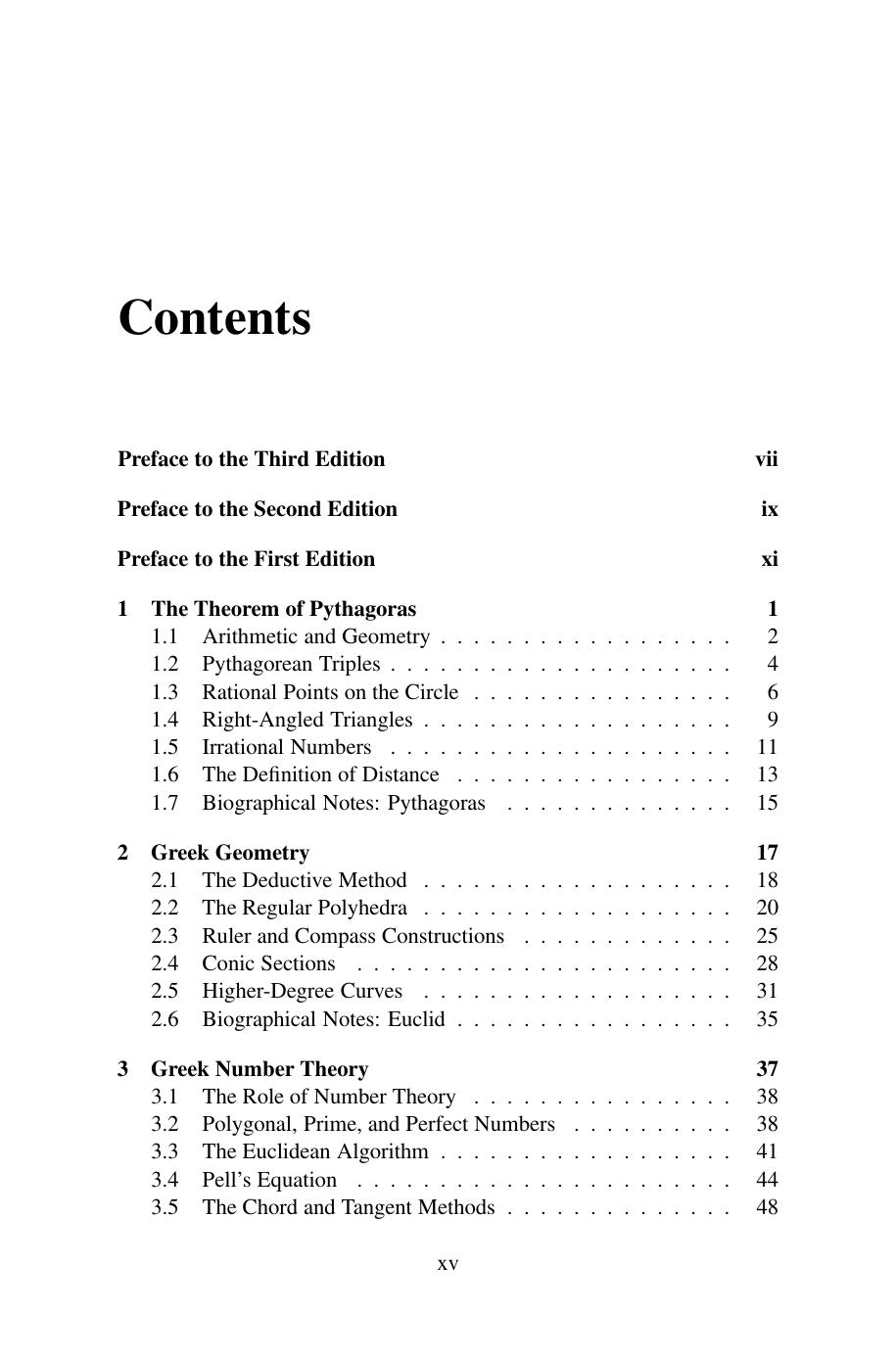
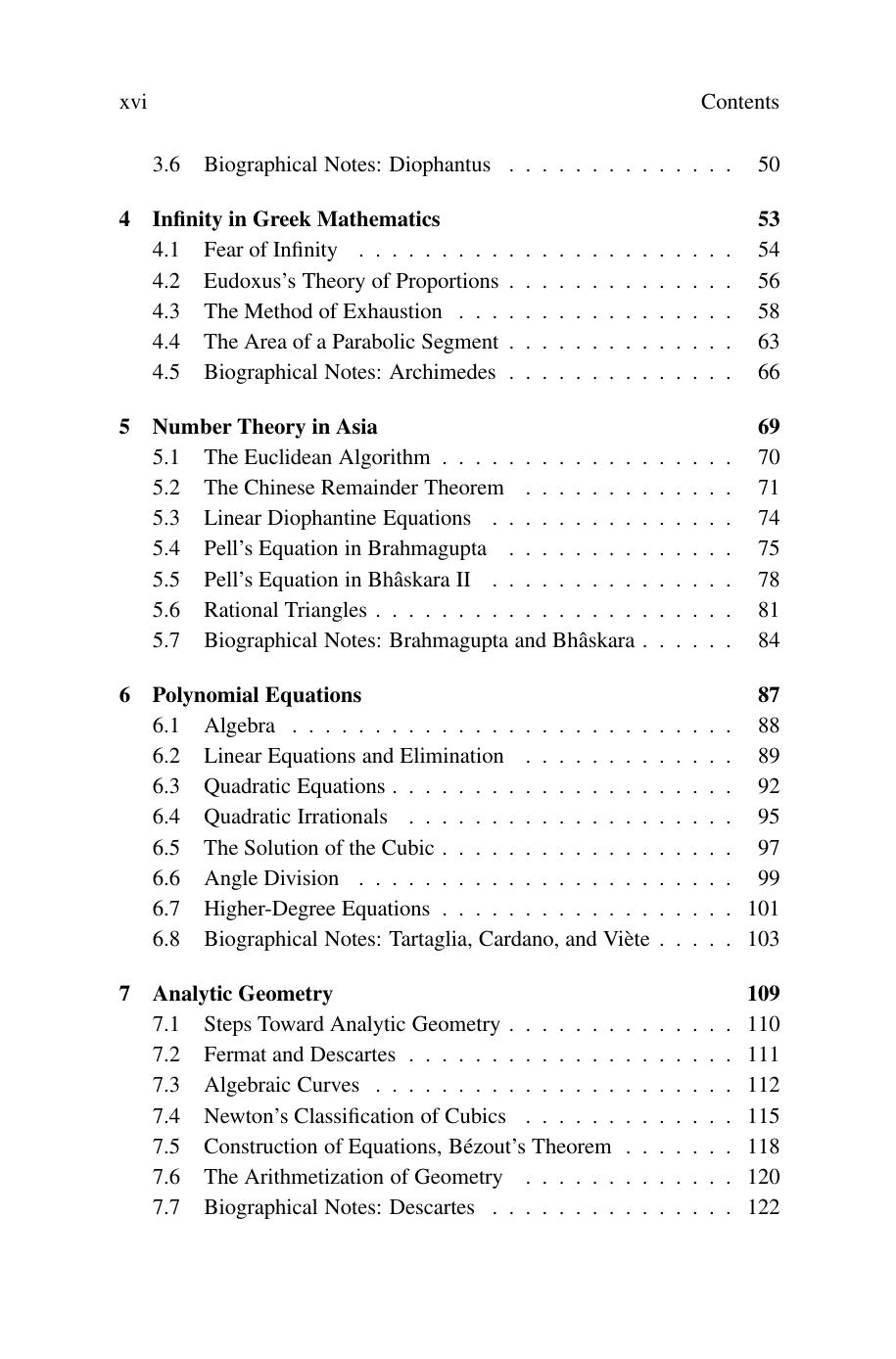
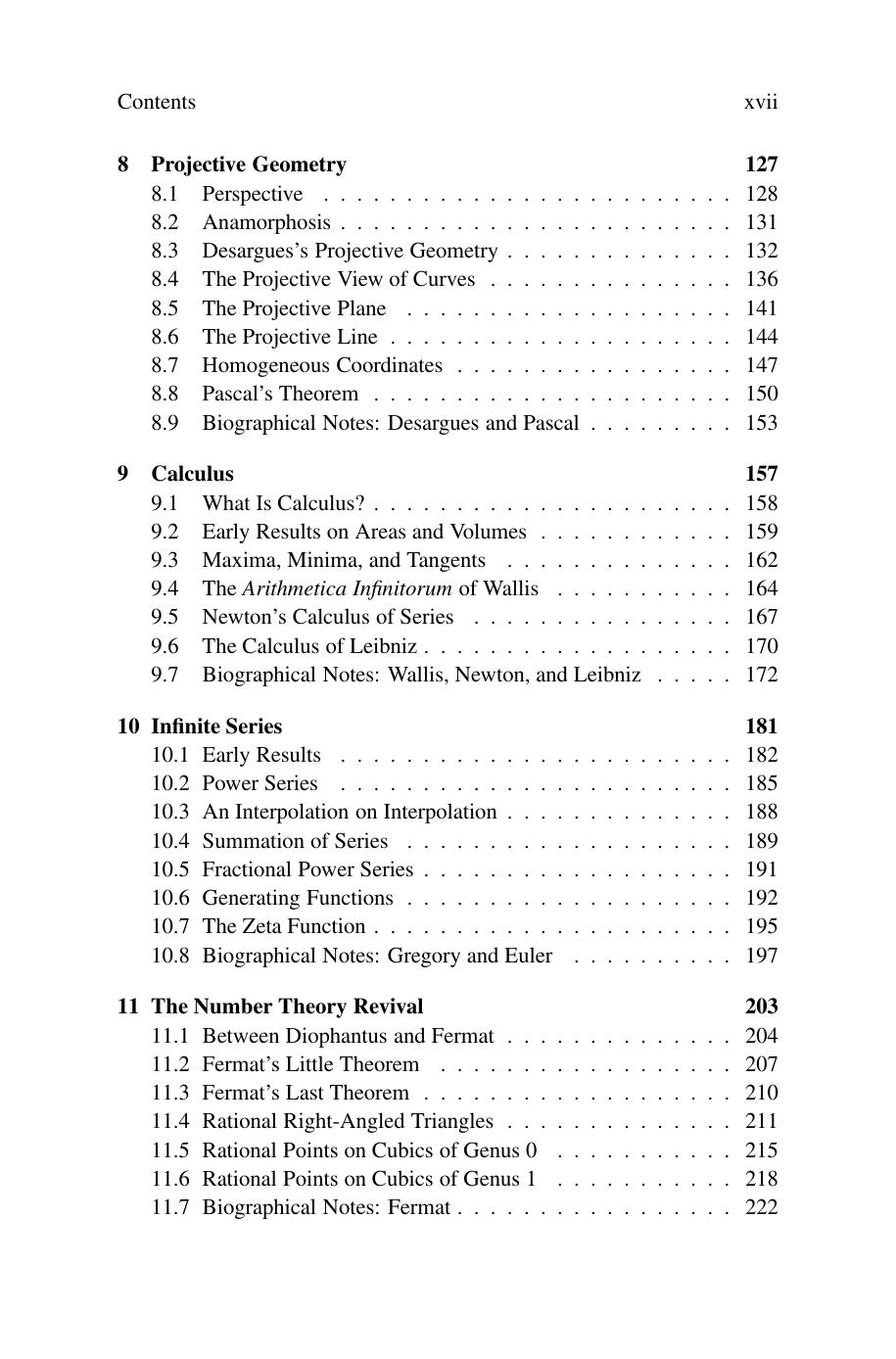
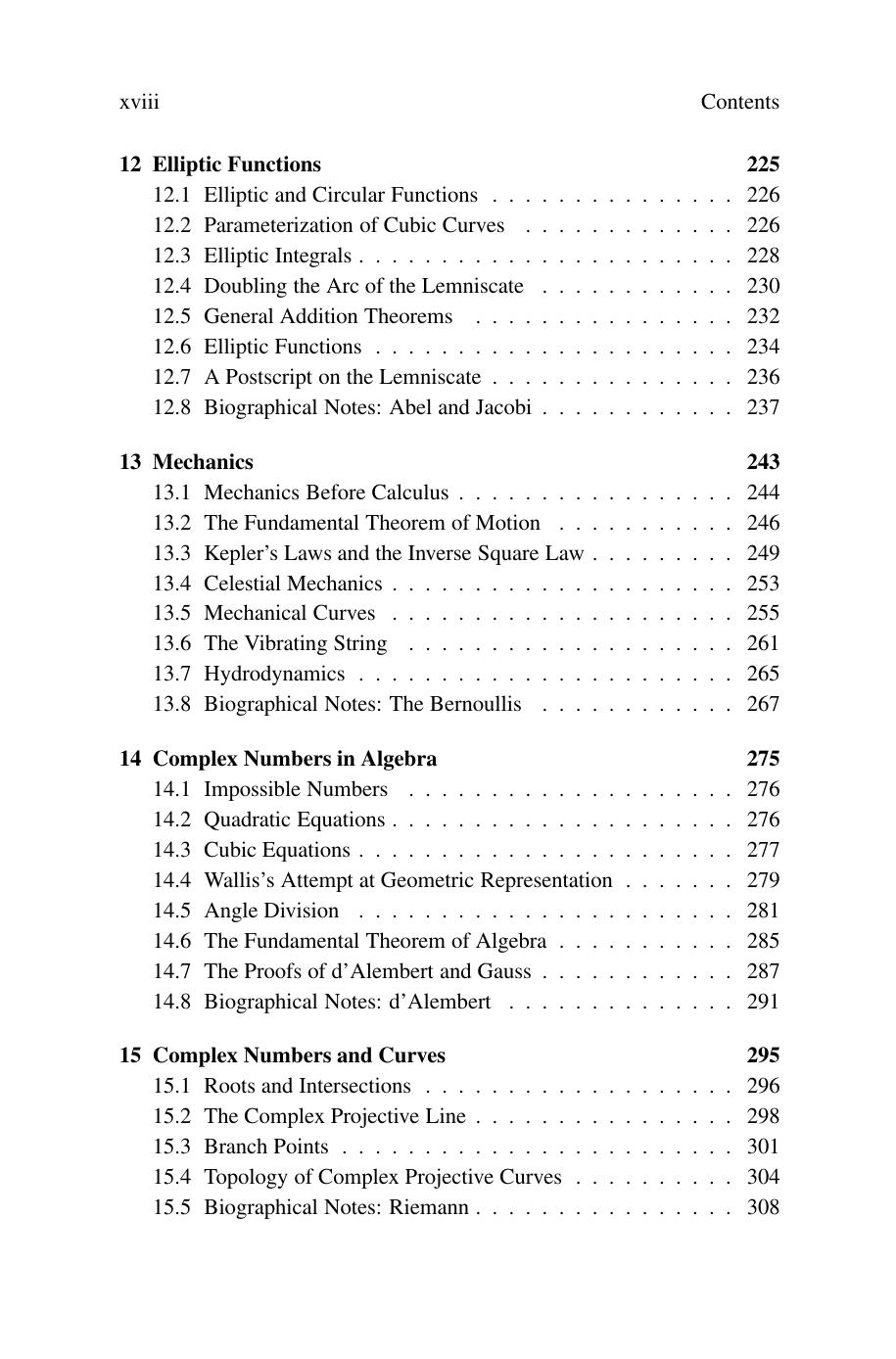
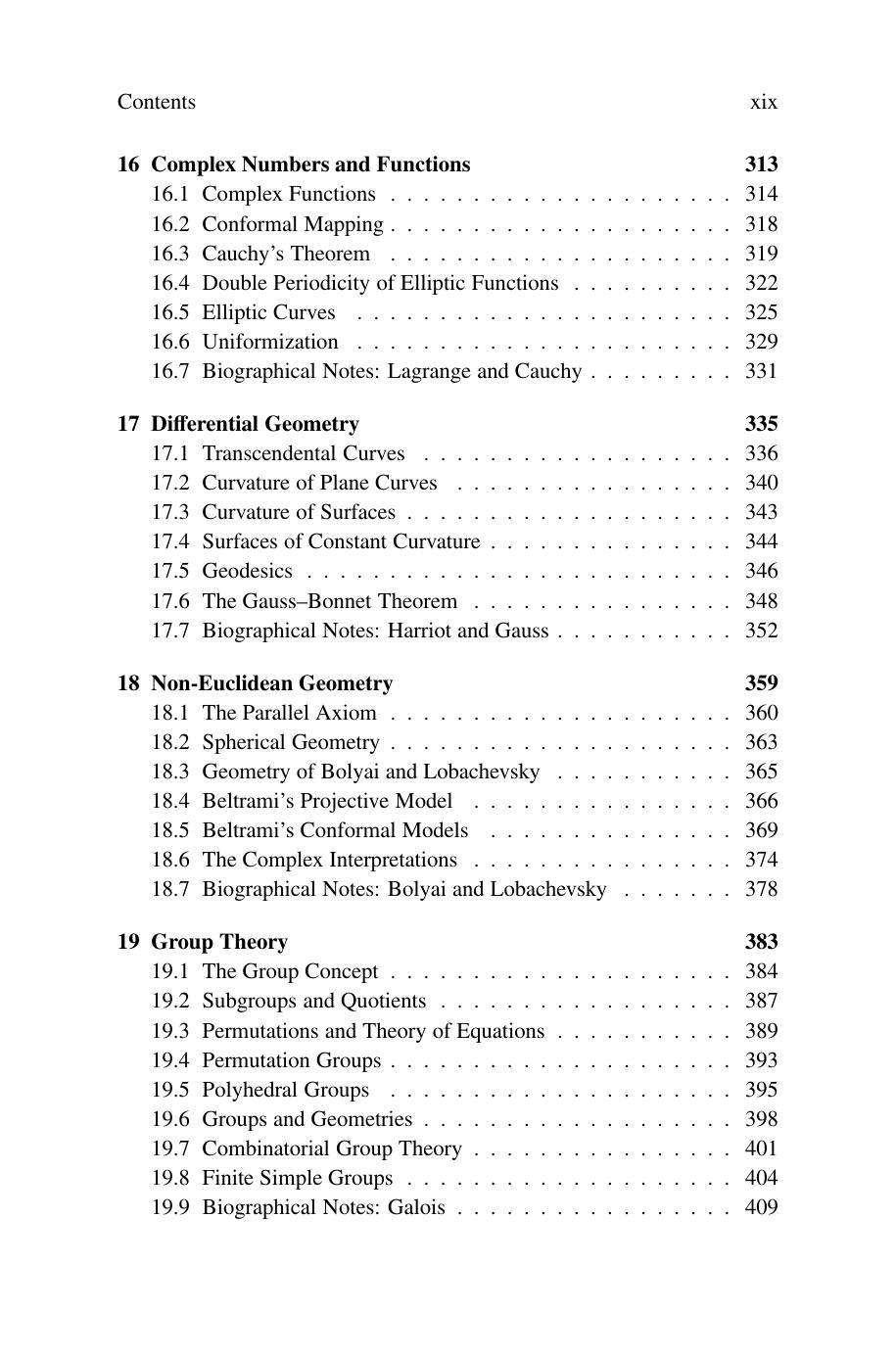
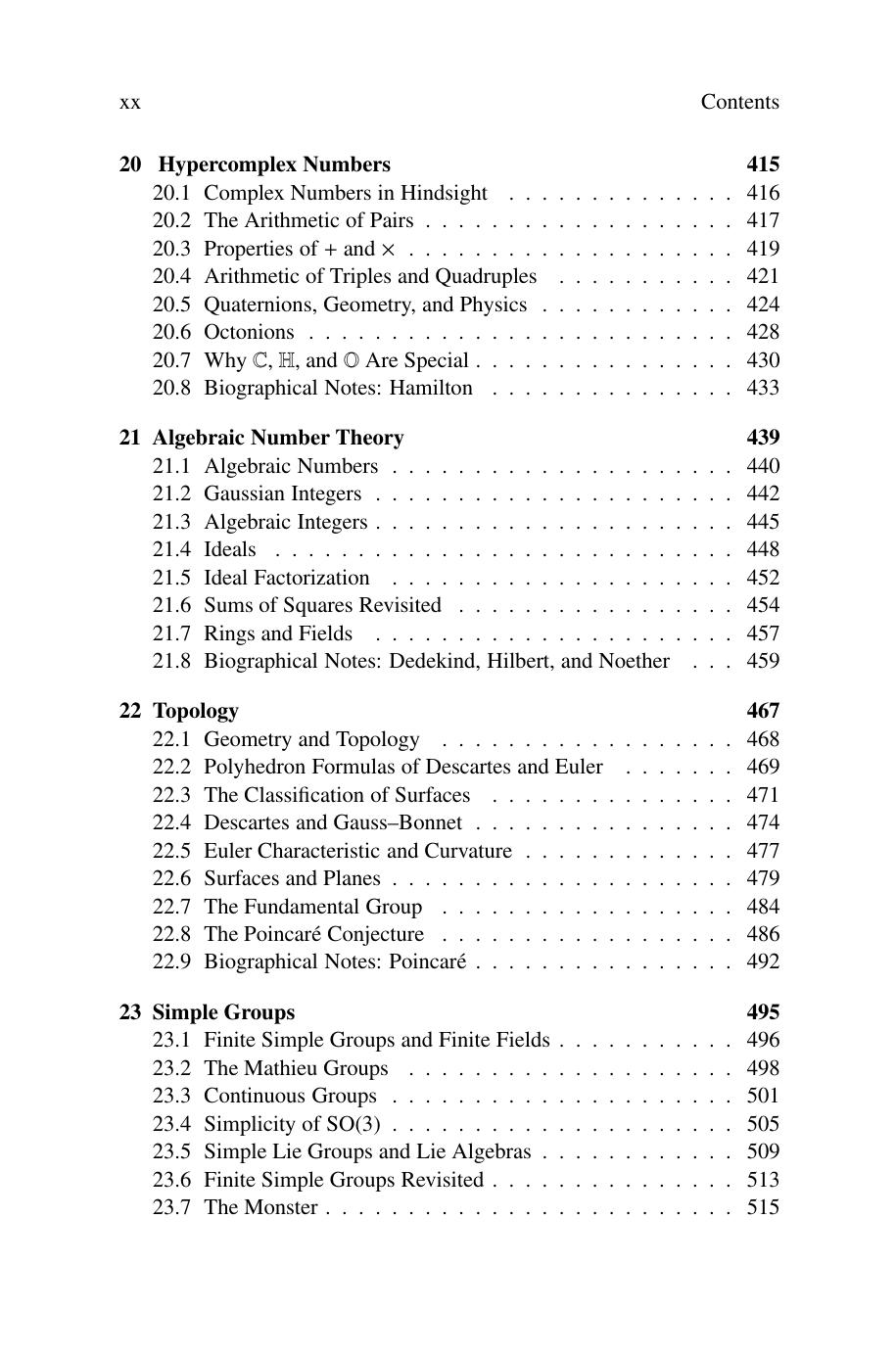
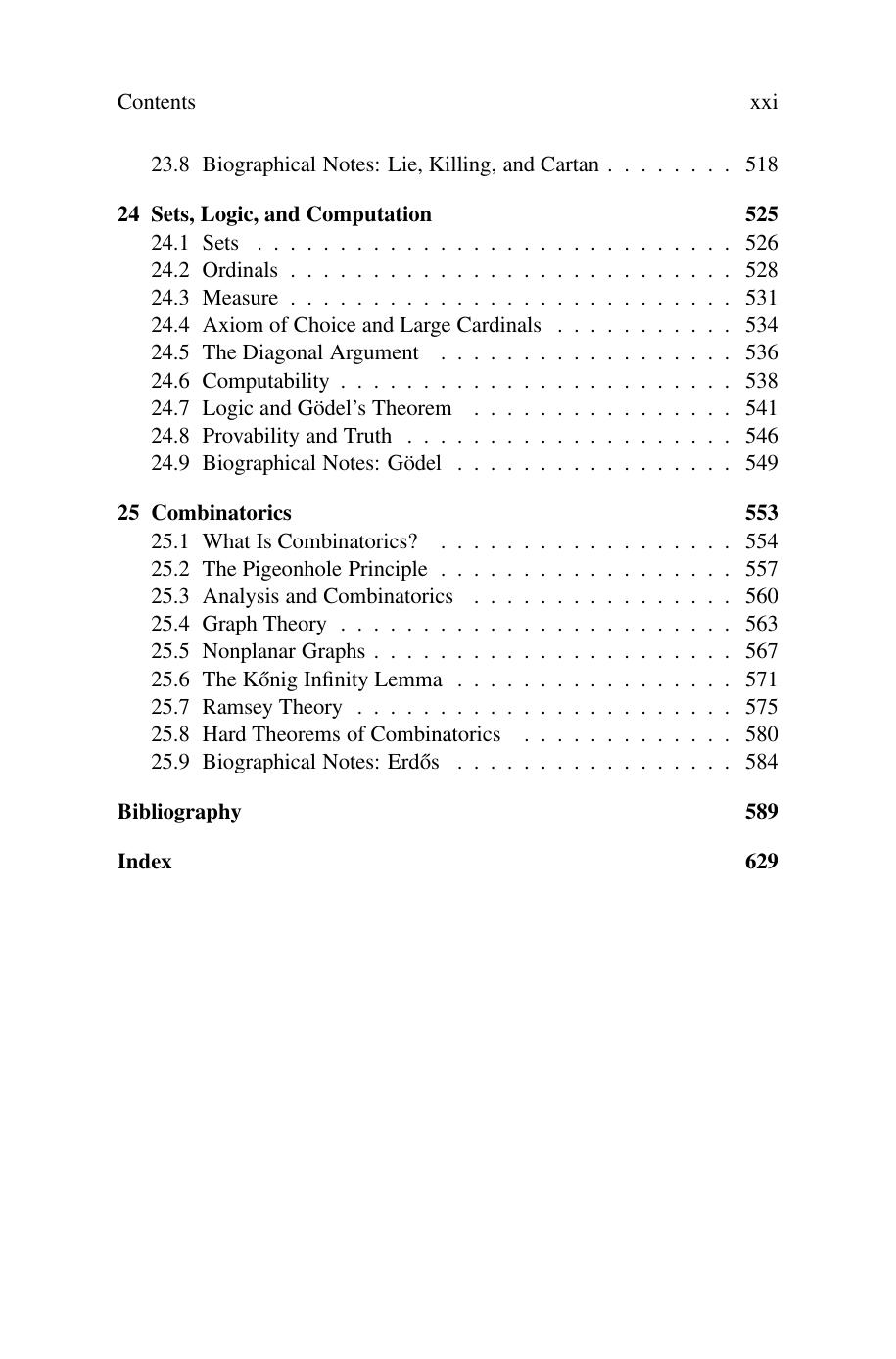
Topics include (see also the table of contents attached to the post):
- The Pythagorean theorem
- Greek geometry
- Greek number theory
- Infinity in Greek mathematics
- Number theory in Asia
- Polynomial equations
- Analytical geometry
- Projective geometry
- Calculation
- Endless series
- The revival of number theory
- Elliptic functions
- Mechanics
- Complex Numbers in Algebra
- Complex numbers and curves
- Complex numbers and functions
- Differential geometry
- Non-Euclidean geometry
- Group theory
- Hypercomplex numbers
- Algebraic number theory
- Topology
- Simple groups
- Sets, logic and calculus
- Combinatorics
The theorems and demonstrations are alternated with historical references and biographical notes, with discursive language that makes it easy to read without sacrificing rigor. It is a useful text for both early college students of science and engineering subjects and for enthusiasts of the subject in general.
From a review by R.J.Wilders in the online journal of the MAA - Mathematical Association of America: " Mathematics and its History is a joy to read.The writing is clear, concise, and inviting.The style is very different from a traditional text.I found myself picking it up to read at the expense of my usual thriller or detective novel late at night…. The author has done an excellent job of tying together the dominant themes of college mathematics."

John Stillwell is an Australian mathematician, PhD at MIT Boston on Alonzo Church’s team, and professor emeritus at the University of San Francisco (https://www.usfca.edu/faculty/john-stillwell).
Author, to say the least, of prolific textbooks and introductory texts on mathematics, among which should be mentioned at least:
- Classical Topology and Combinatorial Group Theory, 1980
- Mathematics and Its History, 1989, 3rd edition 2010
- Geometry of Surfaces, 1992
- Elements of Algebra: Geometry, Numbers, Equations, 1994
- Numbers and Geometry, 1998
- Elements of Number Theory, 2003
- The Four Pillars of Geometry, 2005
- Yearning for the Impossible: The Surprising Truths of Mathematics, 2006
- Naive Lie Theory, 2008
- Roads to Infinity, 2010
- The Real Numbers: An Introduction to Set Theory and Analysis, 2013
- Elements of Mathematics: From Euclid to Gödel, 2016
- Reverse Mathematics: Proofs from the Inside Out, 2018
- A Concise History of Mathematics for Philosophers, 2019
- The Story of Proof: Logic and the History of Mathematics, 2022
Many of these titles can be warmly recommended, for example, “Naive Lie Theory” is an antidote to the excessive abstractness of traditional textbooks on the subject, useful for physicists interested in the continuous symmetries of spacetime. In 2020, the online magazine “Academic Influence” ranked him No. 4 on its list of the ten most influential contemporary mathematicians, “Top Influential Mathematicians Today.”