Math for All
MATHEMATICS FOR ALL v. 0.3
What are the basic math concepts that should be known to everyone, even those who have NOT and will NOT study science subjects? The post attempts to answer this general question, rather than giving detailed reviews of each volume mentioned, which will be published later.
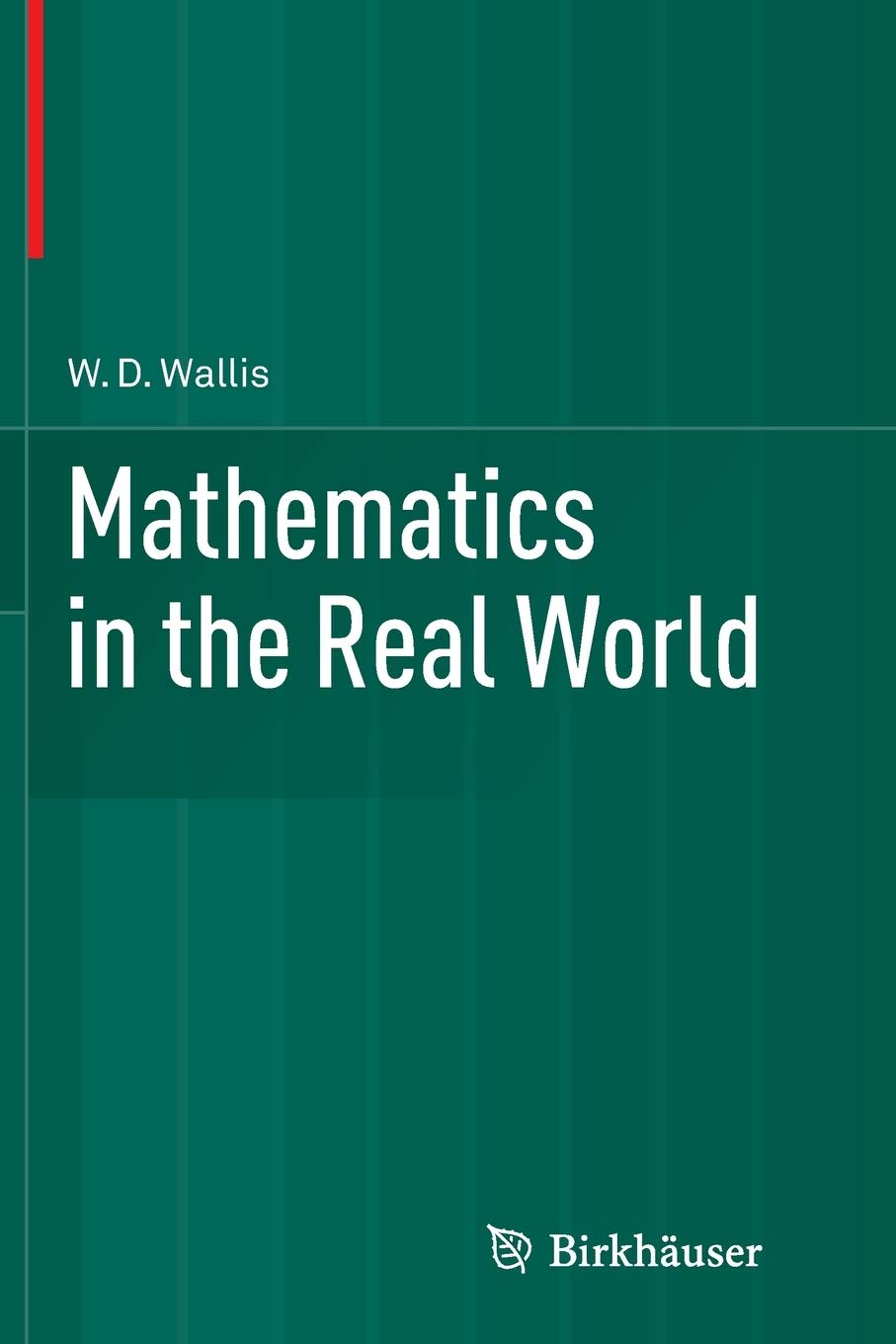
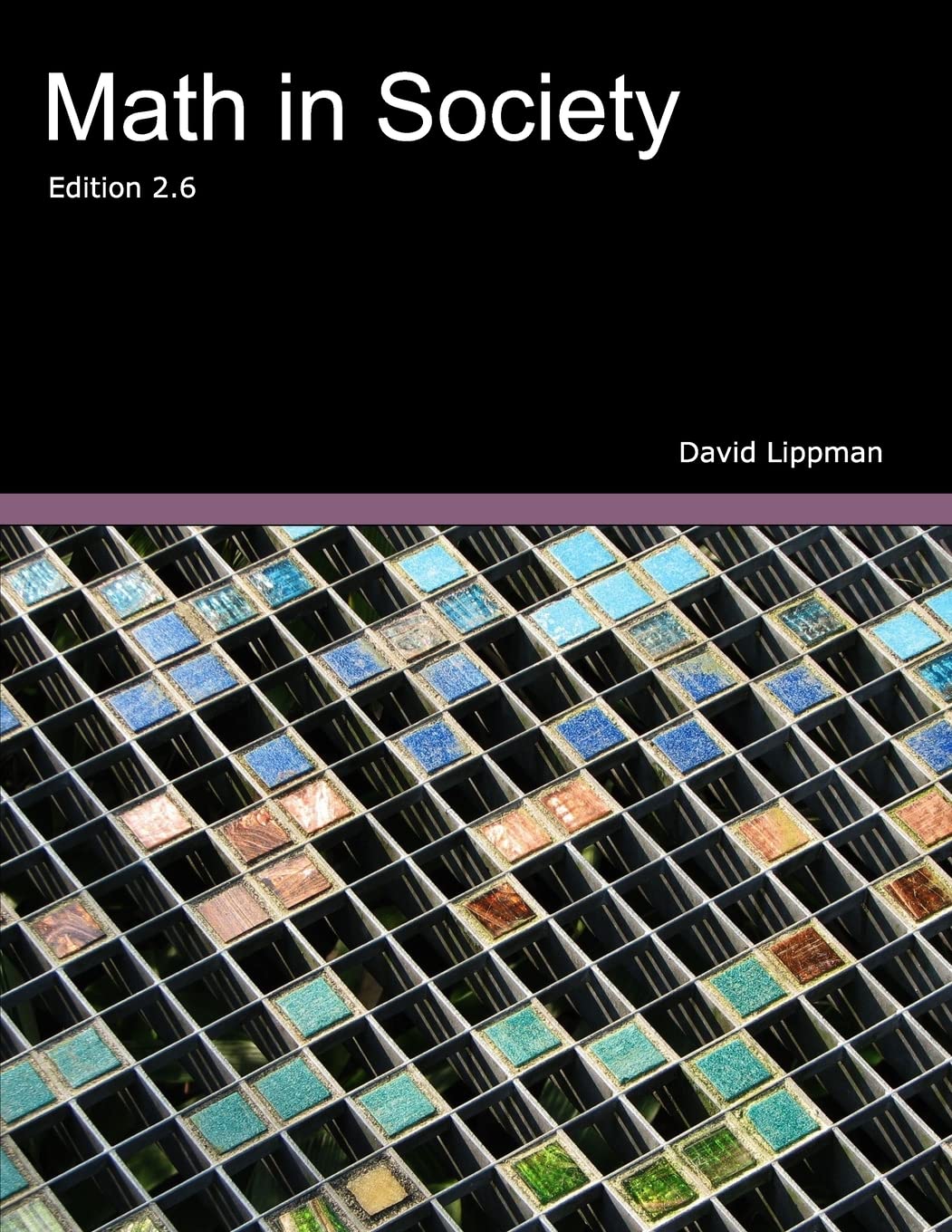
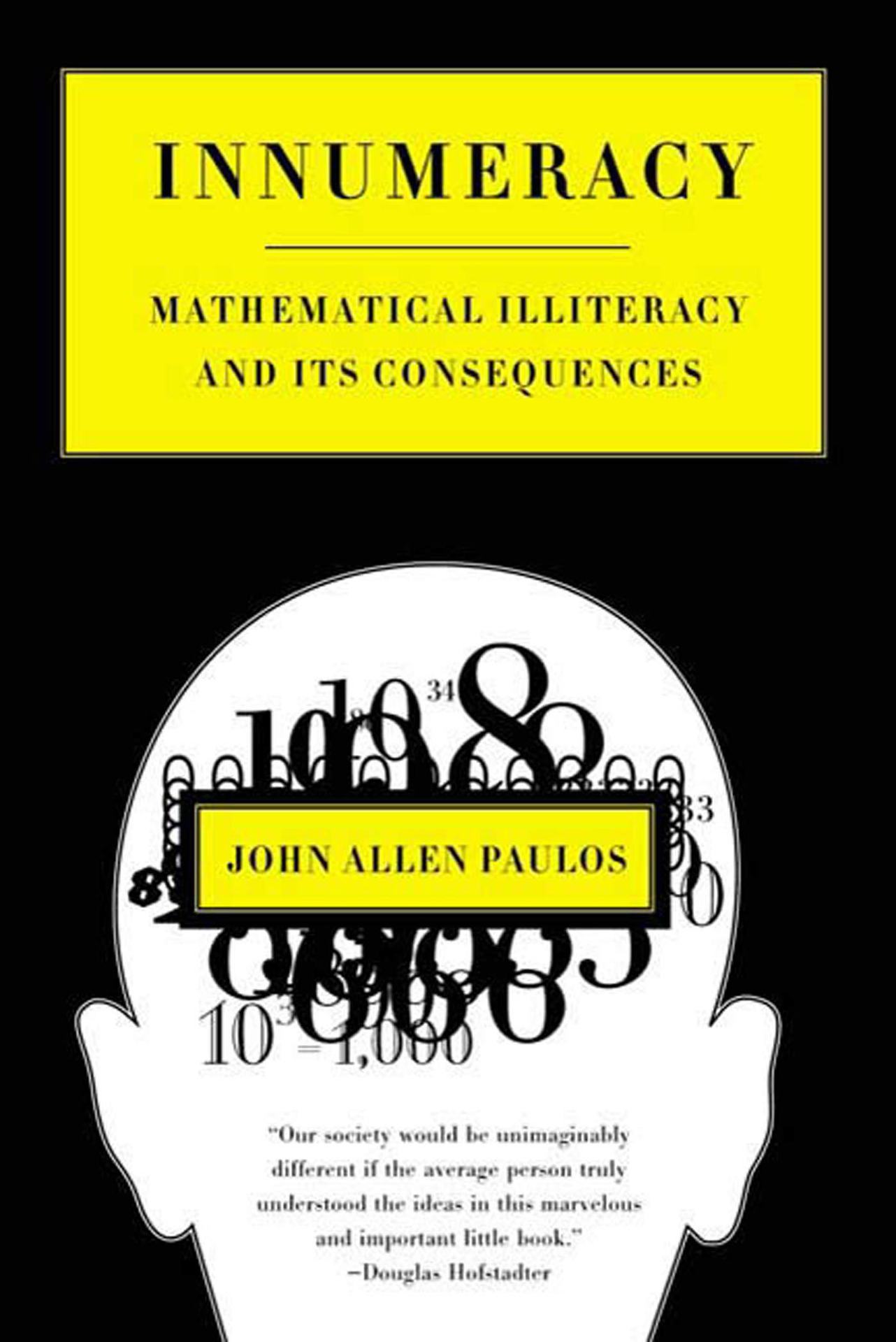
Mathematical illiteracy is a serious problem in modern societies, a real plague, for so many reasons. In English we speak of the “innumeracy” of the “innumerates,” from the title of a successful pamphlet by John Allen Paulos, itself inspired by Douglas Hofstadter, and the word “illitteracy,” to define incompetence with numbers rather than words ( https://en.wikipedia.org/wiki/Innumeracy_(book) ). Mathematical illiteracy is a serious problem even for many otherwise well-educated and well-informed people with degrees in literature, philosophy, law, political science, communication science (sic!!) and other humanities subjects. While many people would be ashamed to admit that they are illiterate, there is very little shame in admitting incompetence in mathematics by saying things like “I have always hated mathematics,” “I love people not numbers,” “I have never understood anything about mathematics,” “mathematics is abstract, it is useless,” and other such nonsense. With ridiculous presumption and boorish arrogance, people who have only a humanities-only culture, a small fraction of the knowledge they should have, often call themselves intellectuals. Indeed, Warren Siegel recalled, “Science is the only universal education. The humanities are only about people. Technology is only about the things people use. But people form only an infinitesimal fraction of the universe. Science is about everything."(Common Misconceptions, New York, 2002). An “innumerate” is also a scientific illiterate, because mathematics is the language of the sciences, both natural and social, and those who do not master it can only approach popular texts at the level of children’s fairy tales, and in most cases they do not even understand them, but misunderstand them thinking they have understood. Scientific misinformation is a social plague, a cancer on democracy, development, progress, and both cultural and economic growth in a society based on science and technology. not understanding anything about mathematics means not understanding the world, the reality around us. Finally, mathematical thinking is also culture with a capital “c,” not at all inferior to other creations of human thought, indeed along with the exact sciences its highest achievement. Mathematical illiteracy is the worst case of functional illiteracy, a problem exacerbated by the fact that sufferers are often not even ashamed of it, but boast about it. In everyday life, a mathematically illiterate person has several disadvantages, besides having to use a calculator often or having to ask for help often to solve even the simplest problems; for example, he struggles to distinguish different levels of risk, he does not distinguish facts from opinions, he tends to believe pseudoscience more easily, and his choices can be influenced much less effortlessly by con artists and swindlers. A starting point for understanding what mathematics all citizens should know, is the Anglo-Saxon tradition of “Colleges for Liberal Arts,” universities that aim to provide a broad interdisciplinary preparation, and develop general intellectual skills, instead of a specialized and labor market-oriented professional or technical preparation. Students at a liberal arts college generally major in a particular discipline but study a wide range of subjects, including mathematics, astronomy, natural sciences, social sciences, music, and traditional humanities subjects taught as liberal arts. In fact, in antiquity the “Liberal Arts” were composed of Trivium (dialectic, grammar, rhetoric) and Quadrivium (arithmetic, geometry, astronomy, music). This union was lost with the scientific revolution of the 1600s, when out of the ugly bacarozzo of classical culture (from the Greeks to the Romans and the Renaissance) came the beautiful butterfly of modern science (Galileo, Newton, Bacon, Leibniz,…). mathematics courses, “mathematics for liberal arts majors,” are also taken by those majoring in the humanities or the arts. Their approach, choice of topics, and level of depth, is suitable for the purpose of providing a basic preparation for those who will not be professional mathematicians. The emphasis is on practical, real-world applications and connections with other disciplines, rather than on more complex formal aspects, and exercises untethered from real-world cases. Recent courses, such as Wallis (Mathematics in Real World), or Lippman (Math in Society) deal with:
- sets and logic
- numbering systems
- combinatory calculus
- probability
- statistics
- graph theory
- fractals
- voting systems
- equitable division
- financial mathematics
- functions and diagrams
- growth and decay
- codes, data transmission, encryption
Math in Society is an open handbook, freely downloadable online under a Creative Commons license: http://www.opentextbookstore.com/mathinsociety/index.html
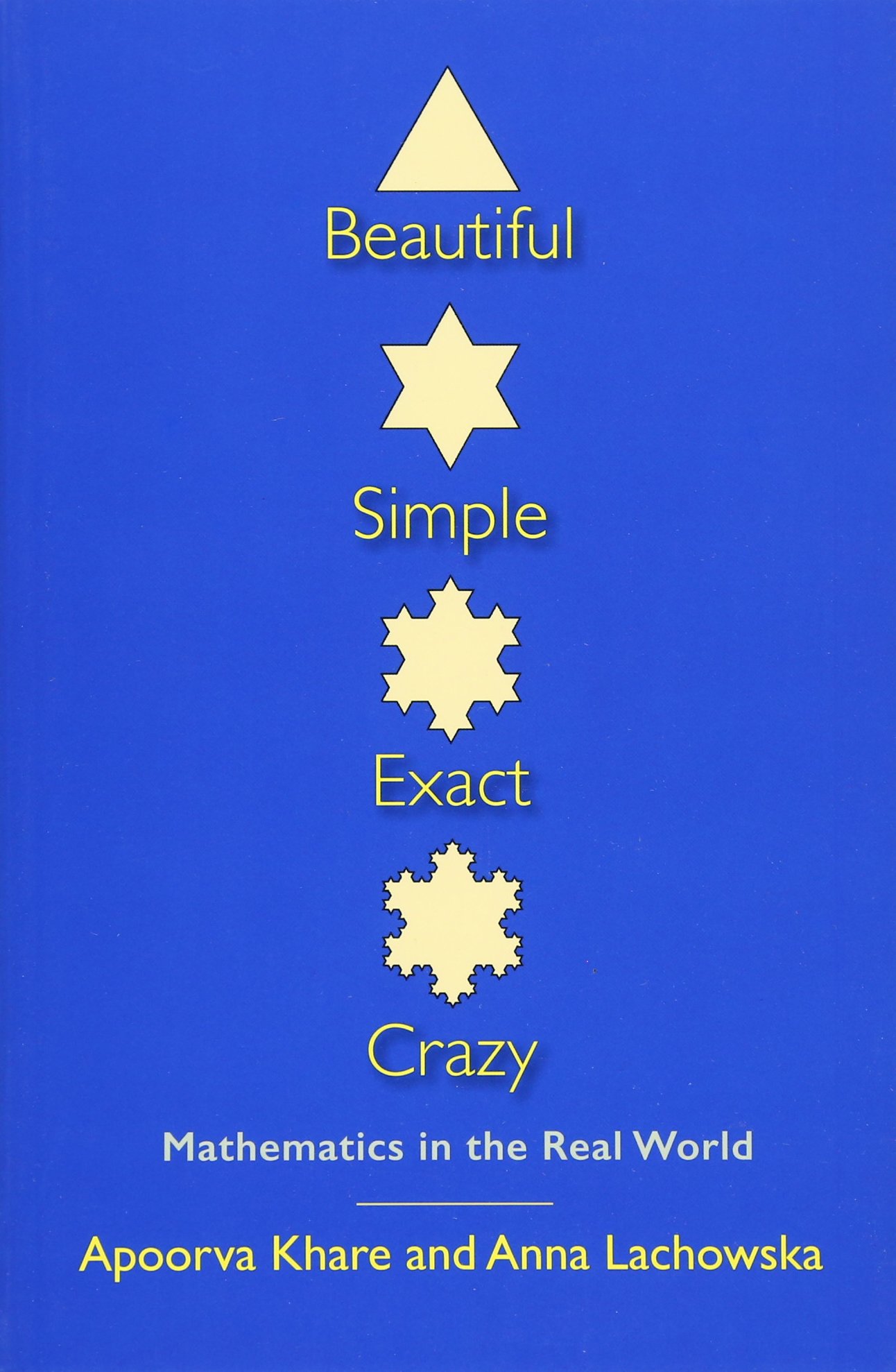
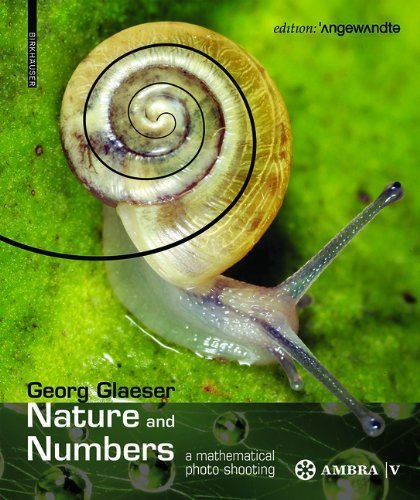
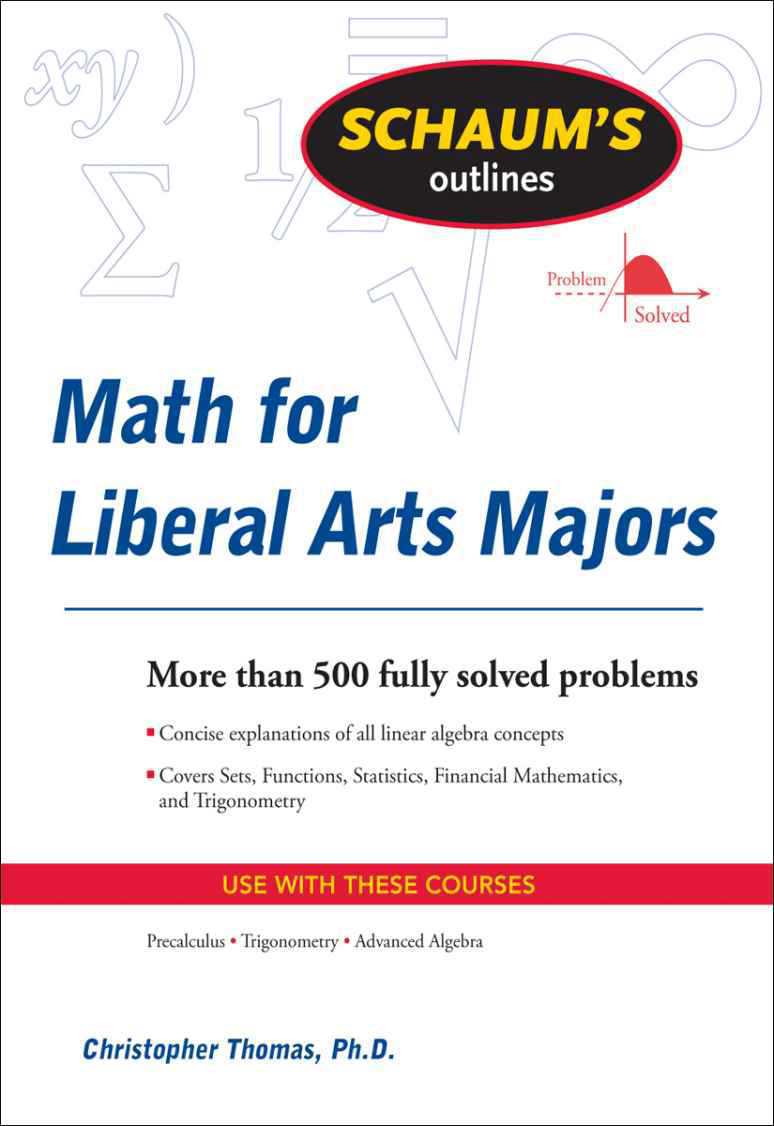
Along with either of the two volumes mentioned above, Thomas (Math for Liberal Arts Majors), in the infamous Schaum series, with summaries of the theory and hundreds of exercises, is also very useful. Thus, the lion’s share is taken up by discrete mathematics, computer mathematics, probability and statistics, and their applications to the real world. A natural choice of topics after the computer revolution, PCs and smartphones, artificial intelligence, away from obsolete high school curricula. These are the basic concepts, covered at this level, that should be part of everyone’s cultural heritage. But neither should the mathematics of the continuum be completely ignored: real and complex numbers, derivatives and integrals, infinity. So they should be added:
- scientific notation, scales and orders of magnitude
- real numbers and complex numbers
- derivatives and integrals, tangents, instantaneous velocities
- vectors and matrices
- hints at the history and philosophy of mathematics
For these topics, a few chapters from a much more traditional and “old-fashioned” text such as Kline’s (Mathematics for non-mathematician), the first edition of which was published in 1967, could be retrieved, insisting mainly on applications to physics of algebra, analytic geometry and differential calculus. As a simple introduction to modern algebra and linear algebra, it is hard to find anything better than Higgins (Algebra), in the Very Short Introduction series at Oxford University. For historical background and philosophy of mathematics, one can also refer to a volume we have already reviewed, Stillwell’s “From Pythagoras to Turing,” or “Mathematics and its history” by the same author.
To understand mathematics, there are never too many examples of where it is used , how it is applied to the real world, and where it is encountered in nature, so it is also useful to consult texts such as: glaeser(Math Tools), Stewart(What’s the use?), Apoorva Khare, Anna Lachowska (Beautiful Simple Exact Crazy), Glazer, McConnell (Real-Life Math), Glaeser (Nature and Numbers). Even the recent Italian Nobel laureate in physics, Giorgio Parisi, reminded how important it is to study this abstract discipline along with its applications. And for the great Russian mathematician Vladimir Arnold: “mathematics is a part of physics, the part where experiments cost little.”
All of this should be taught in high schools, or at least introduce most of the topics; in the U.S., colleges tend to plug the gaps in the very bad public secondary schools.
Unfortunately, in Italy we are very far from the awareness of the importance of basic science education, in a school still under the very bad influence of the idealistic reform of Croce and Gentile, based on the classical high school, a very bad and uneducational school, in which too much time is wasted on Italian, useless dead languages (Latin, Greek) and humanistic subjects in general. The programs then are also obsolete in the scientific high school, and technical colleges. An indicator of Italy’s failure is also the lack of translations of interesting and important books; they are now printed only in English, with rare exceptions. So children are forced to study in a foreign language instead of their native tongue.
They suffer from the same severe mathematical illiteracy:
- the truly illiterate, who have not completed compulsory education
- the functional and returning illiterates, who have completed compulsory education but have forgotten almost everything
- graduates in secondary schools, particularly those in classical high school, the worst school
- graduates in non-science subjects: letters and philosophy, political science, communication, law and so on.
The consequence is that even 95 percent of the ruling class suffers from mathematical illiteracy and scientific illiteracy: politicians, entrepreneurs, business executives, magistrates, journalists and so on. This problem leads them to make wrong decisions, not understanding the nature of problems, with disastrous results for society. Think for example of the difficulties in understanding the exponential growth in the covid pandemic. Because obviously those with responsibility do much more damage than the common man who decides almost nothing.