The Big Story of Everything - Part Two
Books for the history of the universe, the earth, life, and humanity. And for understanding who we are, where we come from, and where we are going. Part Two
DRAFT - WORK IN PROGRES …
Index
Volumes
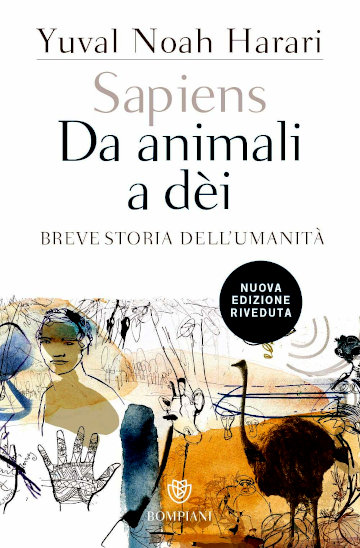
- Yuval Noah Harari - Sapiens. From animals to gods
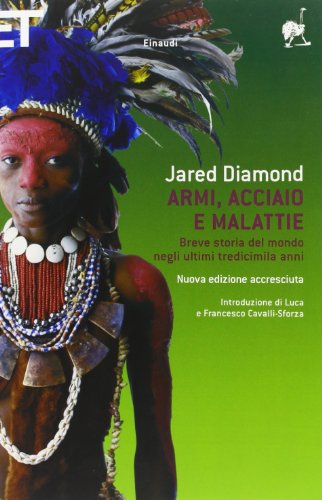
- Jared Diamond - Weapons, Steel and Disease
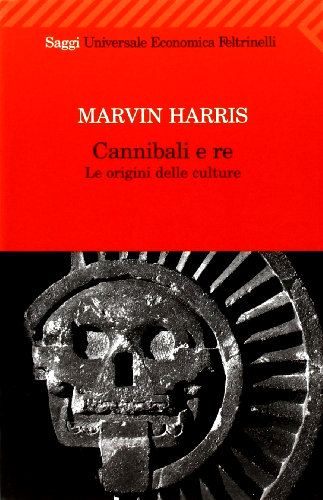
- Marvin Harris - Cannibals and Kings
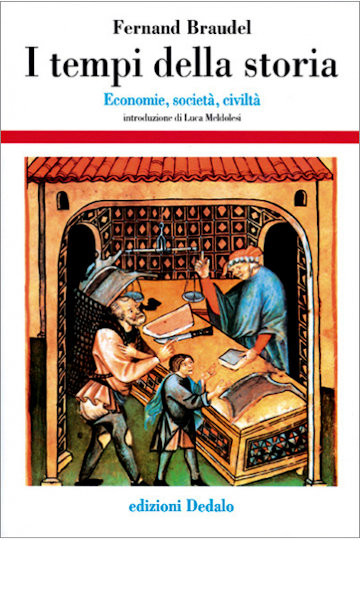
- Fernand Braudel - The Times of History
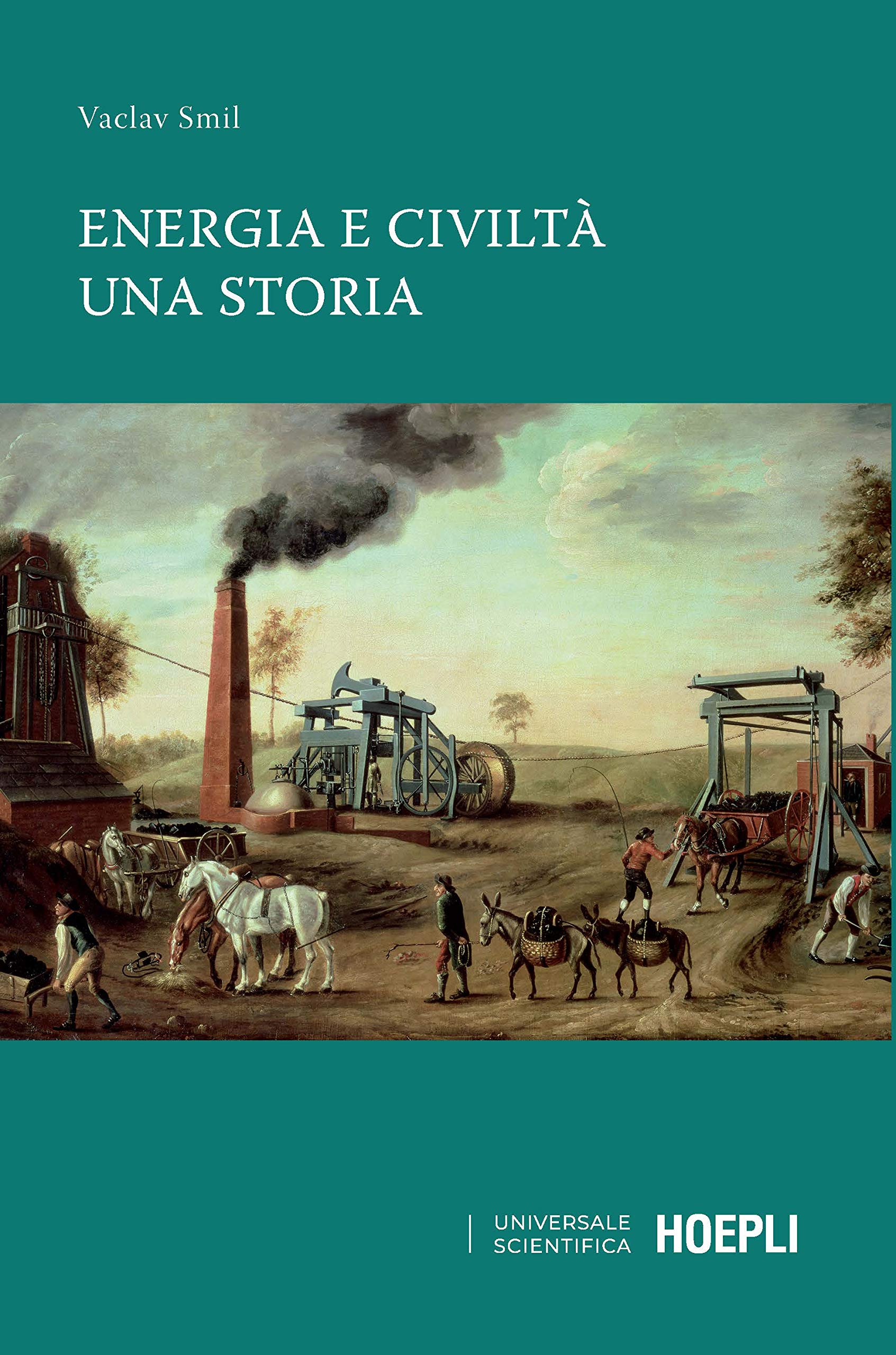
- Vaclal Smil - Energy and Civilization
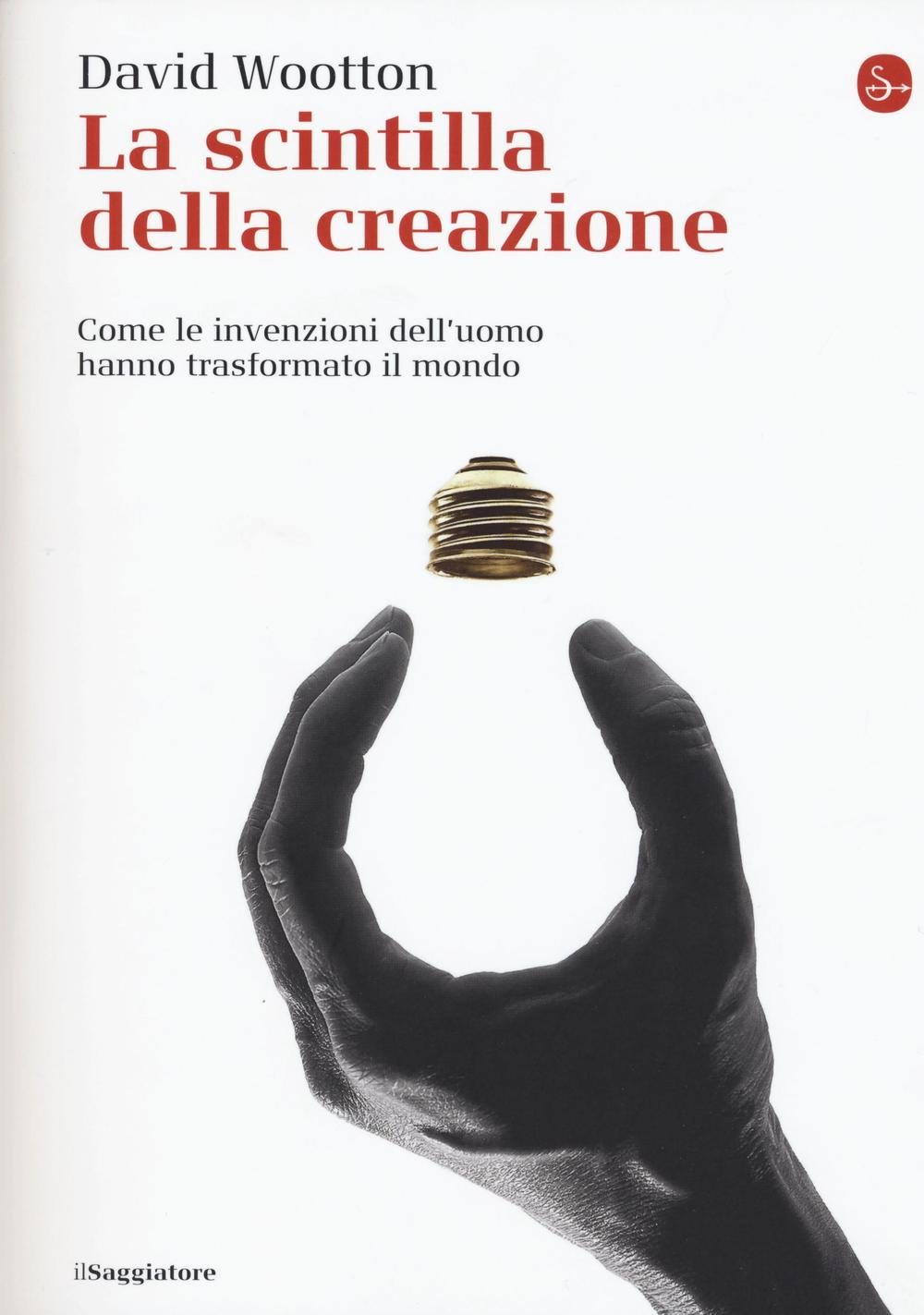
- David Wootton - The Spark of Creation
The Indispensables For those who do not have time to read so many books but only two:
ChronoZoom, Una esplorazione interattiva delle scale temporali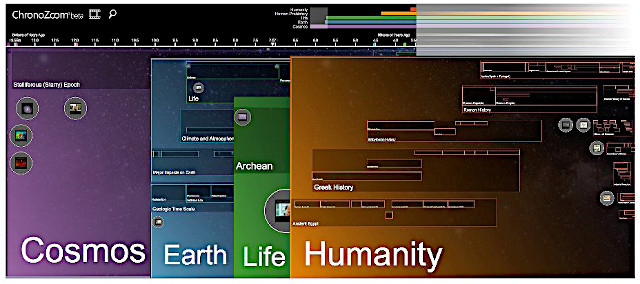
Introduction
We usually think of history as a succession of political, military, and cultural events. Geographically limited to Western Europe and the Mediterranean. Limited in time from the invention of agriculture,writing and early state societies to the present day. Restricted to the study of a civilization, nation or empire at a time. with no interdisciplinary connection to the natural and social sciences. History as a description of “one damned fact after another,” for scholar Jared Diamond, unable to explain and make predictions because it is not based on modern science, but only on the limited humanistic culture. This is how it has always been taught and continues to be treated in schools of all levels.
A first Copernican revolution in historical studies occurred with the new French historical school gathered around the journal “Annales.” founded around 1930 by Marc Bloch and Lucien Febvre, with such exponents as Henri Pirenne, Fernand Braudel, Jacques Le Goff, Georges Duby. The focus has been shifted from the micro-history of events to the history on long timescales (centuries) of social, economic, political and cultural structures, with contributions made by the study of economics, geography, climate, geology. Great importance is given to the story of daily and material life (trade, food, sexuality, religion,…), of the marginal subjects (women, peasants, the poor,…). The field of historical documentation has been expanded to theological, medical, legal, and administrative writings, folklore, paintings, engravings, chronicles, archaeological finds, oral accounts, songs, maps, photographs, tools and machinery. In this way, history has fully entered the social sciences.
Toward a global history
The Eurocentric view of history has been increasingly criticized since the 1960s.And a second revolution broadened the focus of attention from history european to the global history of the world. The American historian William H. McNeill, in his The Rise of West ( The Rise of the West. A History of Human Community, 1964), criticized comparative world history and the theses of Oswald Spengler (The Decline of the West) and Arnold Toynbee (Civilizations in History, The Tale of Man) who regarded the civilizations as independent and separate. For McMeill, human development must be studied as a continuous exchange and interaction between different civilizations in contact with each other (See also Human Web, a historical summary prepared with son J.R. McNeill). Global history, or World History, which officially emerged around 1980, is based on this idea of exchanges between civilizations, and studies history from a global perspective overcoming monocultural and partial views. Sociologist Immanuel Wallerstein analyzed globalization with the system-world theory, influenced by Braudel, Fanon, Prigogine, Marx, Polanyi. Wallerstein rejects distinction between first, second and third worlds arguing that there is only one world connected by a complex network of economic exchange relationships, that is, a world economy or world-system, with states playing a distinct role (central or peripheral). In anthropology, cultural materialism, proposed by American anthropologist Marvin Harris, in The Evolution of Anthropological Thought(1968), explains society and culture as an effect of material factors (economic, technological, environmental and demographic), with influence from updated Marxist materialism. The biological needs of individuals and material relations (production, labor, technology, environment, demographics) are crucial in the evolution of culture and social practices. But the important regulatory mechanisms of the system are social relations (political institutions, family organization, gender roles), symbolic (arts, rituals, games, sports, science, religion), and and ideological (ideas, values, philosophies, beliefs), that they are not mere superstructure or superficial phenomena. The Macrostory analyzes historical events in a broader context, such as geographical environment, economy, ideologies and culture, with an interdisciplinary approach. Examines the evolution of states and societies over a time span spanning several centuries, and seeks to draw general conclusions about the common dynamics of human collectivities, using economic, demographic, climate and other data. A macro-historical approach is that of the israeli historian Yuval Noah Harari, who in the volume Sapiens. From Animals to Gods: A Brief History of Humanity, (2011), examines the development of the entire history of man, with input from paleoanthropology, archaeology, biology, ecology, economics, politics, and philosophy. The first volume of an ideal trilogy on the past (Sapiens), the present (21 lessons for the 21st century) and the future (Homo Deus) of humanity. Some false myths about past societies and the linear evolution of humanity from prehistory to the present were taken apart in a monumental work, The Dawn of Everything. A New History of Humanity (2021), compiled by anthropologist and sociologist David Graeber (the ideologue of the no-global movements and occupy wall street), and by archaeologist David Wengrow, in light of the of the most recent historical and archaeological discoveries, combined with the influence of thinkers not belonging to Western history. It was not included in this selection due to time constraints, but it will certainly be reviewed in a future post on this blog.
The approach of history to science
A third revolution is the ‘bringing the study of history closer to that of the natural and exact sciences. In the celebrated essay Weapons, Steel and Disease. A Brief History of the Last Thirteen Thousand Years (1997), american scholar Jared Diamond (anthropologist, geographer, physiologist, biologist, zoologist and botanist) explores the geographical, cultural, environmental and technological factors that led to the domination of Western culture over the world. To answer these questions he integrates the story with the latest scientific findings of archaeology, anthropology, molecular biology, ecology, epidemiology, genetics, linguistics, social sciences, chaos and complex systems theory.
For some sociologists and economists such as Jason Moore and Raj Patel, one should more correctly speak of of Capitalocene, because it is capitalism, not man or science, that destroys nature, the environment and civilization (Jason W. Moore, Ecology-World and the Crisis of Capitalism., Antropocene or Capitalocene.).
The Volumes
Jared Diamond - Weapons, steel and disease
Brief history of the world over the past thirteen thousand years
Einaudi (2014), 414 pages, new enlarged edition, translated from “Guns, Germs & Steel,” Norton(1997)
In this celebrated essay, the eclectic American scientist Jared Diamond seeks to of understanding why some societies are richer, more advanced, more organized, technologically and scientifically advanced and dominate other countries less developed. To answer these questions he integrates the story with the latest scientific findings of archaeology, anthropology, molecular biology, ecology, epidemiology, genetics, linguistics, social sciences, chaos and complex systems theory. In his research he explores the geographical, cultural, environmental and technological factors that led to the domination of Western culture over the rest of the world, starting from about thirteen thousand years ago, at the dawn of the revolution that will transform human from hunter and gatherer of wild fruits and vegetables to farmer and rancher of animals organizing into gradually more complex societies. The main factors that have driven human history are those mentioned in the title, weapons and steel technology, and diseases carried by viruses such as smallpox. The latter cause, less intuitive at first glance, stems from the fact that in Eurasia, agriculture, urbanization and promiscuity with domesticated animals have developed earlier than in America, Africa and Oceania (indeed in these two continents were practically not born). This led to the development of an immune system much more resistant to many diseases in Europeans and Asians, causing the extermination of other populations when they came into contact with certain germs and viruses. But certain peoples have reached a higher level of development earlier not because of superiority than others but for luck in taking advantage of certain geographical and environmental opportunities. Diamond’s book is therefore also an excellent antidote to racism.
From the back cover:
Why are some peoples richer than others? Why have Europeans conquered so much of the world? The temptation to answer by bringing up men and their alleged aptitudes is strong. But the racist explanation should not be rejected just because it is hateful, Diamond says: above all because it is wrong and does not stand up to scientific scrutiny. Cultural diversities are not innate, but are rooted in geographic, ecological and territorial diversities that are substantially related to chance. Armed with this idea, Diamond embarks on an exciting world tour, in search of exemplary cases with which to illustrate and test his theories. Drawing on linguistics, archaeology, genetics and a thousand other sources of knowledge, he manages to conduct this cultural-historical tour de force with surprising mastery and rare skill as a popularizer.
This new edition has been enhanced by the chapter Who are the Japanese? and an afterword by the author.
Edward O. Wilson - The Social Conquest of the Earth
Raffaello Cortina Ed.(2013), 356 pages, Ital. transl. of “The Social Conquest of Earth,” Liveright(2012)

American biologist Edward Osborne Wilson, born in 1929, is the founder of Sociobiology, understood as the systematic study of the biological evolution of social behavior, of both animals and humans, a product of the interaction between genetic inheritance and environmental stimuli. A field of inquiry somewhere between the natural sciences and social disciplines based on Darwin’s theory of evolution, another important exponent of which is the zoologist englishman Richard Dawkins. Wilson has also worked extensively on biodiversity, as well as behavior social of ants.Among his many works include “Sociobiology. The New Synthesis”, “The Ants”,“On Human Nature”,“The diversity of Life”, “Letters to a Young Scientist”,“The Meaning of Human Existence”, “The Deep Origins of Human Societies”, “Half the Earth - Saving the Future of Life”, “Stories from the world of ants”. “The social conquest of the earth” is sociobiology’s view of the birth of human societies.
From the back cover:
Nel volume l’autore delinea lo sviluppo di Homo sapiens dallo stadio iniziale alle più importanti conquiste creative. Nel rielaborare la storia dell’evoluzione umana, attinge alla sua straordinaria conoscenza della biologia e del comportamento sociale per illustrare l’origine della nostra condizione attraverso una limpida e incalzante narrazione. Wilson mostra come, dagli insetti sociali all’uomo, l’evoluzione non sia stata sospinta solo dall’egoismo genetico e dalla competizione individuale, ma anche dallo sviluppo di comportamenti sociali e cooperativi sempre più elaborati all’interno dei gruppi. È stata una forza evolutiva a guidare la conquista sociale della Terra da parte dell’uomo. Ora però abbiamo accelerato a tal punto, attraverso una crescita non regolamentata e incondizionata, da minacciare il pianeta così come lo conosciamo. “La conquista sociale della Terra” presenta una provocatoria teoria delle nostre origini che delinea l’evoluzione del vivente “da un inizio tanto semplice” all’attuale e p
Marvin Harris - Cannibals and Kings
The origins of cultures
Feltrinelli(2013), 240 pages, translated from “Cannibals and Kings: Origins of Cultures,” Random House(1977)
The great American anthropologist Marvin Harris created the paradigm of neo-Marxist cultural materialism. By labeling demographic and production factors as “infrastructure,” Harris postulated that these were the key factors in determining the social structure and culture of a society. After the publication of The Evolution of Anthropological Thought in 1968, Harris prompted anthropologists to focus on cultural and ecological relationships throughout his career. Many of his publications have been widely circulated among lay readers.
According to cultural materialism, anthropology was to provide causal explanations of similarities and the differences that exist in the thinking patterns and behavior of human societies. Laws, social rules, and religious prescriptions are derived from by material factors that are then reformulated in cultural terms. A very fascinating reading of his is “Good to Eat” where he explains the origin of religious and cultural food taboos. Much of his work is directed to the general public and not just to insiders, such as “Good to Eat,” “Our Species,” “Why Nothing Works. The Anthropology of Daily Life.” “Cows, Pigs, Wars & Witches” and precisely the classic but still relevant “Cannibals and Kings.” His analysis of the nature of violence in primitive societies, cultural and nonbiological, complements that of Steven Pinker (“The Decline of Violence”).
From the back cover:
Perché i cacciatori dell’età della pietra vivevano in un benessere quasi invidiabile? Come nacque l’agricoltura? E la guerra? Perché gli Aztechi si cibavano dei loro prigionieri e praticavano sacrifici cruenti? Cosa spinse tante culture alla sistematica uccisione delle neonate? Quale fu l’origine di una supremazia, quella maschile, che non ha alcuna giustificazione biologica? Come sorse e si radicò il complesso di Edipo? A domande come queste il grande antropologo americano Marvin Harris dà organica risposta, mettendo a frutto lunghe ricerche condotte fra le civiltà primitive e avanzate del presente e del passato, costruisce una teoria per molti aspetti originale basata su un rinnovato determinismo. Secondo Harris le diverse civiltà e culture locali si sono sviluppate e caratterizzate a seconda del loro o modo di rispondere alle effettive disponibilità delle risorse. Quando la domanda della popolazione in aumento era superiore a tale disponibilità, le culture intensificavano la produzione finché le
Fernand Braudel - The Times of History
Economy, Society, Civilization
Dedalo(2020), 416 pp., new edition, based on original collection of writings from 1984
Fernand Braudel was one of the most important historians of the 20th century. He was born in France in 1902, developed innovative historical theories, including the three-times theory. and has written such important books as “Mediterranean Civilizations and Empires in the Age of Philip II” (2 vols., Einaudi), but also “Material Civilization, Economics and Capitalism, 15th-18th Centuries” (1967-1979), “The Identity of France” (1986-1988), “The Mediterranean. space, history, people, traditions” (1987), “Memories of the Mediterranean. Prehistory and Antiquity” (1998), Venice (Il Mulino 2013), “Writings on History” (Bompiani 2016).
Fernard Braudel’s work and thought are intrinsically linked to the current School of Annales (which he would direct from 1956), developed in France in the early 1930s by Marc Bloch, Lucien Febvre and, indeed, Braudel. the methodological approach is innovative compared to previous historians: a conception of history not as a chronological account of past facts and events, but as a tool for knowing and understanding human society.
Between 1941 and 1944, the French historian is interned in camps in Mainz and Lübeck and it is precisely in this circumstance that he deepens his theory of historical inquiry.
The relationship that is most emphasized is that between the deep history and evenemential history: the historian must not limit himself to analysis and investigation of the single chronological fact or event, but must be able to understand the historical context in which it takes place and the change in power relations that it inaugurates.
From the back cover:
A “timeless” collection of important essays on social and economic analysis, portraits of historians of today and the past, and vivid autobiographical accounts. A volume that launched the typical themes of the “Braudelian model” of historiographical inquiry.
The attention that the work of Fernand Braudel, the great French historian who died in 1985, now attracts throughout the world undoubtedly goes beyond the traditional reception that has always been reserved for him by the community of historians. A pupil and successor of Lucien Febvre at the head of the “Annales” school, the author of central works in the historiography of this century, Braudel saw the interest of men of culture and the public grow around his work, especially in his last years, and he took an active part in it with numerous interventions (annotations, interviews, photo books, television broadcasts). The reader will find in the volume important essays that are anticipatory of the themes typical of the “Braudelian model” of historiographic inquiry.
Vaclal Smil - Energy and Civilization
A Story
Vaclal Smil is a Czech-born but naturalized Canadian scientist and analyst. His research interests include a broad area of study on energy, environment, food, population, economy, history and public policy. He applied his open and interdisciplinary approach to energy, food and environmental issues for the future of humanity. His greatest admirers include the founder of the Microsoft, Bill Gates, who is constantly quoting from his books in the reading recommendations, and enthusiastically reviewed Energy and Civilization, in which the course of human history is presented as the management of flows and energy deposits.
From the back cover:
A history of energy, the only universal currency, necessary to achieve anything, through social, technological and industrial development. smil chronicles the eras of energy, from prehistoric times when fire was discovered to modern society’s dependence on fossil fuels. Agriculture, industry, transportation, weapons, but also communication, economy, urbanization, quality of life, politics and environment are part of these momentous transitions. The book presents human evolution and the course of history as a continuous search for ways to control deposits and flows of increasingly concentrated and increasingly versatile energy sources, with the aim of converting them-in more accessible, lower-cost, and more efficient ways- in heat, light and movement. With the problem of pollution and renewable sources. an interdisciplinary overview of world development, in which approaches by historians, scientists, engineers and economists are merged into a single voice, enhanced by essential boxes and tables for more detailed explanations.
David Wootton - The Spark of Creation
How man’s inventions have transformed the world Trad.it of The Invention of Science. A New History of the Scientific Revolution
The most important event in human history is undoubtedly the Scientific Revolution of the seventeenth century by Galilei, Newton and others. as indeed the most important project in human history after the pyramids is the Manhattan Project, for the construction of the atomic bomb during World War II. From scientific and technological progress, and its complex interaction with finance and political institutions, derive all the wealth, well-being, and health of humanity. David Wootton’s work is a monumental story of the Scientific Revolution.
From the back cover:
La Rivoluzione scientifica è stata la più importante rivoluzione della storia umana. In questo libro monumentale David Wootton ci accompagna tra i secoli e i continenti per esplorare le tappe che hanno portato alla nascita della scienza moderna: una svolta epocale cui diedero impulso la stampa a caratteri mobili, la scoperta dell’America, i progressi dell’astronomia, l’intuizione della pittura prospettica, e il cui sviluppo fu segnato da invenzioni in grado di moltiplicare le capacità umane, come l’orologio, il microscopio e il telescopio, il termometro, fino alle macchine a vapore da cui prese avvio l’industrializzazione. L’invenzione della scienza ha cambiato le nostre1 vite materiali, la nostra visione del mondo, la consapevolezza di noi stessi, grazie al genio di Copernico, Brahe, Galileo, Boyle, Keplero, Newton e ad altri scienziati straordinari e iconoclasti, ma anche grazie a pensatori che passo dopo passo hanno saputo anticipare e interpretare lo spirito della modernità come Montaigne, Giordano Br
Other readings
Such a list obviously involves arbitrary choices and serious omissions. so many books they narrowly missed making the list:
- David S. Landes - The Wealth and Poverty of Nations. Why some are so rich and others so poor.
- David Graeber, David Wengrow - The Dawn of Everything. A New History of Humanity
- David Christian - Maps of Time. An introduction to Big History
- Jared Diamond - Collasso
- Jared Diamond - The World Until Yesterday
- Yuval Noah Harari - 21 lessons for the twenty-first century
- Yuval Noah Harari - Homo Deus
- Bill Bryson - Brief history of private life
- Marvin Harris - Our Species
- Fernand Braudel - A Lesson in History
- Raj Patel, Jason Moore - A History of the Cheap World
Global Stories
- Oded Galor - The Journey of Humanity. To the Origins of Welfare and Inequality
- Daniel R. Headrick - The Dominance of the West. technology, environment and imperialism
- Jean-Paul Demoule - The ten forgotten millennia that changed history.
- Emmanuel Todd, Julie Sciardis - Brief history of humanity. from homo sapiens to homo oeconomicus
- Daron Acemoglu, James Robinson - Why Nations Fail.
- Robert B. Marks - The Origins of the Modern World
- J.R. McNeill, William H. McNeill - The Human Web: A Bird’s-Eye View of World History
Maps
- David Christian - Maps of Time: An Introduction to Big History
- Tim Marshall - The 10 maps that explain the world.
- Jerry Brotton - World history in twelve maps
- Gerard’t Hooft, Stefan Vandoren - Time in Powers of Ten: Natural Phenomena and Their Timescales.
Science Stories
- Bill Bryson - Short history of the human body
- Edward O. Wilson - The Deep Origins of Human Societies
- Peter M. Hoffmann - The Gears of God. From molecular chaos to life
- Nathan Rosenberg - Inside the black box: technology and economics.
- James McClellan - Science and Technology in World History: An Introduction
Economic History
- Angus Maddison - The World Economy. a millennial perspective
- Larry Neal, Rondo Cameron - Economic history of the world. from prehistory to the present
- Ronald Findlay, Kevin O’Rourke - Power and Wealth. An Economic History of the World
- Robert C. Allen - Global Economic History
- P. A. Toninelli - Modern economic development. From the industrial revolution to the energy crisis
Today’s World
- Karl Polanyi - The Great Transformation. The economic and political origins of our age
- Giovanni Arrighi - The Long 20th Century. Money, Power and the Origins of Our Time
- John R. McNeill - The Great Acceleration. An Environmental History of the Anthropocene after 1945
- Immanuel Wallerstein - Understanding the world. Introduction to systems-world analysis
- Peter Frankopan - The Silk Roads. a new history of the world.
- Kenneth Pomeranz - The Great Divergence. China, Europe and the Birth of the Modern World Economy
- Andre Gunder Frank - Reorient: Global Economy in the Asian Age