The Big Story of Everything - Part One
Books for the history of the universe, the earth, life, and humanity. And for understanding who we are, where we come from, and where we are going. Part One
Index
Volumes
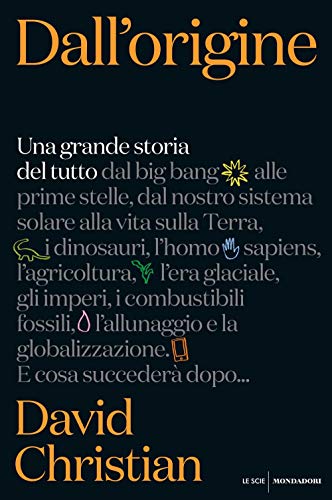
- David Christian - From the Origin_
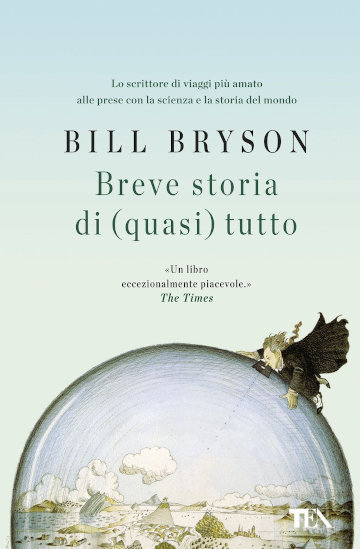
- Bill Bryson - Brief history of (almost) everything
- Guido Tonelli - Genesi
- Jim Baggott - Origins
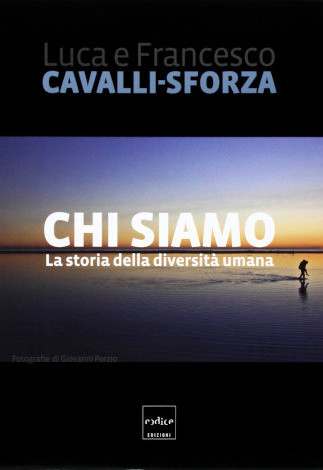
- Luca and Francesco Cavalli-Sforza - Who we are
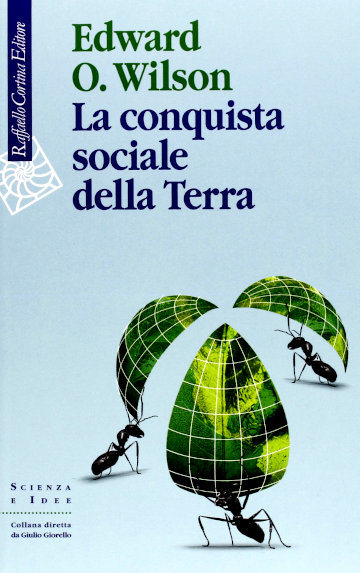
- Edward O. Wilson - The Social Conquest of the Earth
The Indispensables For those who do not have time to read many books but only a couple:
ChronoZoom, Una esplorazione interattiva delle scale temporali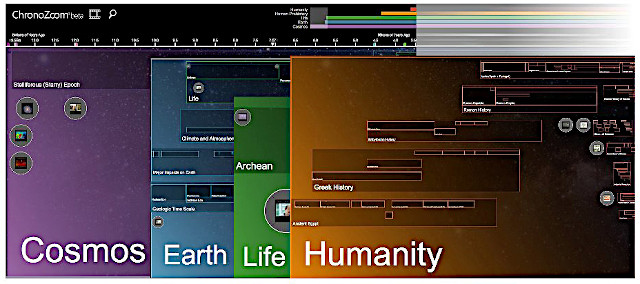
Introduction
We usually think of history as a succession of political, military, and cultural events. Geographically limited to Western Europe and the Mediterranean. Limited in time from the invention of agriculture,writing and early state societies to the present day. Restricted to the study of a civilization, nation or empire at a time. with no interdisciplinary connection to the natural and social sciences. History as a description of “one damned fact after another,” for scholar Jared Diamond, unable to explain and make predictions because it is not based on modern science, but only on the limited humanistic culture. This is how it has always been taught and continues to be treated in schools of all levels.
History and science
The great Italian scientist Luca Cavalli Sforza integrated in his studies of genetics, migrations and evolution of human populations, other disciplines such as anthropology, geography and linguistics. his volumes History and Geography of Human Genes (1997), and Geniuses, Peoples, Languages have had great impact and demolished racist ideologies, proving the nonexistence of human races. Another biologist, the American Edward Osborne Wilson, introduced in 1975 the sociobiology, with the volume Sociobiology: The New Synthesis, that is, the systematic study of the biological basis of all forms of social behavior. the principles, methods and terminology of genetics and evolution theory can be applied to both animal (mice and flies) and human studies. Biologist Eugene Stoermer and chemist Paul Crutzen (1995 Nobel Prize, for studies of ozone in the atmosphere) have proposed the term Antropocene (P.Crutzen, Welcome to the Anthropocene. Man has changed the climate, Earth enters a new era) for the current geological epoch, in which human beings and their activity are the main causes of spatial, environmental and climatic changes. The term is obviously derived from the Greek anthropos, which means man, and indicates the last part of the Holocene, the most recent geological era that began about 11,700 years ago.
The big story of it all
It attracts increasing interest in the Big History, history of everything, which studies the history from the origin of the universe (big bang) to the present, using a multidisciplinary approach based on the combination of numerous scientific and humanistic disciplines. If conventional history focuses on civilization with humanity at the center, the history of the whole places human history in the larger context of the history of the universe and the environment, a fourth Copernican revolution.Typically in courses one-third of the time is spent on the cosmos and the earth, one third to the birth life and evolution of species, one third to human history since the first hominids. Human existence is explored in a much broader context, looking for universal trends, themes and patterns over long periods of time. Big History examines the past using many time scales, from the Big Bang to contemporary history, relying on on the latest findings in physics, astronomy, astrophysics, chemistry, geology, climatology, biology, genetics, and evolutionary theory, paleontology, ecology, geography, anthropology, archaeology, psychology, economics, and demography. Unlike conventional history, there is not much focus on states, civilizations, wars, borders and specific historical periods (ancient Rome, Renaissance, …). American historian David Christian has taught Big History since 1989 at Macquarie University in Sydney, Australia and is considered the founder of the discipline. He has published several volumes including Maps of Time, Introduction to Big History (2005), and the more popular Origin Story (2018), also translated into Italian. In 2011, together with Microsoft founder Bill Gates, he launched the Big History Project, to promote global education of the history of the whole, as the attempt to understand, in a unified way, the history of the Cosmos, Earth, Life and Humanity, starting with secondary schools around the world. On this subject su can see the presentation of the Big History Project and an article in the New York Times of September 7, 2014, So Bill Gates Has This Idea for an History Class … Other important contributors to the Big History are geophysicist Walter Alvarez, astrophysicist Eric Chassoin, historian Cynthia Stokes-Brown. For the dissemination of the project in Italy, an obvious problem is the incompetence of the vast majority of those who should teach it on at least 3/4 of the topics in the syllabus.In fact, teachers in history usually have degrees in arts and philosophy, or other humanities, and are completely ignorant in the core science subjects for the course. In addition, the teaching materials are almost all in English, and students should get used to studying in English, not Italian, from junior high school.
The Volumes
David Christian - From the origin
A great story of the whole
Mondadori (2019), 357 pp., translated by “Origin Story: A Big History of Everything,” Penguin (2018)
The whole history of the universe, life and man in less than three hundred pages, directly from the scholar who founded the discipline of Big History, David Christian, historian of the Russian Empire and Soviet Union, from Macquarie University, Sydney. A great history of everything from the big bang to the first stars, from our solar system to life on Earth, dinosaurs, homo sapiens, agriculture, the ice age, empires, fossil fuels, the moon landing and globalization. An effective synthesis that maps the relationships between the most diverse disciplines scientific and humanities, within a general framework that goes beyond specialized knowledge, intended for the general public and high school students. From the initial introduction: We find ourselves in this universe not by our own choice, in a time and place not of our choosing. For a few moments, like fireflies cosmic, we will travel with other human beings, with our parents, with our sisters and brothers, with our children, with friends and enemies.We will also travel with other life forms, from bacteria to baboons, with rocks and oceans and polar auroras, with moons and meteors, with planets and stars, with quarks and photons and supernovae and black holes, with bullets and cell phones, and with lots and lots of empty space.The procession is rich, picturesque, cacophonous and mysterious, and even if we humans end up abandoning it, it will continue. In the distant future other travelers will join in, and the will abandon.Eventually, however, the procession will disperse. In a few gazillion years, it will fade away like a specter at dawn, dissolving into the ocean of energy from which it originated.
The timeline is divided into eight thresholds of increasing complexity, transitions in which something new and more complex emerges:
| 1. | principle of the universe |
| 2. | galaxies and stars |
| 3. | new chemical elements |
| 4. | from molecules to moons, planets, solar system |
| 5. | appearance of life |
| 6. | early hominids |
| 7. | invention of agriculture |
| 8. | Anthropocene |
Ideas about cosmological evolution in terms of energy flows and entropy are inspired by astrophysicist Eric Chaisson. An obvious limitation of Christian’s book stems from his background as a historian and humanist, thus without a solid background in the exact sciences, mathematics, physics, chemistry.As a result was able to consult for the first two parts only popular sources and second-hand, not directly the scientific works and the most authoritative and up-to-date texts. For this we recommend to flank it with a volume such as Jim Baggot’s, Originals: The Scientific History of Creation, more in-depth and accurate for the history of the cosmos and biosphere. From the back cover: “Why are we on this planet, in this precise place and at this precise time? What is our role in such a complex system that we cannot yet fully understand? Most importantly, it is possible to use science to tell the story of the universe, the Earth and living organisms and find answers to those questions that have always plagued us? The solution advanced by David Christian, a history professor who grew up in Nigeria, Wales and Canada, is Big History, the “story of the whole,” an origin narrative in a modern, secular and unifying key. An articulate, comprehensive historiographical project that is as innovative as it is firmly grounded in science, that holds together vast areas of knowledge, diverse societies and cultures. An approach that can summarize the past 13.82 billion years with a handful of interpretive laws of life in the universe: from the big bang to the solar system, from oceans to minerals, from dinosaurs to primates, from rock art to world wars, from nomadism to the Internet. At the heart of this modern origin narrative is the idea of increasing complexity: the succession of conditions fortunate and advantageous has in fact enabled the evolution of something as small and simple as an atom in increasingly complex forms, in a process that continues to unfold before our eyes. Today we think we can control change, but human activities have altered the distribution and the number of living organisms, altered the chemistry of the oceans and the atmosphere, reorganized natural landscapes and unbalanced the ancient chemical cycles that preside over to the circulation of nitrogen, carbon, oxygen and phosphorus. And the consequences could pose a threat to all the achievements won. Therefore, efforts must be made to ensure that increasing complexity leads to to a conscious management of the entire biosphere, …”
- David Christian on Wikipedia
- Review of Bill Gates
- Interview with Edge
- Lecture at the World Economic Forum, Davos 2015
- “Macrohistory: The Play of Scales,” Social Evolution & History. Vol.4 (No.1), March 2005, pg. 22-59
Jim Baggott - Origins
The scientific history of creation
Adelphi, (2017), 446 pages, translated from “Origins: The Scientific Story of Creation,” Oxford University Press (2015)
Jim Baggott is a British writer and popularizer of science with a very solid scientific training: PhD and postdoctoral research in physical chemistry, quantum mechanics and chemical bond theory, at Oxford and Stanford (Oxford University is also the publisher of his books). Proficiency in physics and chemistry is seen in lucidity of the exposition of the creation story, from the big bang to human consciousness, in this masterpiece of popularization. A concise and comprehensive informational tour de force, which deals with very complex topics with simplicity and clarity, the twelve origins: of space, time and energy (in principle), of the mass (symmetry breaks down), of light (surface of last scattering [scattering]), of stars and galaxies (the firmament lights up), of chemical complexity (synthesis), of the sun and planets (sol), of a habitable Earth (Signature Earth), of life (cosmic imperative), of cells and organisms (symbiosis), of humanity (the human stain), of human consciousness (cogito ergo sum).
The volume in the exposition of the history of the cosmos and biosphere is superior to those of Christian, Bryson, and to fashionable (and top-selling) popularization, even of well-known scientists,peddling unconfirmed physics “from fairytale,” fairytale physics, toward which Baggott polemicized in the essay Farewell to reality, (“Farewell to reality: how fairy-tale physics betrayed the search for scientific truth.”) Contains an interesting discussion on the origin of man and consciousness, but does not deal with human history (Anthropocene or Oligocene, agricultural invention, industrial revolution), which should be sought instead in the works of historians, such as Sapiens, by Yuval Noah Harari, and anthropologists, such as Arms,Steel and Disease, by Jared Diamond Cannibals and Kings by Marvin Harris, The Dawn of Everything_ by Graeber and Wengrow.
from the author’s introduction: In recent years, in the field of physics, we have been been inundated with outreach works that have us told about the new theories of the whole, or explained to us that we live in what is only one among many universes. although are always presented as science, in truth none of these theories is accepted outside a circle of theorists relatively narrow, nor does it actually offer any explanation relevant to our history. I have written elsewhere about this unconfirmed physics-“fairy tale-like”-and I believe (how much less I hope) that readers are becoming more and more distrustful of him.[Note: in Farewell to reality ] What to do, then, when the news assails us shrieking in the headlines yet another discovery critical to the understanding of our origins - except to retract the conclusions a few months later, at the time when it emerges that analysis was flawed and the announcement premature? In such circumstances it is all too easy to lose sight of what should really be considered a scientific fact.And what to do when scientists publish books in which they advocate for the their own favorite theories - theories that perhaps very few of them colleagues are willing to accept? It is difficult to know how interpret them: should we give them credit? In Origins I tried to distinguish undisputed facts from the explanations that are widely followed, from interpretations debatable and from mere conjecture.
Other works by Jim Baggott include:
- Mass: The quest to understand matter from Greek atoms to quantum fields (transl.it. Mass )
- Higgs: The Invention and Discovery of the God Particle (transl.it. Il bosone di Higgs )
- Quantum Space: Loop Quantum Gravity and the Search for the Structure of Space, Time, and the Universe
- Atomic: The First War of Physics and the Secret History of the Atom Bomb, 1939-1949
- Beyond Measure: Modern Physics, Philosophy and the Meaning of Quantum Theory
- Quantum Reality: The Quest for the Real Meaning of Quantum Mechanics - A Game of Theories
- The Quantum Cookbook: Mathematical Recipes for the Foundations of Quantum Mechanics
- The Quantum Story: A history in 40 moments
- Farewell to Reality: How Fairytale Physics Has Betrayed the Search for Scientific Truth
From the back cover:
“It is possible to trace in a single, tight narrative the “material history” of the universe from the big bang to the evolution of Homo sapiens consciousness? Yes, it is, if the task-ambitious bordering on the risky-provides a scientist like Jim Baggott, with his approach at once rigorous and fascinating. Drawing on the latest insights from all disciplines functional to the enterprise-astrophysics and evolutionary biology, cosmology and genetics-, Baggott in fact goes back, in precise chronological succession, to many related and distinct “origins,” each framed as a key sequence: from the formation of spacetime and mass-energy, moments after the big bang, to the appearance of light, from the genesis of galaxies to the gradual delineation of “our” portion of the universe with the birth of the solar system and the Earth. In the latter’s hot and humid environment, conditions will be created for perhaps the most mysterious and inscrutable origin, that of life. The emergence of the first single-celled terrestrial organisms about four billion years ago triggers that evolutionary process culminating in the emergence of Homo sapiens: a long and troubled journey, “interrupted on several occasions by the unpredictable brutalities of chance”–ice ages, volcanic eruptions, asteroid impacts–responsible for periodic mass extinctions…”
Guido Tonelli - Genesis
The great tale of origins
Feltrinelli(2019), p. 219, 1st ed.
An enjoyable readable volume by a great Italian scientist who is very keen on popularization for the general public, and to the relationship with humanistic culture. Guido Tonelli is a full professor of Physics at the University of Pisa, and led the experiment cMS (Compact Muon Solenoid), along the tunnel of the Large Hadrons Collider (LHC) accelerator at CERN in Geneva, which first detected the Higgs boson, at the same time as the ATLAS experiment , led instead by Fabiola Gianotti, current director of the European Nuclear Research Center.
In this nimble little volume, perhaps a little less in-depth than Jim Baggott’s, but naturally superior to that of the literary Bill Bryson, one finds the short story first-hand accounts of some of the latest scientific discoveries, exhibited with great clarity by one of the protagonists.
From the back cover:
_Forse avevano davvero ragione i Greci, che in principio era il caos. Molte osservazioni della fisica moderna sembrerebbero confermarlo. Ma cos’è successo nei primi istanti di vita dell’universo? Davvero la scienza del XII secolo fa ritornare d’attualità il racconto di Esiodo, che racchiude l’origine del tutto in un verso splendido e fulminante: “All’inizio e per primo venne a essere il caos”? E oggi l’universo è il sistema organizzato e affidabile che ci appare o è dominato ancora dal disordine? Per rispondere, ogni giorno schiere di uomini e donne esplorano gli angoli più reconditi della materia, usano i grandi telescopi o i potenti acceleratori di particelle per ricostruire in dettaglio i sottili meccanismi attraverso i quali la meraviglia che ci circonda ha acquistato caratteristiche che ci sono così familiari, per cercare di capire quella strana singolarità che ha dato origine all’universo e raccogliere indizi sulla sua fine. Dunque possiamo dirci che gli acceleratori di particelle oggi, come il r
Bill Bryson - Brief history of (almost) everything
TEA(2019), 590 pages, new it. ed., translated as “A Short History of Nearly Everything,” Broadway Books(2003)
Bill Bryson is a famous American writer and journalist, author of travel books, biographies, and English grammar texts. After seeing the cult movie Walking in the Woods with Robert Redford, Nick Nolte, Emma Thompson, many will have read A Walk in the Woods, about the mad attempt to walk the 3,500 km of the Appalachian Mountains hiking trail through thirteen states in the USA.
Others dove into William Shakespeare’s Elizabethan era by reading the masterful biography “The World is a Theater.” To Bryson, a scholar, the science taught in school appeared distant and unfamiliar, books and professors failed to convey to him the passion for that knowledge, never delved into the whys, hows and whens. Speaking of the author of a science text: it was as if, soberly, he wanted to keep all interesting things secret by making them incomprehensible.
A writer with a background in the humanities, however, who one day realized the his colossal ignorance in scientific matters, somewhat like Umberto Eco who remembered that when he had to talk about math, he felt “as inadequate as an impotent person talking about sex.” Or like Italo Calvino who recognized Galileo Galilei as the most Italian writer of all time (for prose, because obviously for poetry it should compete with such Dante Alighieri).
In Bill Bryson’s own words: While I was flying over the Pacific and lazily looking out the window the moonlit ocean, came to my mind, with a rather disturbing force, the knowledge that I knew nothing about the only planet on which I would ever happen to live. how big, in fact, is our planet? What does it look like? What laws govern its motion, nature, and phenomena? Hence her commitment to inform herself and fill in her gaps, and the project of a new book, dedicated to scientific knowledge in simple language accessible to all.
The result is the bestseller Brief History of (Almost) Everything, a novel of the evolution of modern scientific concention of the universe, which tells the story of science through the personal stories of leading scientists of the most famous discoveries: the theory of relativity, the Big Bang, the laws of evolutionism, the appearance of man on earth, the DNA double helix, the discovery of quantum mechanics, chemistry, geology, paleontology, astronomy, anthropology, and particle physics.
Highly recommended especially for those who know nothing about science subjects, and is bounced without understanding anything from the first few chapters of books like Jim Baggot’s. or even find even Tonelli’s book or Christian’s book difficult. An illustrated edition for junior high school children (ages 11-14) is also available, “(Very) Short History of Almost Everything,” (Salani Ed., 2019).
Of course, since Bryson is a writer, a scholar and not one is a scientist, in the book there are some chapters and errors, mercilessly reported at one site, Errata and corrigenda. But nothing too serious compared to the merits of a very well written book, and understandable to all.
Recensione 3 bryson’s other books:
Luca and Francesco Cavalli-Sforza - About Us
The history of human diversity
Code(2013), 443 pages, new revised ed. 1st ed. Mondadori(1993)
One of the scientists who most influenced Jared Diamond is undoubtedly the great Italian geneticist and anthropologist Luigi Luca Cavalli-Sforza. The Genoese scholar, in monumental works such as “Genes, Peoples and Languages. The History of Human Diversity.” and “History and Geography of Human Genes.” traced the genetics of human populations over the past hundred thousand years and compared the results with data from biology, linguistics, of archaeology and demography to reach a unified synthesis. Cavalli-Sforza demonstrates that all humanity is derived from a single race native to East Africa 100,000 years ago, providing the definitive scientific refutation of racism, relegated among the absurdities of history. “About Us” is a summary for the general public, drafted together with his son Francis, also a brilliant scientist, and several times reprinted in different editions.
From the back cover:
In 1993 Luca and Francesco Cavalli Sforza gave the following to the presses “Who We Are. The Story of Human Diversity.” a great classic of science popularization that, demonstrating the common African origin of modern humanity and dismantling the concept of race piece by piece, it carried with it a message of unity and tolerance. Today, 20 years later, that message is more relevant than ever, and “About Us” returns in a new look, revamped in content and iconography. The illustrations and numerous color maps, but especially the numerous shots by John Porzio - a journalist, reporter and globetrotting photographer - thus become the ideal visual counterpoint to the tale of our origins, but also a tribute to the human and professional journey of one of the greatest scientists of the 20th century.
- Luigi Luca Cavalli Sforza
- Book Details
- Stamapa review other works by Cavalli Sforza:
- Genes Peoples Languages
Edward O. Wilson - The Social Conquest of the Earth
Raffaello Cortina Ed.(2013), 356 pages, Ital. transl. of “The Social Conquest of Earth,” Liveright(2012)
American biologist Edward Osborne Wilson, born in 1929, is the founder of Sociobiology, understood as the systematic study of the biological evolution of social behavior, of both animals and humans, a product of the interaction between genetic inheritance and environmental stimuli. A field of inquiry somewhere between the natural sciences and social disciplines based on Darwin’s theory of evolution, another important exponent of which is the zoologist englishman Richard Dawkins. Wilson has also worked extensively on biodiversity, as well as behavior social of ants.Among his many works include “Sociobiology. The New Synthesis”, “The Ants”,“On Human Nature”,“The diversity of Life”, “Letters to a Young Scientist”,“The Meaning of Human Existence”, “The Deep Origins of Human Societies”, “Half the Earth - Saving the Future of Life”, “Stories from the world of ants”. “The social conquest of the earth” is sociobiology’s view of the birth of human societies.
From the back cover:
Nel volume l’autore delinea lo sviluppo di Homo sapiens dallo stadio iniziale alle più importanti conquiste creative. Nel rielaborare la storia dell’evoluzione umana, attinge alla sua straordinaria conoscenza della biologia e del comportamento sociale per illustrare l’origine della nostra condizione attraverso una limpida e incalzante narrazione. Wilson mostra come, dagli insetti sociali all’uomo, l’evoluzione non sia stata sospinta solo dall’egoismo genetico e dalla competizione individuale, ma anche dallo sviluppo di comportamenti sociali e cooperativi sempre più elaborati all’interno dei gruppi. È stata una forza evolutiva a guidare la conquista sociale della Terra da parte dell’uomo. Ora però abbiamo accelerato a tal punto, attraverso una crescita non regolamentata e incondizionata, da minacciare il pianeta così come lo conosciamo. “La conquista sociale della Terra” presenta una provocatoria teoria delle nostre origini che delinea l’evoluzione del vivente “da un inizio tanto semplice” all’attuale e p
- Edward O. Wilson, Wikipedia
- Book Details: The Deep Origins of Human Soccieties
- Book Details: The Social Conquest of the Earth
- Book Details: The Origins of Human Creativity
- Book sheet: Stories from the world of ants
- The meaning of existence, Wikipedia
- Saving the future of life
- The Legacy of Edward O. Wilson
- Edward O. Wilson, to whom we owe the term biodiversity
- Edward O. Wilson, a life for nature
- The passing of Edward O. Wilson