The political economy that moves and regulates the world-Part I
DRAFT - WORK IN PROGRES …
Introductions for those who know nothing about it:
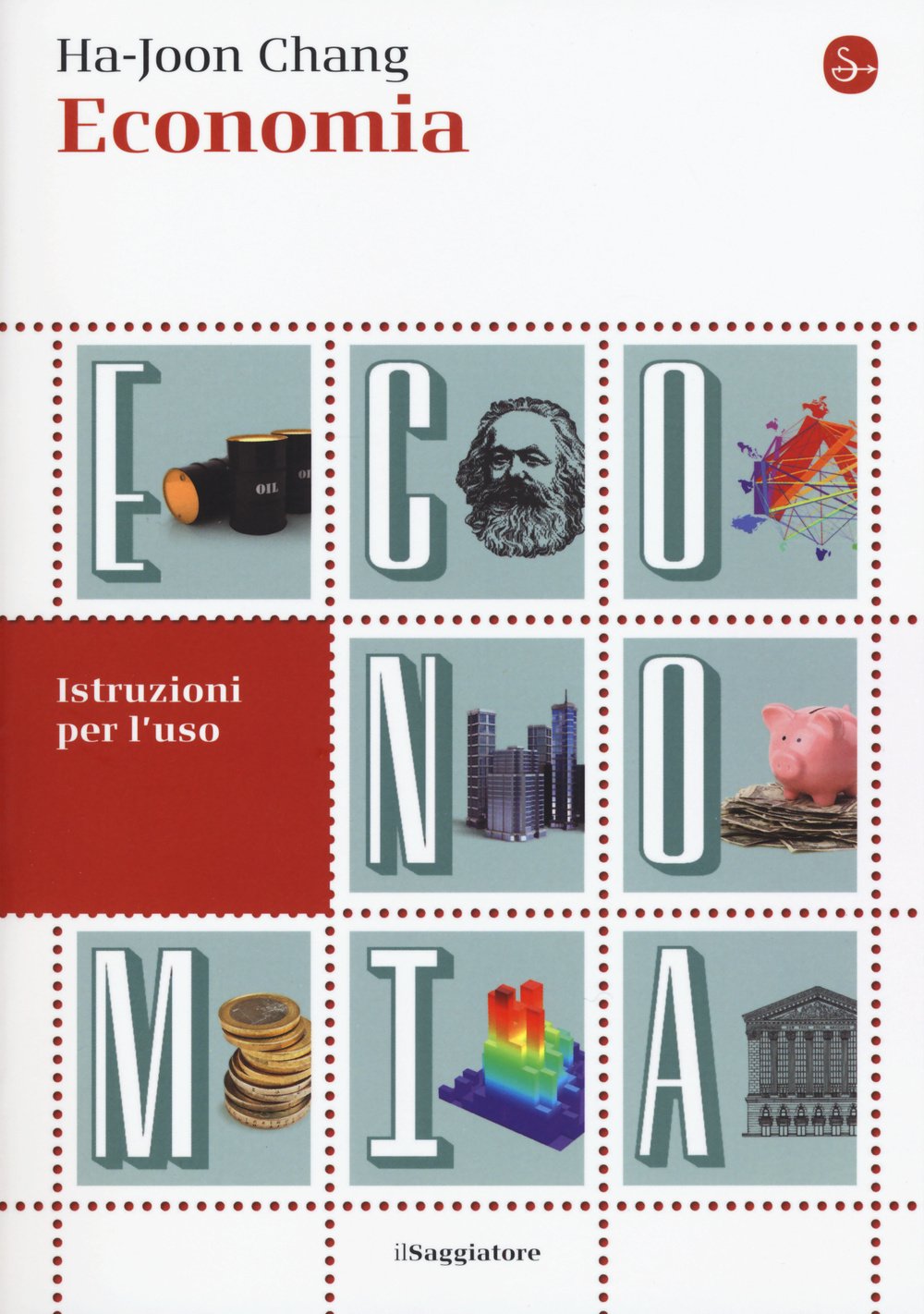
Ha-Joon Chang - Economics. Instructions for use
Luigi Campiglio - Thirteen ideas for reasoning about economics
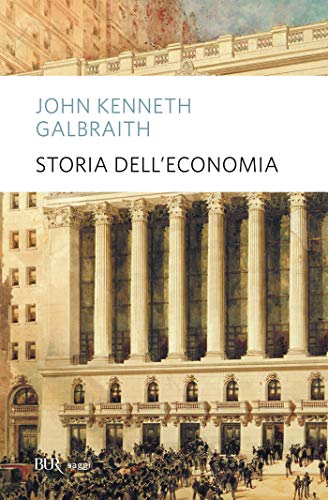
John Kenneth Galbraith - History of Economics
The contemporary debate on crises, the failure of dominant theories and the future of the world economy:
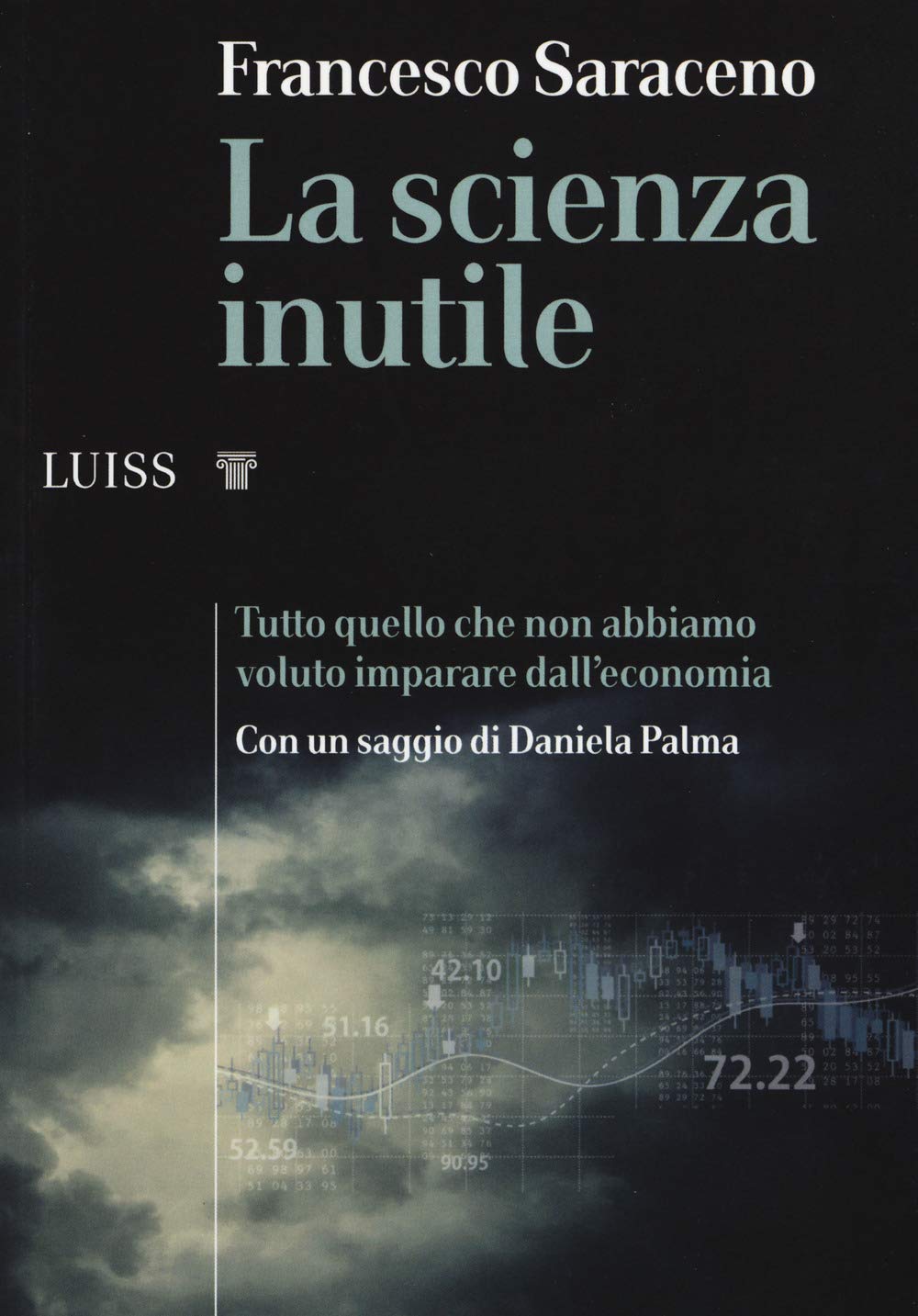
Francesco Saraceno - The useless science
Sergio Cesaratto - Six Lessons in Economics
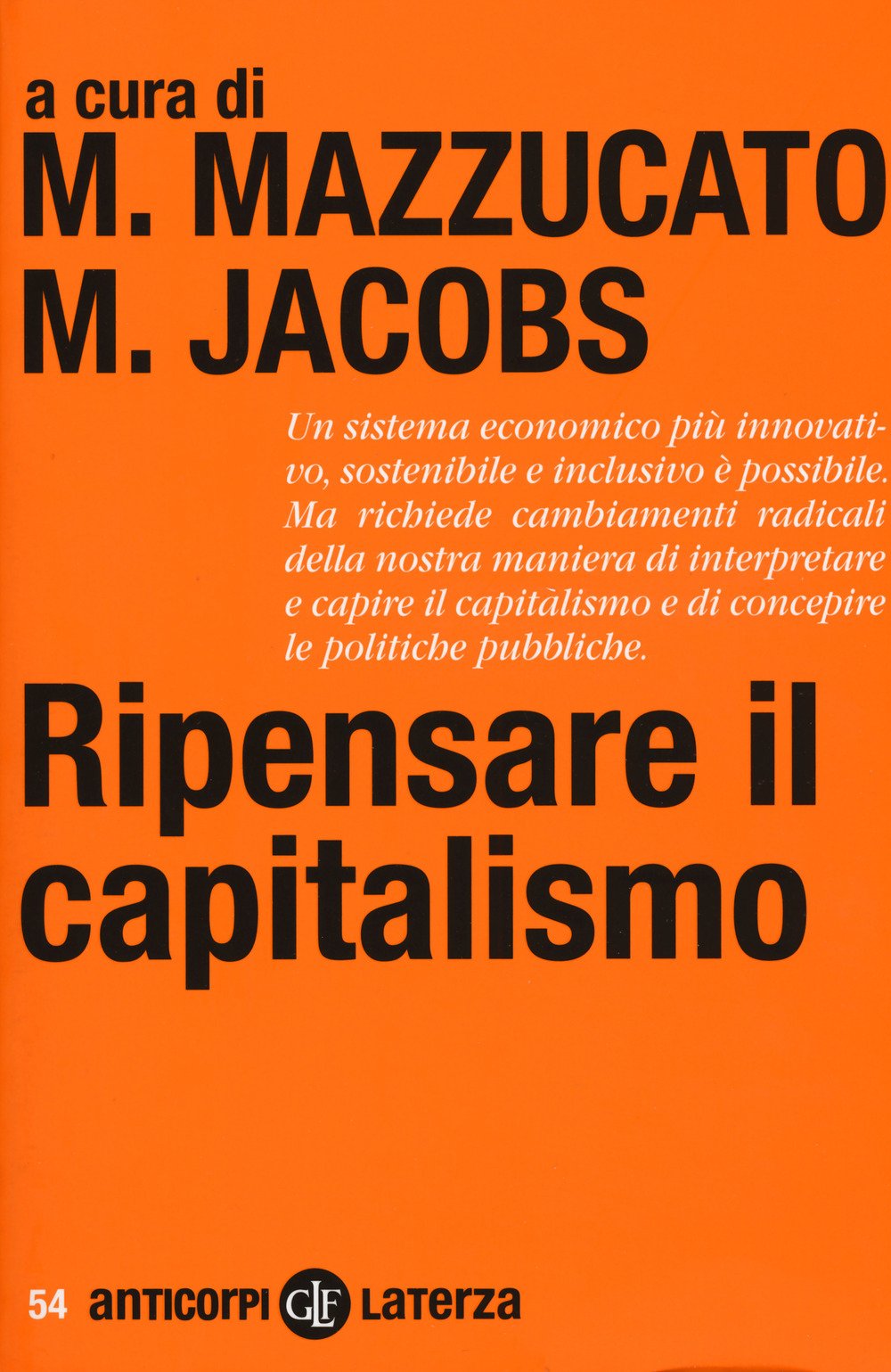
Mariana Mazzucato, Michael Jacobs (eds.) - Rethinking Capitalism
The Indispensables
If one does not have time to read so many books, but at most a couple, possibly very simple and suitable for everyone:
- Ha-Joon Chang - Economics. instructions for use
- Luigi Campiglio - Thirteen ideas for reasoning about economics
Ha-Joon Chang adds in the interlude to his volume the recommendations for those who have only ten minutes, a couple of hours or a half free day for reading.
To elaborate on various aspects:
- Francesco Saraceno - The Useless Science
- Mariana Mazzucato and Michael Jacobs - Rethinking Capitalism.
- Sergio Cesaratto - Six Lessons in Economics
Foreword
Political economy, particularly international macroeconomics, has an enormous impact on everyone’s lives, yet it is ignored or misunderstood by the vast majority of the population. Understanding the nature of economics and its basic concepts is a pre-requisite for being a good citizen, and make informed choices in the world of work, politics, and the purchase of goods and services. But very often even those who have one or more degrees are completely illiterate in the field. Ordinary people ignore the true meaning of basic concepts as value, money, prices, productivity, labor, organization, innovation, investment. And because of this, in addition to the lack of information, they make irrational and wrong choices. Entrepreneurs and managers do not understand how a country’s society, state, and economy work and the international one. Most economists, and business people (entrepreneurs, managers, employees and the self-employed), believe with ideological and religious fanaticism to wrong theories far removed from reality, and have them adopted by politicians, with disastrous results.
The important point is that Economics is not a science, not even a technique, in the sense of the exact sciences (such as physics, chemistry, mathematics, computer science, …), but rather a political opinion, which tends to describe the existing society. In this it is very close to history, sociology, anthropology, psychology even when it wants to sever the link with other social sciences. There are no right or wrong economic choices, not even superior choices over others, universal recipes that apply to everyone, but only choices dictated by political views with so many direct and indirect effects both positive and negative, beneficial to one social group but harmful to others. If they are disguised as technical, forced choices dictated by expertise and knowledge of the subject matter, is a very dangerous illusion; in fact it is simply a scam. Governments of supposed technicians (in reality they are not) often impose measures that benefit the richest and most unproductive 0.1 percent of the population, campaign funder of politicians, but they impoverish everyone else, 99.9 percent of citizens. The history and experience of many countries shows that the best results in positions of power and responsibility, such as leading the government and the economy, get them engineers, lawyers, scientists who have demonstrated the ability to excel in the study of some STEM discipline (science, engineering, medicine,…) or social (law, sociology, anthropology, history,…), who study all their lives and can reason about complex problems. If academic economists in government do damage to economic growth, entrepreneurs, managers, and in general those who come from from the world of work, they manage to make worse disasters, scraping the bottom of the barrel, because a country is not a business (Paul Krugman, 2008 Nobel laureate). in fact, those accustomed to the local, “easy” and open world of business often fail to understand a global, complex, indeed thousands of times more complicated, “difficult” and closed system as the economy of a country. Completely different skills are needed to lead a state than those who had success in the world of work, the mentality “corporatist” is the most dangerous in the administration of public goods.
Said some years ago Joan Robinson:
To make good use of an economic theory, we must first make the sorting between the propagandistic elements
and the scientific elements; then checking with experience, see how convincing the scientific part appears,
and ultimately combine it with our own political ideas.
The object of studying economics is not to acquire a set of prepackaged answers to economic questions,
but to learn how to avoid being deceived by economists.
(former Professor Economics at Cambridge, translated from Contributions to modern economics, 1978).
Ed clarifies Ha-Joon Chang:
Economic science has been particularly successful in keeping the general public at a distance.
People are always ready to make their opinions heard on anything, even though they do not have the necessary expertise:
climate change, gay marriage, war in Iraq, nuclear power plants–but when it comes to economic issues,
many show no interest, let alone a clear opinion on the matter.
[…]
the economy will not be
never a science on a par with physics or chemistry. In this field
there are in fact very different theories, each of which emphasizes aspects
diverse of a complex reality, generates moral and political value judgments
different and comes to different conclusions. In addition, economic theories do not
can ever predict what will happen in the real world, not even
in areas of specific expertise, not least because human beings
are endowed with free will, unlike chemical molecules or the
physical objects.
If there is no single right answer in economics, then we cannot leave everything in the hands of experts.
In other words, every responsible citizen needs to learn some economics, which does not mean getting a big textbook
and assimilate a particular economic perspective. What is needed is to study economics in order to be aware
that there are different types of economic theses and develop the critical spirit to evaluate which position makes the most sense
in a given situation and in light of certain moral values and political goals. […]
(Cambridge Lecturer in Economics, Prologue. Why bother? from “Economics. Instructions for Use,” 2016).
Unfortunately, since the late 1800s, most of the economy has been transformed in a waffling pseudo-science that religiously believes in absurdities such as the equilibrium of markets and rational expectations of economic agents, neoclassical marginalist economics, post-Keynesian syntheses, ordoliberalism, neoliberalism. A scientist or engineer tries to develop realistic models of the problem they study, to derive exact and profitably applicable predictions in practice. At the opposite end of the spectrum is the liberal economist, who believes in the self-regulation of markets, develops absurd mathematical models, far from reality, does not understand the mathematics he uses, gets all predictions wrong, and suggests to the public and politicians harmful choices for economic growth, reduction of unemployment and inequality. In fact, a liberal economist never makes predictions (as opposed to the scientist and technician), and when he makes them he blatantly gets them wrong, not foreseeing the coming crises. These pseudo-scientists occupy 90% of university chairs (especially in private ones like Bocconi), in the faculty of business and economics, law, political science, and churn out so many graduates, ignorant in the other schools of economic thought and of the limitations of the their matter, like dull breeding chickens. In fact, for Irving Fischer (professor at Yale in the early 1900s): teach a parrot to say “It’s the law of supply and demand” and you will have a perfect economist And Prof. Paolo Sylos Labini thus described the economist’s profession: the microbiologist studies microbes, but he is not a microbe; the economist studies the economic life of societies, and he himself is a member of one of these societies. He is thus influenced by his own personal assessments, which enter, if nothing else, into the very choice of problems studied and which may affect, by distorting them, the results of the analysis
The following list of suggested readings I hope you might use to inform yourself and fill in their own gaps.
Ha-Joon Chang - Economics
Instructions for use
_The Assayer (2016), 475 pg
in this popular handbook, a leading scholar introduces the major issues in the economy in very simple language that everyone can understand, even those who are completely ignorant about certain issues. Quoting from the Prologue:
Economic science has been particularly successful in keeping the general public at arm’s length. People are always ready to have their say on anything, even if they don’t have the necessary expertise: climate change, gay marriage, the war in Iraq, nuclear power plants… But when it comes to economic issues, many people show no interest, let alone a clear opinion on the subject. […] If there is no single right answer in economics, then we cannot leave everything in the hands of the experts. In other words, every responsible citizen needs to learn some economics, which does not mean getting a big textbook and assimilating a particular economic perspective. What is needed is to study economics to be aware that there are different kinds of economic theses and to develop the critical spirit to evaluate which position makes the most sense in a given situation and in light of certain moral values and political goals. […]
The volume is divided into two parts, Familiarizing with Economics and Using Economics, preceded by a Prologue, and followed by an Epilogue. The first part clarifies the object of the discipline, the differences between capitalism today and capitalism before the industrial Revolution, and develop a synthesis of world economic history (government policies, production,…) and a summary from economic thought from its origins to the present day. The second part deals with the major issues of economics: production, income, growth, and development, happiness, inequality, finance, poverty, work, unemployment, industrialization and deindustrialization, state intervention, market failure, international trade, balance of payments, immigration.
The ’economy is not a science such as chemistry or physics. Economics is a political issue, in which there are no objective truths and every theory implies different moral judgments, privileges the interests of different groups, and prescribes different political choices. Ha-Joon Chang offers a witty and irreverent economic handbook designed to be understood by all and yet never superficial. The goal is not to explain to the reader what to think, but how to think about economics. never before, as today, immersed in an epochal recession that closely touches our lives, can the major issues of economics be understood only from an open and plural perspective: the history of capitalism, with its crises and golden ages; the concepts of growth and development, exchange, income, consumption, poverty and inequality; the mechanisms of production and the imprint of technology; the centrality of labor and the causes of unemployment; the functioning of the banking system and the dominance of speculative finance; the role of the state - “minimal” or interventionist? - and the behaviors - not always rational - of individuals. Chang dusts off the most valuable theoretical tools of each economic school, buried in the depths of neoliberal conformism: from the classics to the institutionalists, from Marx to Schumpeter, from the Austrians to Keynes, via the behavioral and developmentalist traditions, each current of thought offers illuminating insights. Economics.Instructions for Use, however, is also and above all a practical guide, offering a vast amount of real information and data on both the richest countries and the developing ones; a very rich repertoire of tools for navigating the bewildering transformations of our time, without delegating to “technicians,” politicians and sorcerer’s apprentices. Another quote from the text:
[In some countries] premature deindustrialization is mainly the result of neoliberal economic policies implemented since the 1980s. The sudden liberalization of trade destroyed entire industrial sectors in those countries. Financial liberalization allowed banks to offer loans to consumers (more profitable), diverting them from producers. Policies aimed at controlling inflation, such as adopting high interest rates and overvaluing the currency, have further burdened already agonizing manufacturing companies by making loans more expensive and making it harder to export of products. Worldwide success prompted the author to write a sequel to this volume, Edible Economics, soon to be released, clarifying economic problems related to climate change, uncontrolled immigration, austerity and automation.
ha-Joon Chang is a professor on the prestigious Chair of Political Economy at the Development in Cambridge(UK).The South Korean-born economist (son of a former minister of industry), is also an adviser to the Bank World and UN, and author of famous essays of worldwide acclaim. In “Kicking away the Ladder” and “Bad Samaritans” he explains how the most developed countries got richer with protectionism and market closure, state dirigisme, public intervention, nationalizations and keep others in poverty by imposing open markets to international trade and foreign investment flows, globalization, privatization, liberalization. In “23 Things You’ve Never Been Told About Capitalism,” he debunks many false myths one by one and dogmas about the dominant economic system. Often these harmful misconceptions have become common sense to the man in the street, they come taught in liberalist economics courses, are touted by politicians and the media. Ha-Joon Chang instead explains how capitalism really works, showing that:
- the free market does not exist
- globalization is not enriching the world,
- we do not live in a post-industrial age
- the washing machine changed the world more than the internet
- poor countries are more enterprising and industrious than rich ones
- in rich countries most people get paid more than they should
- companies should not be run in the interests of shareholders
- highest paid managers produce the worst results
- despite the fall of communism we all live in highly planned economies
- equality of opportunity cannot be equitable
- a generous welfare state makes people more open to change and risk
- financial markets need to be less efficient
- good economic policy does not need economists in government
- Official website
- homepage in Cambridge
- Ha-Joon Chang, Wikipedia
- Why the washing machine has changed our lives more than the Internet
- What’s wrong with the world economic order
- Four myths to dispel about the post-industrial economy
- The limits of neoliberalism
- Economics is too important to leave to the experts
- Five minutes with Ha-Joon Chang
Luigi Campiglio - Thirteen ideas for reasoning about the economy
The Mill (2002), pg. 176
A clear introduction to economics for those who know nothing about it, complementary to that of Ha-Joon Chang, for a much more traditional approach, but not turbo-liberal, close instead to progressive Catholicism. The concise essay, is not very recent (first edition 2002), and therefore does not address the great crisis of 2008-2011, but it examines the fundamental concepts of the subject. The thirteen themes addressed are:
- The economic problem
- Markets, goods and externalities
- Economic subjects
- Individual behaviors
- Collective behaviors
- Economic courses and recourses
- The opportunity cost
- Globalization
- The price level
- Currency and inflation
- The interest rate
- Productivity
- How to win the general election and make the grandchildren live happily.
Markets, prices, currency, inflation, productivity, globalization: terms and concepts we can no longer afford to ignore. This volume aims to introduce these concepts, in a simple and clear way, always keeping a close connection between theoretical issues and concrete facts, through the use of numerous examples drawn from the contemporary economic scene and from daily life.
Prof. Luigi Campiglio teaches Economic Policy at the Univ. Cattolica del Sacro Cuore (Milan), of which he also served as deputy pro-rector, and is the author of such textbooks as “Market, Prices and Economic Policy.” and essays such as “Women and Children First; Who Represents Minors?” in which he proposes the right to vote at birth, delegated to parents until age 18, to increase the political clout of young people with offspring.
Francesco Saraceno - The useless science
Everything we didn’t want to learn from economics
LUISS University Press (2018), pg.189
The provocative title, “Useless Science,” is explained by the subtitle, “Everything we didn’t want to learn from economics.” We have experienced a series of economic and financial disruptions over the past hundred years, but they seem to have taught nothing; the same mistakes of the past continue to be made. negligence and ignorance in understanding economic history of politicians, “policy makers,” voters, and even professional economists themselves, in the study of world economic affairs, has led to the aggravation of moments of crisis. The volume is divided into 5 parts:
- Balance and efficiency: the neoclassical school
- The Keynesian revolution
- Expectations and the neoclassical counterrevolution
- The New Consensus
- From Great Moderation to Crisis: the Battered Consensus
A “What to do?” paragraph and a short essay by Martin Wolf close.
There are no universal recipes or policies that are always superior to others; economists should stop selling this dangerous illusion to public opinions and policy makers.
Unnecessary Science is a short and very clear essay on contemporary economic thought, of a somewhat superior to those of Ha-Joon Chang and Campiglio (which should therefore be read first if one knows nothing about the subject), but however, accessible to laymen. saraceno examines the history of economic ideas and policies from the Great Depression of 1929 to the current crisis started in 2008, with the reactions of Obama and Trump, the EU, the Eurozone and the latest Italian governments. The bad results, the many wrong interventions at the political and institutional levels all fall within the of a cycle of historical courses and recurrences that are repeated again and again, and worse each time.
Prof. Francesco Saraceno teaches Political Economy and International Macroeconomics at Sciences Po (Paris) and Luiss (Rome). He is a grandson of the great economist Pasquale Saraceno, who had so much influence on Italy’s economic boom, as the founder and inspirer of SVIMEZ, the Cassa del Mezzogiorno and the Ministry of State Holdings, and as a consultant to IRI and political leaders such as De Gasperi, Vanoni, Moro, La Malfa.
He also published for LUISS, The Reconquest. Why we lost Europe and how we can take it back., ideal sequel to this volume. Some of the themes of Useless Science are instead explored in greater depth in an essay by Mauro Gallegati, The Market Makes You Free, also for Editions of LUISS, the private university and think tank of the Italian Confindustria.
- Author Card
- Book Details
- Review by C.Clericetti at Useless Science
- Review by M.Cedrini at Useless Science
- Review of M.C. Marcuzzo, Is economics really “the useless science”?
- For an Economy of Complexity, Preface by F.Saraceno to “Market Makes Free” by M.Gallegati
- Why it changes the way we use currency
Sergio Cesaratto - Six Lessons in Economics
Knowledge needed to understand the longest crisis (and how to get out of it).
Diarkos, 2nd ed. (2019), 444 pg.
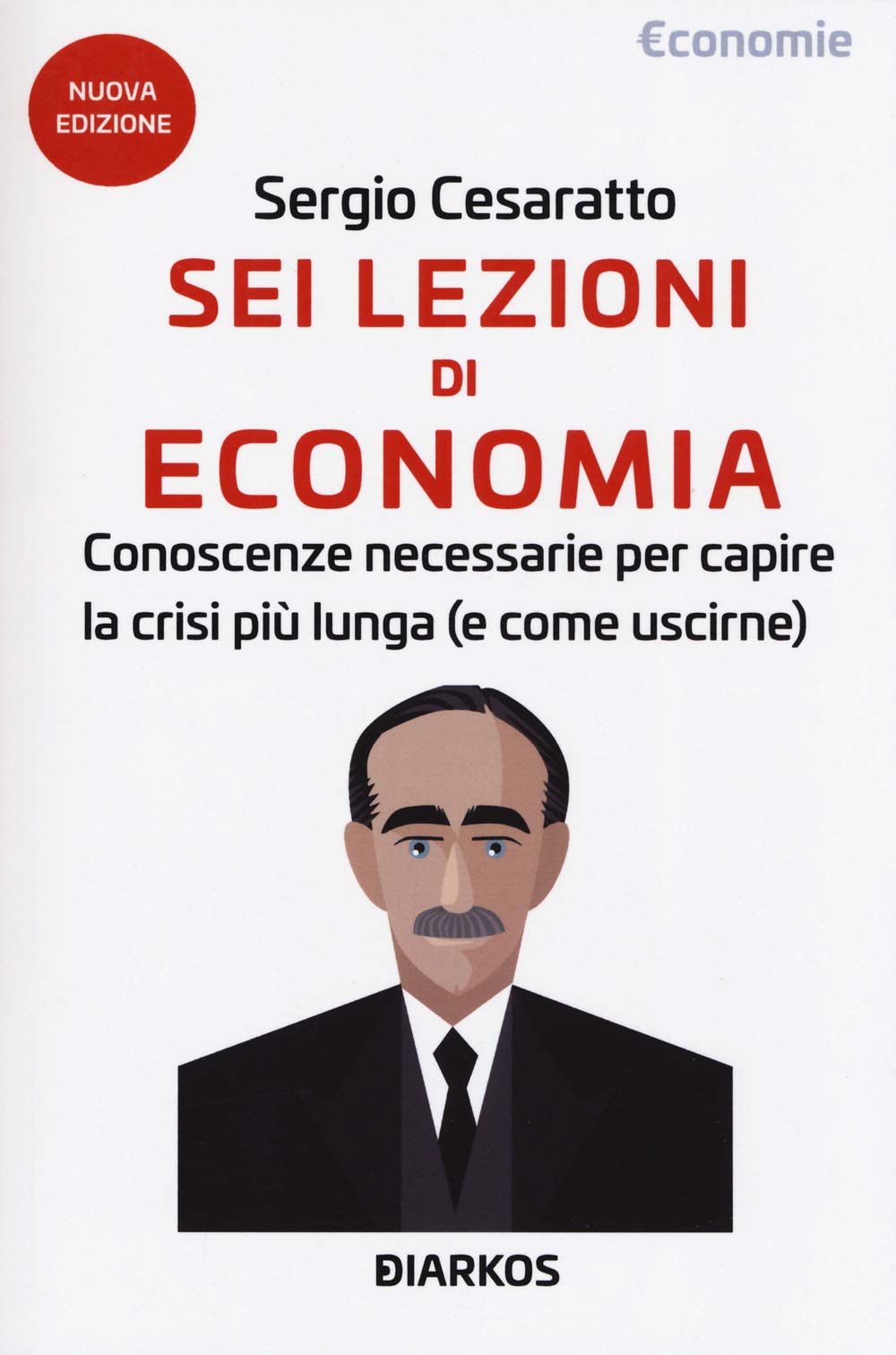
From Adam Smith to German mercantilism, this book interweaves economic theory with the dramatic events of the European crisis, of the euro, of the decline of our country. Lessons:
- The theory of surplus
- The marginal economy
- Keynes’ General Theory
- Currency and the foreign bond
- The longest conjuncture
- Dragonball’s horse
- A. Draghi’s Organ
- B. The strange case of Target2
Moving from the theories of Sraffa and Keynes and a modern view of money, it shows the weakness of the dominant theory and the conservative nature of European construction. Without optimism of will, but as a testimony of reason, the volume points to the possibility, even in this Europe, of implementing more satisfactory economic and fiscal policies. From the introduction: The intent of these lectures answers the simple question, “what should you know about economics a person, busy citizen, who likes to pick up a book in his or her hand?” The classes address, of course, also to students of economics and other disciplines who feel tedious from conventional teaching or who are simply curious. And certainly to many journalists and to all those people who know a lot about politics, but then they skirmish and say, “you know, I don’t have the economics never understood.” But it addresses, above all, those thousands of young and old who in these hard years have rolled up their sleeves to try to break through the mountain of lies that has engulfed us, “it is europe to ask us” in the first place. Among them, I would like to convince our dear friends at Modern Monetary Theory ( MMT ) that heterodox economics is something much broader, and to which we Italians we can look at with some pride. Economics does not actually have huge barriers to entry, and the mathematical latinorum of which we often ammanta has precisely the role of intimidating people, making them feel insufficient and keeping them far from truths (or lies) that are ultimately simple to understand. Culture and counter-information are troublesome to power. Better to give citizens the impression that certain statements we hear from the politicians have foundations in mysteries unknowable to the vulgar, administered by those modern sorcerers or priests called economists.
Prof. Sergio Cesaratto teaches “Political Economy” and “Monetary and Fiscal Policy of the European Monetary Union.” at the Univ. of Siena. runs the blog:
https://politicaeconomiablog.blogspot.com/
- Scheda docente
- Presentation of the second edition
- Interview on the second edition
- Six lessons in economics to understand the longest crisis
- F.Petri’s review of 6 Lessons in Economics
- Who doesn’t play by the rules? Italy, Germany, the double morals of the euro
- The Franco-German idea to cage Italy
- Wage deflation explained to Whirlpool workers, who already know it
Mariana Mazzucato, Michael Jacobs (eds.) - Rethinking Capitalism
(Economics and policy for sustainable and inclusive growth)
Laterza (2017)
A collection of eleven essays on the hottest issues and problems in economics, edited by Michael Jacobs and Mariana Mazzucato, a leading economist with dual Italian and American citizenship. The book Lo Stato Innovatore, by Mazzucato, which demonstrated the importance of the long-term public investment in basic research and technology development to econmic growth, has had worldwide resonance. The most important theses of that study are explained more clearly and concisely in the sixth essay in this volume (Innovation, state and patient capital). Nobel laureate Joseph Stiglitz explains in his eighth essay the negative effects of excessive inequalities on economic growth, a theme developed by many authors such as Thomas Piketty. Canadian economist William Lazonick clearly explains his theory of innovative enterprise. The exponent of modern monetary theory (MMT), Stephanie Kelton, famous for her volume The Deficit Myth, addresses the catastrophic failure of austerity theories. British sociologist Colin Crouch, a theorist of post-democracy, recounts the failure of privatization of public services. The challenge of climate change is addressed by Zenghelis.
In the volume:
- Michael Jacobs, Mariana Mazzucato - Rethinking capitalism: an introduction
- Stephanie Kelton - The failure of austerity: rethinking fiscal policy
- L. Randall Wray, Yeva Nersisyan - Understanding currency and macroeconomic policy
- Andrew G. Haldane - How much does short-term obsession cost
- William Lazonick - The innovative enterprise and the theory of the enterprise
- Mariana Mazzucato - Innovation, the State and Patient Capital
- Stephany Griffith-Jones and Giovanni Cozzi - Growth driven by investment
- Joseph E. Stiglitz - Inequality and Economic Growth
- Colin Crouch - The paradoxes of privatization and outsourcing of public services
- Dimitri Zenghelis - Decarbonization: innovation and the economics of climate change
- Carlota Pèrez - Capitalism, technology and a global golden age: the role of history to help design the future
The economies of developed countries face deep and interconnected problems: polluted cities, severe inequality, marginalization of large segments of the population, slow growth, disastrous climate change. to address these problems, economic policies need to change fundamentally. Which means we need to understand to the core how the contemporary capitalist system works. In this book, some of the top economists internationally address the key issues of contemporary economics-fiscal and monetary policy, the financial market, inequality, privatization, innovation and climate change. With one conviction: capitalism must be reformed and reinterpreted to avoid the failures we still have before our eyes. “We desperately need new ways of thinking about and conceiving economic policies: this book addresses our preconceptions, challenges our sacred monsters and finally offers new and provocative ideas."(Financial Times)
Mariana Mazzucato is professor of “Economics of Innovation and Public Value” at University College of London (UCL). She was born in Rome but moved as a child to the United States when her father, a well-known plasma physicist, was called from Princeton University, and for this reason has dual citizenship. He has always studied and taught in Anglo-Saxon universities. For a short period she was an economic advisor to the Italian government (April 2020-January 2021). His works include “The Innovative State,” “The Value of Everything,” “Let’s Not Waste This Crisis.” )
- [L.Cattani’s review of Rethinking Capitalism] (https://www.pandorarivista.it/articoli/ripensare-capitalismo-mazzucato-jacobs/)
- [Book Details] (https://www.laterza.it/scheda-libro/?isbn=9788858127445)
- [Review by L.Cattani at Innovator State] (https://www.pandorarivista.it/articoli/lo-stato-innovatore-di-mariana-mazzucato/)
- [Innovator State Sheet] (https://www.laterza.it/scheda-libro/?isbn=9788858141243)
- [Review by A.Venieri at Mission Economics] (https://www.pandorarivista.it/articoli/missione-economia-una-guida-per-cambiare-il-capitalismo-di-mariana-mazzucato/)
- [Economy Mission Card] (https://www.laterza.it/scheda-libro/?isbn=9788858140543)
John Kenneth Galbraith - History of Economics
From the role of slavery in ancient Greece to Plato’s “communism”; from feudal organization to the industrial revolution; from Karl Marx to the Great Depression of the 1930s to the development of the globalized market in the second twentieth century: in this text John K. Galbraith demonstrates with astonishing clarity that one cannot understand the workings of contemporary economics without knowing its history, because economic theories and choices are always a product of the times and places in which they arise and they develop. Taking the reader through curious anecdotes and lucid analysis of major issues, from distribution of income to unemployment, the author brings to light the ineliminable intertwining linking economic, political and social issues. And he explains that the economy cannot be socially neutral: it always has the power to determine, for better or worse, the life of a nation and its citizens. The text is rather dated, the first edition being from 1987, but it gives a concise overview of the economy from prehistoric to the early 1970s, from the perspective of one of the most celebrated and influential economists of the 20th century, J.K. Galbraith.
John Kenneth Galbraith, influential scholar critical of traditional economic theory, canadian-born naturalized U.S. citizen, was:
- professor of Political Economy at the Universities of California at Berkeley, Princeton, Cambridge and Harvard.
- economic adviser to U.S. presidents Franklin D. Roosevelt, John F. Kennedy and Bill Clinton
- ambassador to India for the Kennedy presidency,
- supercommissioner of prices during the war for the Roosevelt presidency
His major works include The Opulent Society, The New Industrial State, The Great Collapse, The Age of Uncertainty_, The Scam Economy_.
…