Economy
- The political economy that moves and regulates the world-Part I
- The political economy that moves and regulates the world-Part II
Economics, History, Anthropology and Social Science Quotes
The fundamental role of basic scientific research
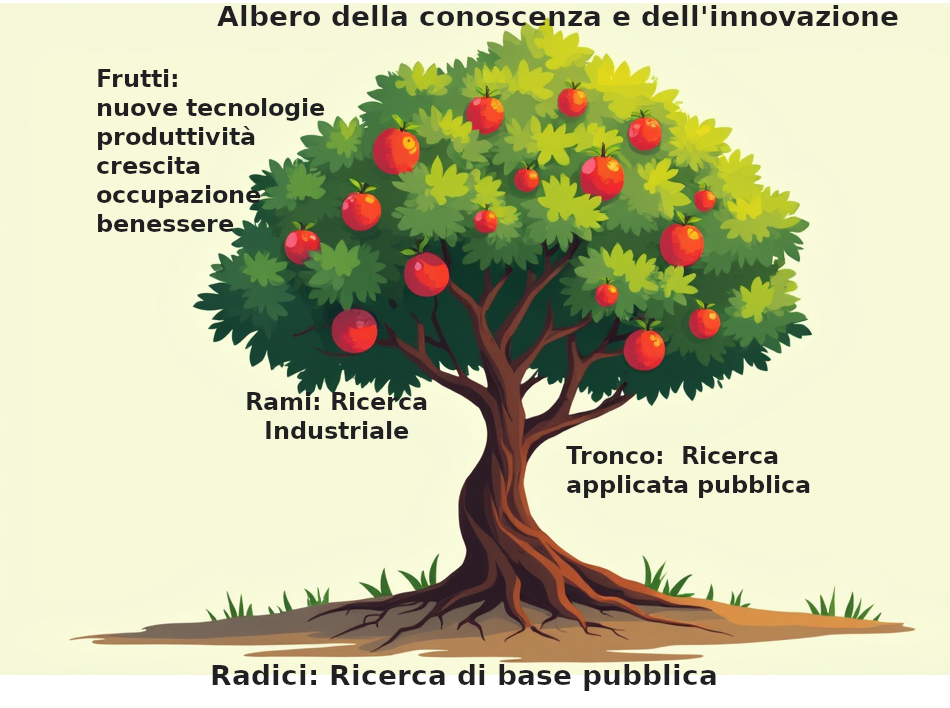
Advances in theoretical physics such as quantum mechanics, electromagnetism, atomic and nuclear physics, and condensed matter physics have revolutionized the 20th century, with their enormous impact on technology, industry, economics and society, the practical applications affecting our daily lives.
It can be said without any doubt that a very large part of our well-being and wealth comes from basic scientific research, for the sheer love of knowledge, without any profit motive or direct application.
The political economy that moves and regulates the world
Political economy, particularly international macroeconomics, has an enormous impact on everyone’s lives, yet it is ignored or misunderstood by the vast majority of the population. Understanding the nature of economics and its basic concepts is a pre-requisite for being a good citizen, and make informed choices in the world of work, politics, and the purchase of goods and services. But very often even those who have one or more degrees are completely illiterate in the field. Ordinary people ignore the true meaning of basic concepts as value, money, prices, productivity, labor, organization, innovation, investment.
And because of this, in addition to the lack of information, they make irrational and wrong choices. Entrepreneurs and managers do not understand how a country’s society, state, and economy work and the international one.
Most economists, and business people (entrepreneurs, managers, employees and the self-employed), believe with ideological and religious fanaticism to wrong theories far removed from reality, and have them adopted by politicians, with disastrous results.
The important point is that Economics is not a science, not even a technique, in the sense of the exact sciences (such as physics, chemistry, mathematics, computer science, …), but rather a political opinion, which tends to describe the existing society. In this it is very close to history, sociology, anthropology, psychology even when it wants to sever the link with other social sciences. There are no right or wrong economic choices, not even superior choices over others, universal recipes that apply to everyone, but only choices dictated by political views with so many direct and indirect effects both positive and negative, beneficial to one social group but harmful to others. If they are disguised as technical, forced choices dictated by expertise and knowledge of the subject matter, is a very dangerous illusion; in fact it is simply a scam. Governments of supposed technicians (in reality they are not) often impose measures that benefit the richest and most unproductive 0.1 percent of the population, campaign funder of politicians, but they impoverish everyone else, 99.9 percent of citizens. The history and experience of many countries shows that the best results in positions of power and responsibility, such as leading the government and the economy, get them engineers, lawyers, scientists who have demonstrated the ability to excel in the study of some STEM discipline (science, engineering, medicine,…) or social (law, sociology, anthropology, history,…), who study all their lives and can reason about complex problems.
If academic economists in government do damage to economic growth, entrepreneurs, managers, and in general those who come from from the world of work, they manage to make worse disasters, scraping the bottom of the barrel, because a country is not a business (Paul Krugman, 2008 Nobel laureate). in fact, those accustomed to the local, “easy” and open world of business often fail to understand a global, complex, indeed thousands of times more complicated, “difficult” and closed system as the economy of a country. Completely different skills are needed to lead a state than those who had success in the world of work, the mentality “corporatist” is the most dangerous in the administration of public goods.
Said some years ago Joan Robinson:
To make good use of an economic theory, we must first make the sorting between the propagandistic elements
and the scientific elements; then checking with experience, see how convincing the scientific part appears,
and ultimately combine it with our own political ideas.
The object of studying economics is not to acquire a set of prepackaged answers to economic questions,
but to learn how to avoid being deceived by economists.
(former Professor Economics at Cambridge, translated from Contributions to modern economics, 1978).
Ed clarifies Ha-Joon Chang:
Economic science has been particularly successful in keeping the general public at a distance.
People are always ready to make their opinions heard on anything, even though they do not have the necessary expertise:
climate change, gay marriage, war in Iraq, nuclear power plants–but when it comes to economic issues,
many show no interest, let alone a clear opinion on the matter.
[…]
the economy will not be
never a science on a par with physics or chemistry. In this field
there are in fact very different theories, each of which emphasizes aspects
diverse of a complex reality, generates moral and political value judgments
different and comes to different conclusions. In addition, economic theories do not
can ever predict what will happen in the real world, not even
in areas of specific expertise, not least because human beings
are endowed with free will, unlike chemical molecules or the
physical objects.
If there is no single right answer in economics, then we cannot leave everything in the hands of experts.
In other words, every responsible citizen needs to learn some economics, which does not mean getting a big textbook
and assimilate a particular economic perspective. What is needed is to study economics in order to be aware
that there are different types of economic theses and develop the critical spirit to evaluate which position makes the most sense
in a given situation and in light of certain moral values and political goals. […]
(Cambridge Lecturer in Economics, Prologue. Why bother? from “Economics. Instructions for Use,” 2016).
Unfortunately, since the late 1800s, most of the economy has been transformed in a waffling pseudo-science that religiously believes in absurdities such as the equilibrium of markets and rational expectations of economic agents, neoclassical marginalist economics, post-Keynesian syntheses, ordoliberalism, neoliberalism. A scientist or engineer tries to develop realistic models of the problem they study, to derive exact and profitably applicable predictions in practice. At the opposite end of the spectrum is the liberal economist, who believes in the self-regulation of markets, develops absurd mathematical models, far from reality, does not understand the mathematics he uses, gets all predictions wrong, and suggests to the public and politicians harmful choices for economic growth, reduction of unemployment and inequality. In fact, a liberal economist never makes predictions (as opposed to the scientist and technician), and when he makes them he blatantly gets them wrong, not foreseeing the coming crises. These pseudo-scientists occupy 90% of university chairs (especially in private ones like Bocconi), in the faculty of business and economics, law, political science, and churn out so many graduates, ignorant in the other schools of economic thought and of the limitations of the their matter, like dull breeding chickens. In fact, for Irving Fischer (professor at Yale in the early 1900s): teach a parrot to say “It’s the law of supply and demand” and you will have a perfect economist And Prof. Paolo Sylos Labini thus described the economist’s profession: the microbiologist studies microbes, but he is not a microbe; the economist studies the economic life of societies, and he himself is a member of one of these societies. He is thus influenced by his own personal assessments, which enter, if nothing else, into the very choice of problems studied and which may affect, by distorting them, the results of the analysis
Remember Ha-Joon Chang ( in the Prologue of Economics Instructions for Use )
Economic science has been particularly successful in keeping the general public at arm’s length. People are always ready to have their say on anything, even if they don’t have the necessary expertise: climate change, gay marriage, the war in Iraq, nuclear power plants… But when it comes to economic issues, many people show no interest, let alone a clear opinion on the subject. […] If there is no single right answer in economics, then we cannot leave everything in the hands of the experts. In other words, every responsible citizen needs to learn some economics, which does not mean getting a big textbook and assimilating a particular economic perspective. What is needed is to study economics to be aware that there are different kinds of economic theses and to develop the critical spirit to evaluate which position makes the most sense in a given situation and in light of certain moral values and political goals. […]
Economics is not a science
Scholars such as Albert Hirschmann (American naturalized German liberal economist and philosopher, brother-in-law of Altiero Spinelli, and father-in-law of 1998 Nobel laureate Amyarta Sen) analyzed the laws and mathematical models proposed by liberalist economists as Freudian envy of Physics (in analogy with the trauma of penis envy in girls). As noted by Hirschmann, if a scientist sees a wiggling dog the tail, for a liberal economist it is the tail that wags the dog. In 1987, a major interdisciplinary conference, at which major economists, social scientists and theoretical physicists from the U.S. and around the world, including several Nobel laureates, should have initiated the study of the Economy as a complex system. The Santa Fe conference was chaired by physicist Philip W. Anderson, founder of complex systems theory emerging (“More is different” Science, 1972) and Nobel Prize winner in 1977, together with David Pines (theoretical physicist) and Kenneth Arrow (economist, 1972 Nobel laureate). After listening to the economists’ report on the status of their subject, increasingly horrified and disgusted by the absurd assumptions, Anderson asked: _But do you guys really believe this crap?
The idea that markets naturally tend toward equilibrium, as if pushed by an invisible hand, thanks to the information provided by prices, is based on clearly ridiculous assumptions:
The interactions between economic agents are very simple. They are actually very complex and drive chaotic behavior, or to converge to situations far from ideal ones (example high unemployment and degrowth.) The correlation between many agents leads to instability and continuous crises.
Economic agents have infinite intelligence and they have rational expectations.That is, they use information in a way that is efficient without making systematic errors in predicting the future state of the economy.In reality, economic agents behave in a manner irrational, have little information, which they do not know how to use and they make them wrong.
information is endless and available. In reality, information is often not shared between economic agents (seller/buyer, insurer/insured), those who have more information benefit. In this case we speak of information asymmetry, which leads to to adverse selection, moral hazard and market failure. The classic example is the used car market. The actual condition of the car is known only to the seller.An average price is set, too high for cars in poor condition and too low for cars in good condition.So good cars are expelled from the free market where only the bad ones, the bins, remain.
Companies work under perfect competition.In reality monopolies and oligopolies form, not necessarily bad for growth and development (see, e.g., Paolo Sylos Labini, “Oligopoly and Technical Progress”). Companies that are strategic to a country, especially in the service sector, often operate under a natural monopoly, in which only one enterprise can exist in the market (example networks and infrastructure for the distribution of water, gas, electricity, highway and rail network).
Moreover, in classical liberal economics, the following are not considered so-called externalities, which they cannot put a price on:
the costs of unsustainable consumption of natural resources, pollution caused by corporations, global warming, consumption indiscriminate use of common property over which property rights are unclear, such as water or air, scientific and technological knowledge accumulated in society, the cost of excessive inequality and precarity caused by the market.
the benefits for growth and labor productivity of scientific research, technological progress, of innovation for long-term investment by the state, of process and product innovation.
The old adage applies perfectly to the liberal economist by Oscar Wilde: knows the price of everything but the value of nothing.
Both the founders of the discipline in the early nineteenth century (Adam Smith, Ricardo, Marx) that the great economists of the 20th century (John M. Keynes, Joseph Schumpeter, Piero Sraffa above all, but also Karl Polanyi, Hyman Minsky, Thorstein Veblen, Michael Kalecki, Nicholas Kaldor, Nicholas Georgescu-Roengen, …) were very clear about the limits of their discipline and the close connection with history, sociology, anthropology, ethics, philosophy. And today there are many schools of economists heterodox who are refounding the discipline on a firmer foundation. Many contemporary economists are engaged in the study of the market failures, causing inefficiency, unemployment, stagnation. Some market failures are related to asymmetric information (Akerlof, Spence, Stiglitz, …). Others study the bounded rationality or irrationality of economic agents with behavioral psychology ( Kahneman, Tversky, Simon, Shiller, Thaler,…). Finally, some develop more realistic models of economic systems, incorporating advances in theoretical physics of complex systems, in the field of ‘Ecophysics. Therefore, it takes a lot of nerve and bad faith to support the argument that you need to liberalize markets, privatize and reduce state intervention, dirigisme and planning. Businesses for example do not pay back the pollution they produce, cannot respond to challenges such as those of a pandemic, are unable to provide public goods including basic research, education, health care, to limit inequality within socially acceptable limits to make countercyclical policies in times of deep crisis. In essence, the state must reach where by nature businesses do not reach. Unfortunately, companies often take advantage of this, and continually demand aid, public funds, tax cuts, to the point that writer Gore Vidal once said that our economic system is free enterprise for the poor and socialism for the rich.